 Minnesota Legislature
Closing state's achievement gap a top aim of Walz's K-12 budget proposal
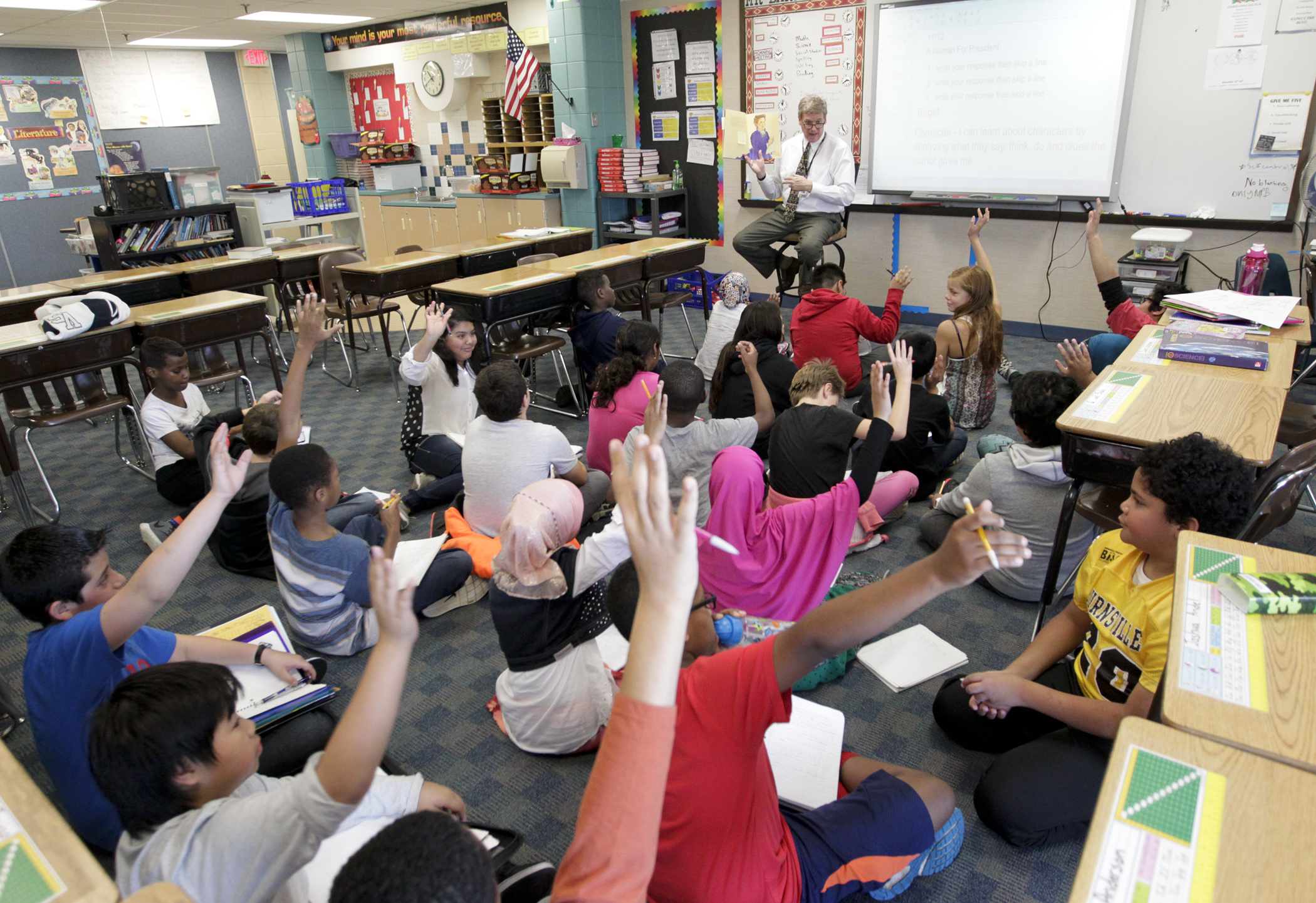
Closing the achievement gap and promoting equity are two tenets of the governor’s proposed education policy plan.
It is also about making a high-quality education available to all Minnesota children, and developing a safe and welcoming environment for students and teachers to flourish academically, Education Commissioner Heather Mueller told the House Education Policy Committee Monday.
HF3401 would do all that by modifying academic standards requirements and student discipline provisions, and updating online education requirements, policies related to American Indian students, teacher licensure and charter schools.
Sponsored by Rep. Ruth Richardson (DFL-Mendota Heights), the bill was laid over for further consideration. Its companion, SF2822, sponsored by Sen. Roger Chamberlain (R-Lino Lakes), awaits action by the Senate Education Finance and Policy Committee.
The bill would introduce a slew of changes, including a new focus on evidence-based social-emotional learning at schools to prevent and reduce discrimination and other improper conduct, and the use of non-exclusionary disciplinary policies and practices as alternatives to removal or dismissal. It would specifically prohibit dismissal of a student in kindergarten through third grade unless non-exclusionary discipline measures are exhausted, and there is an ongoing serious safety threat to the child or others.
There is a distinction between discipline and punishment, Mueller said. Data shows minority students are suspended at a higher rate and time away from class impacts life trajectory and employability. “Our job is to teach not punish.”
Paula Cole, executive director of Educators for Excellence, said school suspensions more often affect Black and brown children, particularly those dealing with poverty, homelessness, and hunger.
Roger Aronson, legal and legislative counsel for the Minnesota Elementary School Principals’ Association and the Minnesota Association of Secondary School Principals, and Rep. Dean Urdahl (R-Grove City) voiced concerns about teacher safety.
Assistant Education Commissioner Stephanie Graff said protocols would be put in place, including behavior intervention, to address the issue.
The bill also would introduce compulsory instruction in ethnic studies, a provision that garnered opposition from the Minnesota Association of Christian Homeschool Educators.
In written testimony, Executive Director Robert S. Prigge called the ethnic studies requirement “unclear” and “intrusive.”
“Part of the expectations for social studies education already includes the study of all people groups that are representative of those that have built both Minnesota and the collective United States. … The legislation requires instruction to be provided in ethnic studies, but doesn’t define the term, a clearly communicated intent and the learning objective of this focus, how to measure outcomes in an effective and healthy manner for students of this instruction.”
Related Articles
Search Session Daily
Advanced Search OptionsPriority Dailies
Could 2026 retirements lead to record turnover in the House?
By Lisa Kaczke In the final weeks of the legislative session, House members not seeking re-election to the body have taken a turn at gaveling in a floor session.
It’s an opportunity to loo...
In the final weeks of the legislative session, House members not seeking re-election to the body have taken a turn at gaveling in a floor session.
It’s an opportunity to loo...
How short are the Legislature's short sessions?
By Lisa Kaczke Rep. Ron Kresha (R-Little Falls) was ready to end the session March 25, making the motion to adjourn sine die. But not enough of his colleagues shared that sentiment, defeating ...
