 Minnesota Legislature
House Capital Investment Committee previews governor’s $907 million bonding recommendation
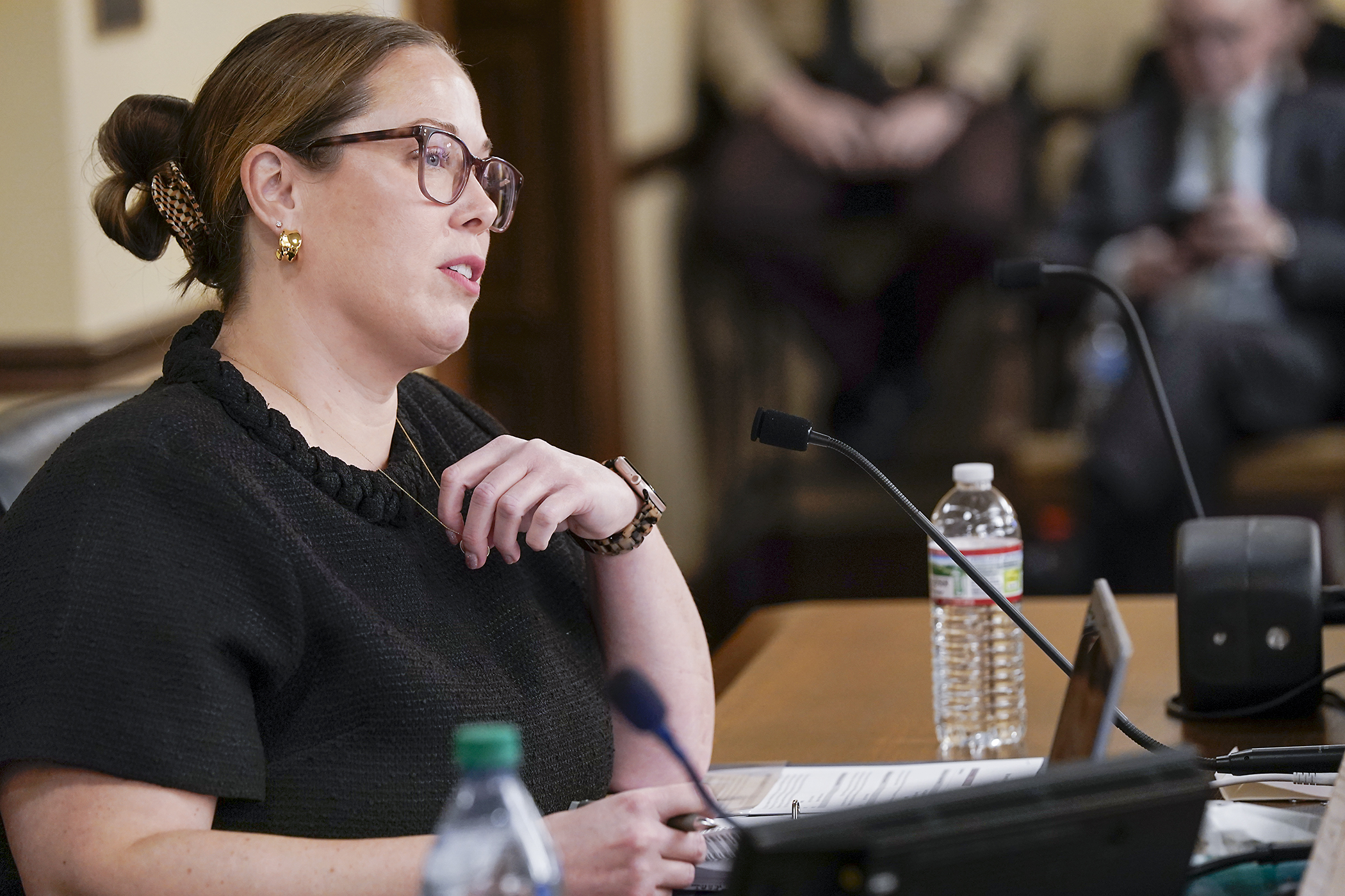
Rep. Mary Franson (R-Alexandria) had a question about the $94 million debt service projected for Fiscal Years 2028-29, nearly double that of the previous biennium.
“Where does the governor plan on taking money from?” she said during Thursday’s presentation of Gov. Tim Walz’s 2026 Infrastructure Plan to the House Capital Investment Committee Thursday.
Erin Campbell, commissioner of Minnesota Management and Budget, said Walz would be reducing other budgets to pay for the upcoming debt service. Those choices will be determined after the February forecast is released Feb. 27.
While bonding is usually passed during even-numbered years, there was no bonding bill passed in 2024, and last year lawmakers passed a $700 million bonding package that House Speaker Lisa Demuth (R-Cold Spring) said focused on basic infrastructure like roads and bridges.
General obligation bonds totaling $700 million comprise the majority of the proposed funding for Walz’s recommendations with $50 million in user-financed General Obligation bonds. The final $157 million includes funds and bonds for trunk highways, General Fund cash, and appropriation bonds.
His recommendations include a wide range of projects statewide, including the third phase of the Capitol Complex security upgrades, facility upgrades at the Department of Agriculture’s East Grand Forks Potato Inspection and demolition work at Minnesota Correctional Facility-Faribault.
Requests for state funds from local governments total $3.19 billion this year, more than three times the governor’s entire recommendation.
Minnesota currently has $6.7 billion in deferred maintenance needs. Campbell highlighted it as a focus of the governor’s recommendation, with more than one-third of his proposal, or $316 million, slated to preserve state infrastructure.
“It is this growing issue of deferred maintenance that drives much of the governor’s recommendations,” Campbell said.
Campbell also called out water infrastructure programs as a large portion of general obligation bonds, with $113 million recommended.
“We know there continues to be a huge demand for water infrastructure funding. In fact, a third of the local government requests that MMB received – totaled $1 billion – were for water infrastructure projects.”
Related Articles
Search Session Daily
Advanced Search OptionsPriority Dailies
Could 2026 retirements lead to record turnover in the House?
By Lisa Kaczke In the final weeks of the legislative session, House members not seeking re-election to the body have taken a turn at gaveling in a floor session.
It’s an opportunity to loo...
In the final weeks of the legislative session, House members not seeking re-election to the body have taken a turn at gaveling in a floor session.
It’s an opportunity to loo...
How short are the Legislature's short sessions?
By Lisa Kaczke Rep. Ron Kresha (R-Little Falls) was ready to end the session March 25, making the motion to adjourn sine die. But not enough of his colleagues shared that sentiment, defeating ...
