 Minnesota Legislature
Data Practices Act balances privacy and the public’s right to know
“Even Post-it Notes can be government data.”
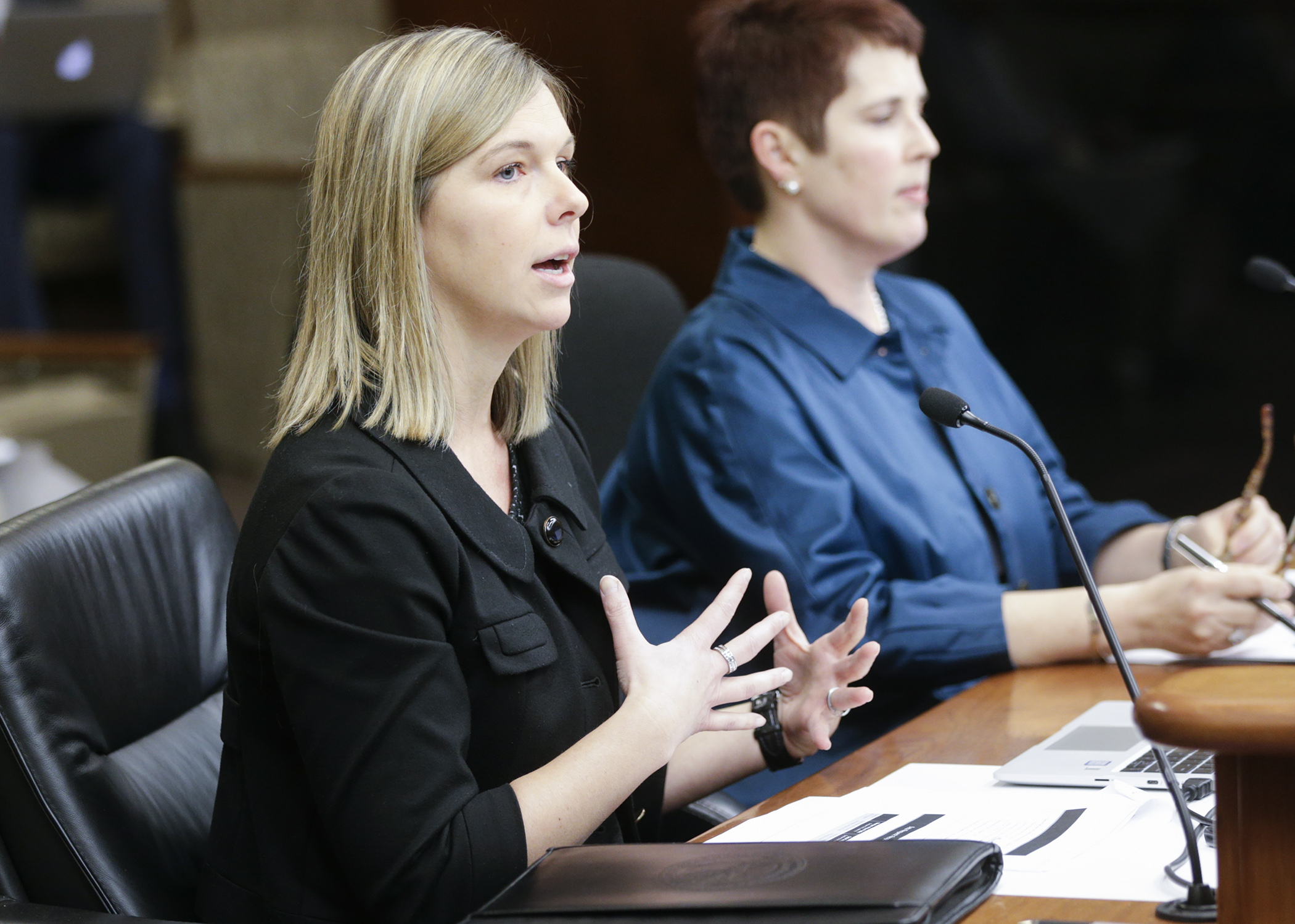
That bit of information came from the director of the state’s Data Practices Office, as she briefed legislators Thursday on the intricacies and subtleties of the Minnesota Data Practices Act.
Testifying before the House Judiciary Finance and Civil Law Division, Stacie Christensen noted that the act encompasses both freedom of information laws designed to ensure transparency in government and rules about what data the government must keep private to protect an individual’s privacy.
Any legislation proposing to establish new, or to modify existing, protected data sets would likely be heard in the division.
Members heard real-world examples of situations where it may be difficult to determine whether government data is public or private. An email sent from a lawmaker’s legislative email account is not government data, she said, because the Legislature is not subject to the Data Practices Act.
However, if a legislator asked a state employee for information, and the employee replied using a personal email account, that reply is considered government data. A member of the public might therefore have the right to see the message, unless it contained private, and therefore protected, data.
“Just because someone uses a personal account doesn’t mean they can remove themselves from the requirements of the Data Practices Act,” Christensen said.
She added no exception exists for “working papers,” such as notes taken on a sticky note in a meeting.
Christensen noted that the Data Practices Act presumes that all government data is public unless legislators establish “protected data sets” that should not be disclosed to the public.
Laurie Beyer-Kropuenske, director of the Community Services Division of the Department of Administration, addressed privacy issues raised by newer types of data collection techniques such as electronic license plate readers and body video cameras worn by law enforcement personnel.
Data captured by a police officer’s body camera as he or she responds to a crime in progress would generally be private and/or confidential while the investigation into the crime is active, Beyer-Kropuenske said. However, the general public would have the right to access data in the completed incident report, she said.
The general public has a high degree of interest in how local police departments handle body camera video footage, said Rep. John Lesch (DFL-St. Paul), the division chair. He noted that previous legislative sessions established special data privacy rules on body camera footage when an officer discharges a weapon or uses force that results in substantial bodily harm.
Related Articles
Search Session Daily
Advanced Search OptionsPriority Dailies
Stable budget outlook projects $3.7 billion surplus now, no deficit in next biennium
By Lisa Kaczke The projected surplus for Fiscal Years 2026-27 is now higher than it was in the November estimate, and no deficit is projected for the next biennium.
“Minnesota’s budge...
The projected surplus for Fiscal Years 2026-27 is now higher than it was in the November estimate, and no deficit is projected for the next biennium.
“Minnesota’s budge...
Legislative leaders set 2026 committee deadlines
By Lisa Kaczke Legislative leaders on Tuesday officially set the timeline for getting bills through the committee process during the upcoming 2026 session.
Here are the three deadlines for...
Legislative leaders on Tuesday officially set the timeline for getting bills through the committee process during the upcoming 2026 session.
Here are the three deadlines for...
