 Minnesota Legislature
DEED officials report smooth rollout of paid leave program
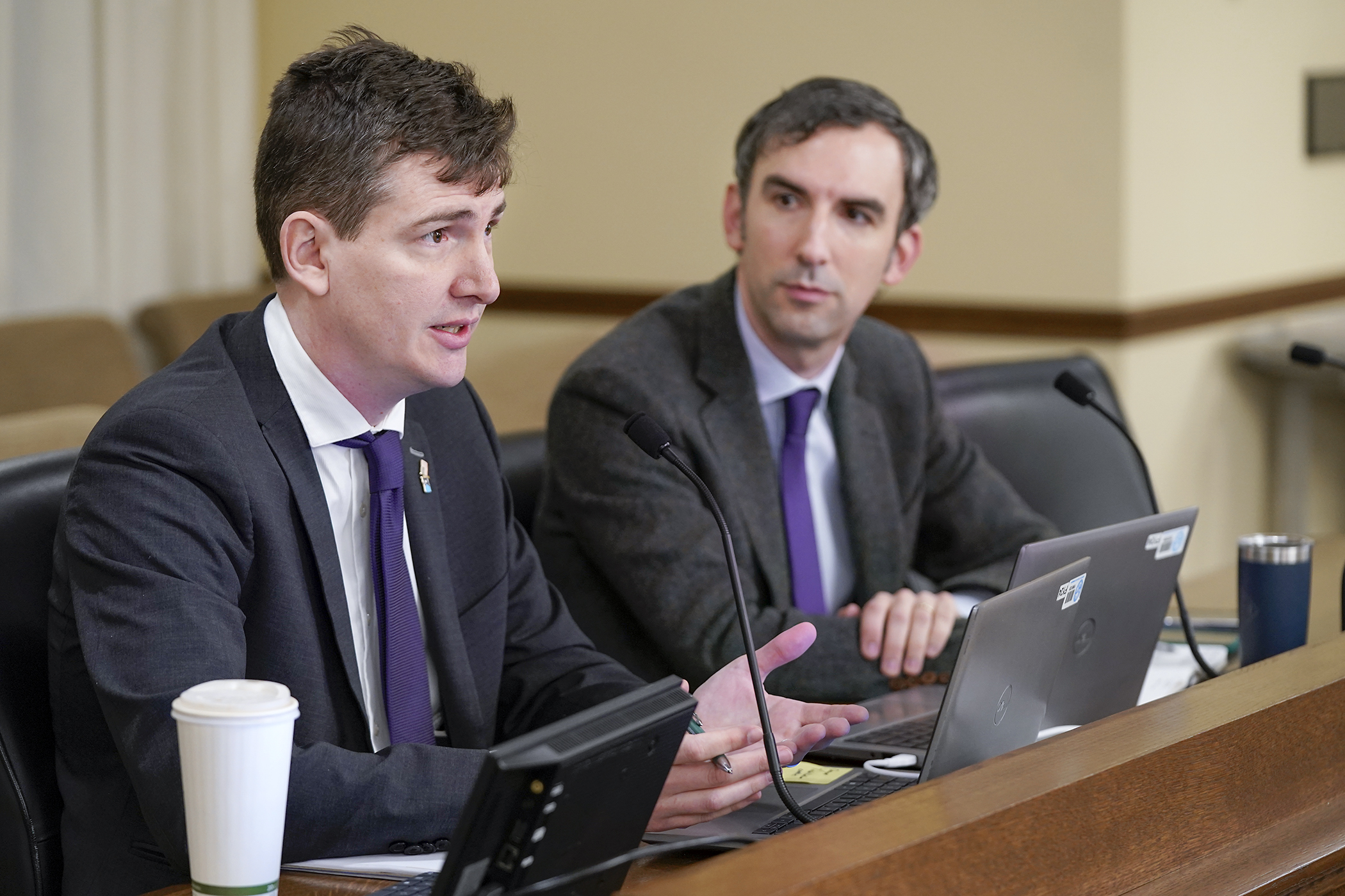
Ahead of schedule and under budget.
Those aren’t necessarily the first words that come to mind with the launch of a significant government project, but they frame the rollout of Minnesota’s Paid Leave program.
Program Director Greg Norfleet and Department of Employment and Economic Development Deputy Commissioner Evan Rowe said that the implementation came in $70 million below its budget, savings that will be redirected into the program’s trust fund.
“Just two years ago I was the first full-time employee of the paid leave division,” Norfleet told the House Workforce, Labor, and Economic Development Finance and Policy Committee Tuesday. “And under a tight timeline we were tasked with supporting Minnesotans under some of the most important times in their lives.”
Norfleet said the savings are due in part to an agile project management approach. That includes building small end-to-end test systems, gathering stakeholder feedback, and making continuous improvements. The department also drew on experience from other states, including Massachusetts, where Norfleet helped implement its paid leave program.
For example, a demonstration application was created to help the department start taking bonding leave applications Dec. 1, 2025, ahead of the Jan. 1, 2026, deadline.
[MORE: View the update presentation]
Early returns of applications and claims are in line with expectations.
As of Feb. 15, nearly 48,000 applications had been submitted, with decisions made on about 31,000. More than 20,000 have been approved. About 45% of claims are for bonding leave with a new child, 44% are for a worker’s own medical leave, 11% for caring for another person, and less than 1% each for safety or military family leave.
The average leave runs six to nine weeks, less than the maximum 12 weeks allowed by law. About two-thirds of applicants work for employers with more than 200 employees; 13% work for small employers.
The most common reason for rejecting claims is that workers are covered by private insurance; others lack required certification. Some overpayments have occurred when applicants returned to work earlier than planned.
Rep. Ben Bakeberg (R-Jordan) said he appreciates the department’s public engagement process before and after the launch. The main feedback Bakeberg has received from employers is the “aha” moment that the program applies to them.
Related Articles
Search Session Daily
Advanced Search OptionsPriority Dailies
Could 2026 retirements lead to record turnover in the House?
By Lisa Kaczke In the final weeks of the legislative session, House members not seeking re-election to the body have taken a turn at gaveling in a floor session.
It’s an opportunity to loo...
In the final weeks of the legislative session, House members not seeking re-election to the body have taken a turn at gaveling in a floor session.
It’s an opportunity to loo...
How short are the Legislature's short sessions?
By Lisa Kaczke Rep. Ron Kresha (R-Little Falls) was ready to end the session March 25, making the motion to adjourn sine die. But not enough of his colleagues shared that sentiment, defeating ...
