 Minnesota Legislature
Upgrades to ‘Oregon Trail’-era county IT systems would be prioritized under bill
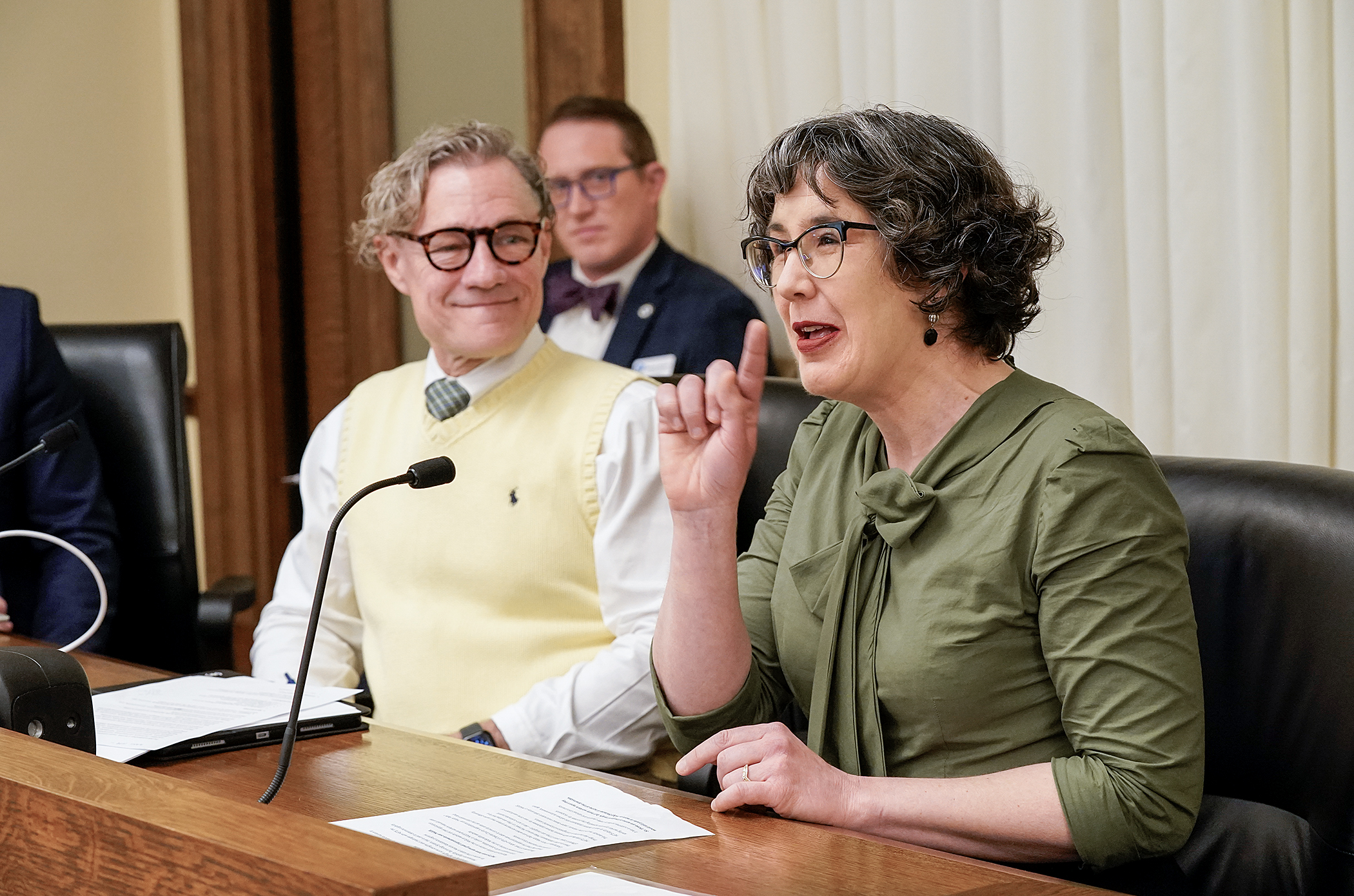
When Jeanne Holland became a Wright County commissioner, she thought county workers were joking that they had to use a green screen to process public assistance services.
They weren’t.
“The state would never accept these types of inefficiencies for their workers, and it should not be assumed that counties can,” Holland told the House Human Services Finance and Policy Committee Tuesday.
Counties have long lamented outdated “Oregon Trail”-era IT systems used to enroll Minnesotans in Medicaid, Supplemental Nutrition Assistance Program, Women Infants and Children, and other public assistance programs. Soon, President Donald Trump’s “One Big Beautiful Bill” will introduce increased complexity to these systems and legislators have said the status quo can’t accommodate that.
In addition to remedies proposed by Gov. Tim Walz and other legislators throughout the session, Rep. Danny Nadeau (R-Rogers) has a proposal to kickstart upgrades and modernizations.
He sponsors HF4675 to establish a steering committee that would provide recommendations on current human services IT systems and the development of new ones. The bill would also appropriate an undetermined amount of money in Fiscal Year 2027 to update county IT systems.
The committee laid the bill over.
Counties currently use two systems to process claims: MAXIS, launched in 1989, and METS, established in 2014.
Testifiers said both systems have issues.
MAXIS users must toggle through forms using a keypad, not a mouse, to avoid errors. Many also must take physical notes throughout the process. If an error is made, they must start over.
The policy manual for METS exceeds 1,000 pages, said Dana DeMaster, director of employment and economic assistance for Dakota County.
Workers also must navigate workarounds such as when someone has a baby or develops a disability. DeMaster said workers must reenter the information, which automatically triggers a letter to the recipient stating their insurance has been discontinued, even though it hasn’t. Counties must inform Medicaid recipients of this letter and reassure them they are still covered.
These issues make finding and retaining staff difficult, said Matt Hilgart, deputy director of government relations with the Association of Minnesota Counties. It takes two years for new county staff to become even rudimentarily fluent with these systems. “That’s like learning a new language, sometimes even harder.”
Related Articles
Search Session Daily
Advanced Search OptionsPriority Dailies
Could 2026 retirements lead to record turnover in the House?
By Lisa Kaczke In the final weeks of the legislative session, House members not seeking re-election to the body have taken a turn at gaveling in a floor session.
It’s an opportunity to loo...
In the final weeks of the legislative session, House members not seeking re-election to the body have taken a turn at gaveling in a floor session.
It’s an opportunity to loo...
How short are the Legislature's short sessions?
By Lisa Kaczke Rep. Ron Kresha (R-Little Falls) was ready to end the session March 25, making the motion to adjourn sine die. But not enough of his colleagues shared that sentiment, defeating ...
