 Minnesota Legislature
Ban on nudification technology passes House by wide margin
Artificial intelligence can be used for good, but it also can be used for evil.
Anyone can take a non-explicit photo of someone, upload it to a platform that offers an AI nudification feature and create a non-consensual, sexually explicit image or video of the person. Those images and videos often end up on the dark web, shared on social media or exchanged for money.
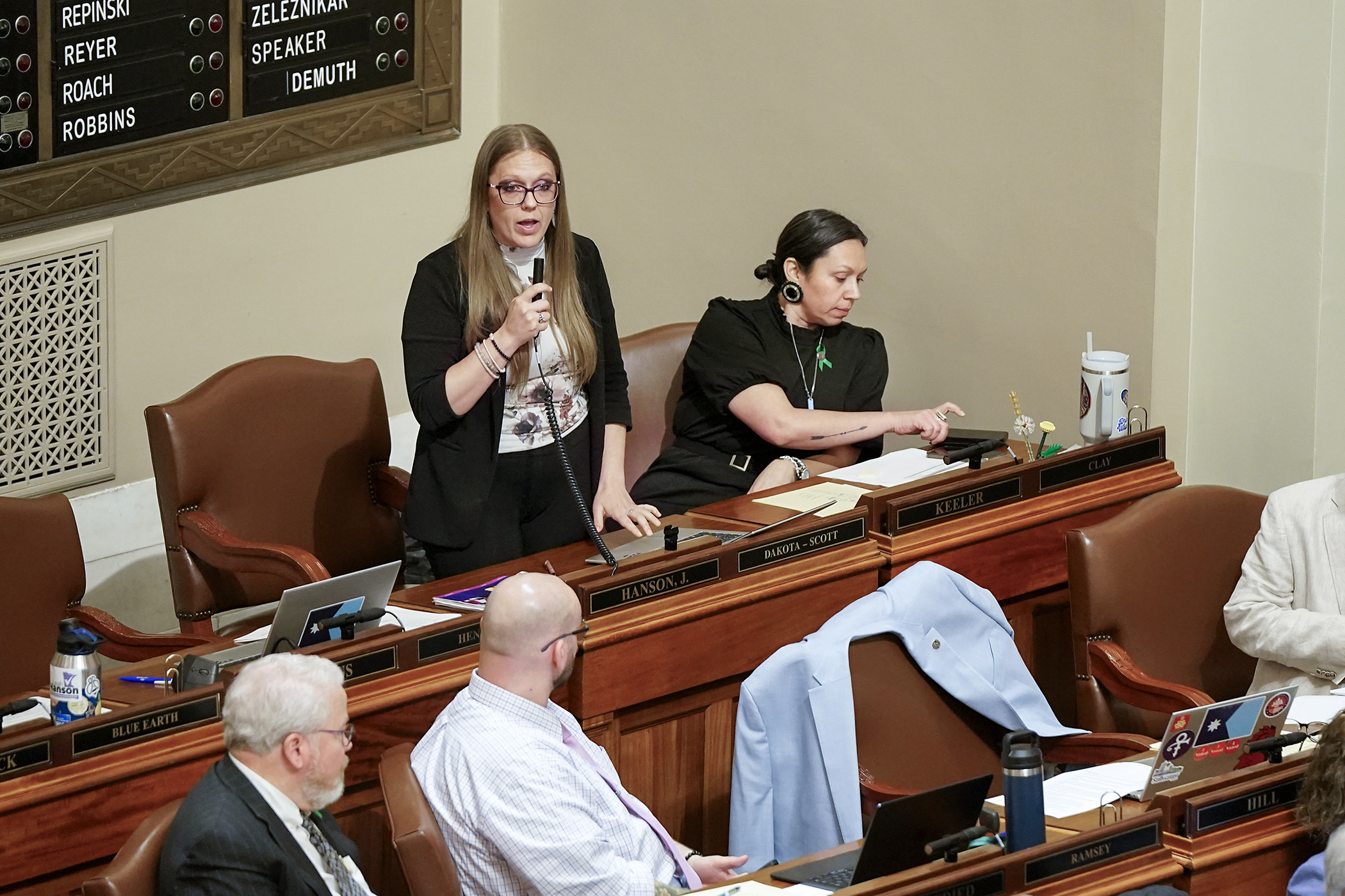
Nudification technology has “empowered and enabled pedophiles and sexual predators around the globe. It has harmed children who are made victims by their cruel peers, women who are made victims by men they have trusted for decades. And what’s worse is that these predators are increasingly profiting while wreaking this havoc,” said Rep. Jessica Hanson (DFL-Burnsville).
She sponsors HF1606 that would prohibit a user to access, download or use a website, application, software, program or other service to nudify an image or video. The advertising of any such service would also be banned, and a legal avenue is provided for the victim against the violator.
Passed 132-1 by the House Thursday, it now goes to the Senate.
“We need to ban nudification features because they allow users to create non-consensual, unauthorized deep fakes of sexually explicit content, including child sexual abuse material,” Hanson said.
Material disseminated using nudification technology is “disgusting” and “vile,” and the victims should have accountability and justice, said Rep. Drew Roach (R-Farmington). But he opposes the bill because it doesn’t get at the root cause and prevent it from happening in the future. He noted that the bill wouldn’t prevent someone from nudifying an image or video if they know how to do it themselves.
“What we’re going to do here is we’re going to attack a software, a manufacturer and instead, shifting our focus on that instead of the perpetrators of these crimes,” he said. “If we want to prevent this from happening in the future, we should go after those perpetrators with the full force of the law.”
Hanson said the bill gets at the root cause, which is the content creation, and the state does goes after perpetrators, but “the law is not strong enough to catch a lot of them.”
Earlier this session, women described to lawmakers the toll on their mental health, jobs and sense of safety caused when a man they had known for years used their personal non-explicit photos from their private Facebook pages to create pornographic images and videos of them.
It takes “an indescribable amount of courage, strength and support” for victims of nudification technology to publicly share their stories, Hanson said, thanking them for sharing their stories in effort to prevent others from having to go through the same situation.
An amendment that would require age verification for websites that contain “content harmful to minors” went down along party lines. The amendment targets pornography and applies to commercial entities where at least 33.3% of their website content is harmful to children, said Rep. Ben Bakeberg (R-Jordan), the sponsor.
The goal is to keep children from accessing adult content online and to balance protecting children with adults’ privacy rights, Bakeberg said.
Hanson opposed the amendment, saying it “muddies” a bill that addresses victims’ intimate trauma and an AI feature used without the victim’s consent to cause harm to the victim’s well-being to create violent, dangerous and traumatizing material.
“This, in practice, interrupts and deflects the focus from the issue that we’re addressing in the underlying bill,” she said.
Related Articles
Search Session Daily
Advanced Search OptionsPriority Dailies
Could 2026 retirements lead to record turnover in the House?
By Lisa Kaczke In the final weeks of the legislative session, House members not seeking re-election to the body have taken a turn at gaveling in a floor session.
It’s an opportunity to loo...
In the final weeks of the legislative session, House members not seeking re-election to the body have taken a turn at gaveling in a floor session.
It’s an opportunity to loo...
How short are the Legislature's short sessions?
By Lisa Kaczke Rep. Ron Kresha (R-Little Falls) was ready to end the session March 25, making the motion to adjourn sine die. But not enough of his colleagues shared that sentiment, defeating ...
