 Minnesota Legislature
Lawmaker says ‘aggressive’ action needed to combat use of AI, deepfakes in MN elections
Before last month’s New Hampshire presidential primary, a robocall was made purportedly from President Joe Biden telling voters they need not participate, saying, “It’s important that you save your vote for the November election.”
However, the voice was an impersonator.
To reduce the spread of misinformation that could threaten the electoral process, Minnesota was a nation leader in enacting a law last year to criminalize the use of deepfakes to influence an election.
“But since that legislation was passed the need to be aggressive in combatting deepfakes has been illustrated pretty dramatically in our presidential election,” said Rep. Zack Stephenson (DFL-Coon Rapids). “Deepfakes are here, people are doing them, and we need to be very real about how we address them.”
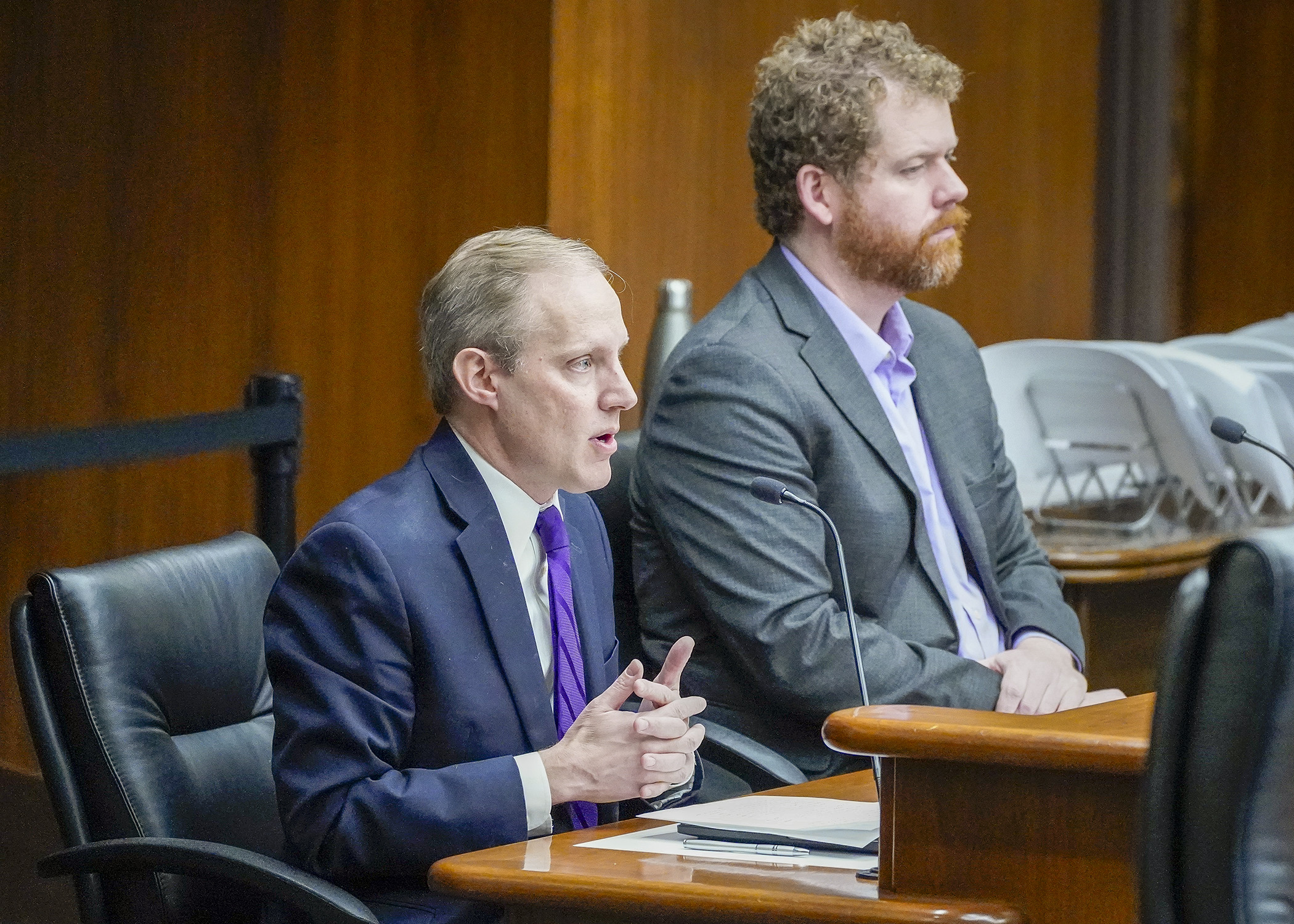
Stephenson sponsors HF3625, a bill that aims to provide updates. As amended, it was approved Wednesday by the House Elections Finance and Policy Committee on a split voice-vote and sent to the House Judiciary Finance and Civil Law Committee.
“There is no truth in advertising rule in political advertisements,” said Mary Hartnett, executive director of Clean Elections Minnesota.
Among its provisions the bill would:
- add forfeiture of nomination or office if a candidate is convicted of a deepfake crime;
- modify the deepfake definition to include video, images, or recordings that a reasonable person would “have a fundamentally and materially different understanding of the substance or meaning of the content of the speech or conduct compared to the unaltered, original version”;
- add political party nominating convention; presidential nomination primary, state, local or special primary; and special election to statute that the crime must occur 90 days before a primary or general election; and
- permit equitable relief, in addition to injunctive relief, against a person violating the law.
“AI, which powers deepfakes, is not in and of itself a threat to our elections or our democracy, but it is an emerging and powerful amplifier of existing threats, such as disinformation,” said Secretary of State Steve Simon.
To his knowledge no Joe Biden type-robocall has occurred in Minnesota, but election officials cannot bank on it not happening. “It’s a problem, it’s a challenge, but we’ve faced technological challenges before.”
Rep. Paul Torkelson (R-Hanska) unsuccessfully offered an amendment to delete the enhanced penalties. “Some of this is somewhat unexplored territory. Taking people off a ballot is weaponizing this in a way that I think is beyond what we were really thinking about last year when we voted for this.”
Stephenson said a candidate knowingly using illegal behavior to win elected office needs to be treated harshly.
Related Articles
Search Session Daily
Advanced Search OptionsPriority Dailies
Could 2026 retirements lead to record turnover in the House?
By Lisa Kaczke In the final weeks of the legislative session, House members not seeking re-election to the body have taken a turn at gaveling in a floor session.
It’s an opportunity to loo...
In the final weeks of the legislative session, House members not seeking re-election to the body have taken a turn at gaveling in a floor session.
It’s an opportunity to loo...
How short are the Legislature's short sessions?
By Lisa Kaczke Rep. Ron Kresha (R-Little Falls) was ready to end the session March 25, making the motion to adjourn sine die. But not enough of his colleagues shared that sentiment, defeating ...
