 Minnesota Legislature
Bill to ban corporate campaign donations stalls in commerce committee
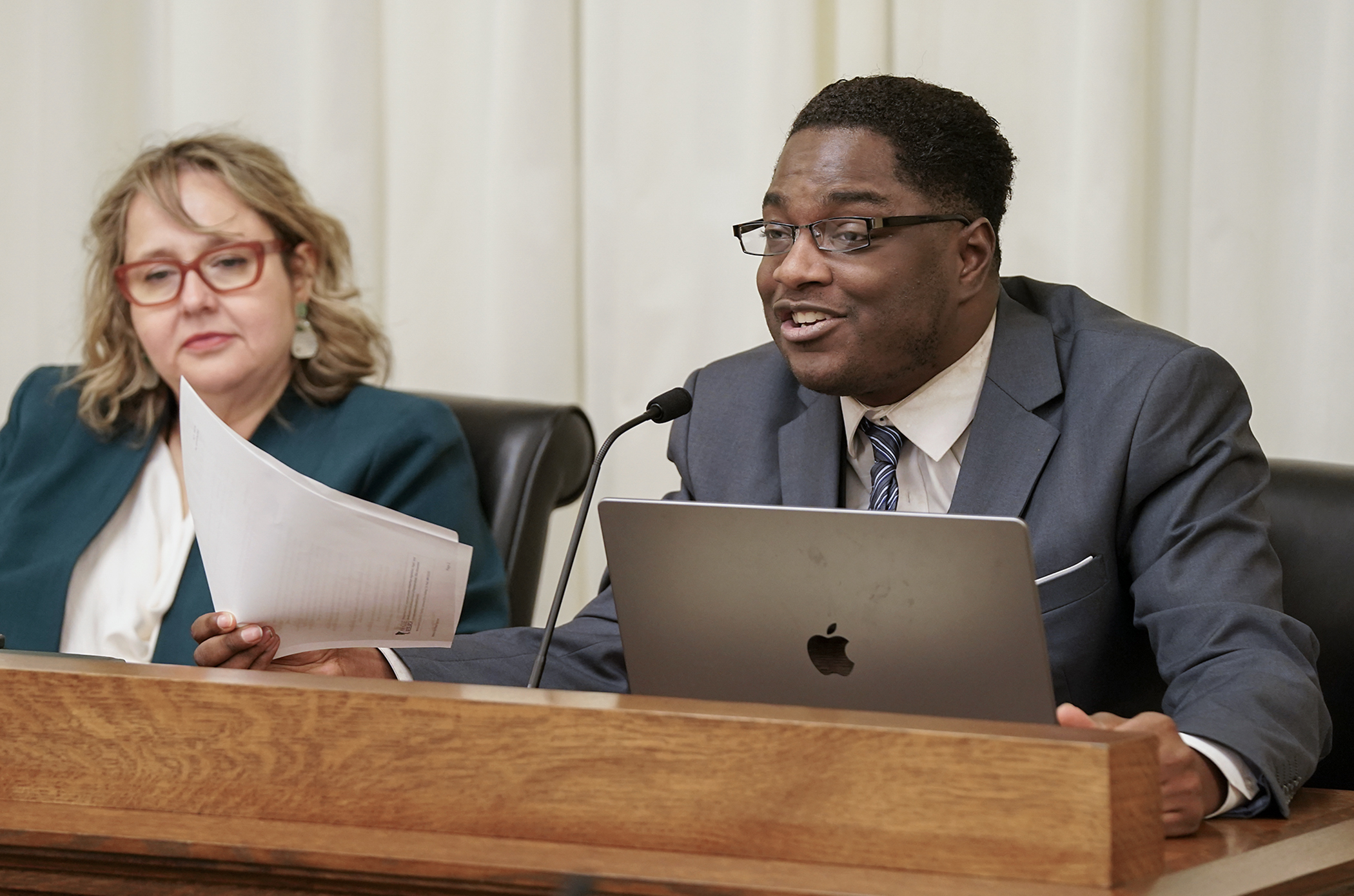
Corporate donations to candidates in Minnesota have increased exponentially since the U.S. Supreme Court’s Citizens United decision in 2010.
The court found that corporations’ expenditures in elections are a form of protected speech and since then, corporate spending in elections has increased from $144 million in 2008 to $4.5 billion in 2024, Rep. Emma Greenman (DFL-Mpls) told the House Commerce Finance and Policy Committee Thursday.
People say nothing can be done about it, she said, but corporations only have the power the state grants them by law.
So she sponsors HF3419 to prohibit entities — including business corporations, nonprofit corporations, limited liability companies and foreign entities that do business in Minnesota — from disbursing money to a candidate, political committee or statewide or local ballot measure, initiative, referendum, recall, constitutional amendment or charter amendment.
“We, the states, have the power to decide and we need to use that. It’s clear voters don’t want corporations flooding our elections with their cash, and political spending isn’t a power we have to grant corporations,” she said.
Committee Co-chair Rep. Tim O'Driscoll (R-Sartell) disagrees with Greenman’s approach to the issue. He questioned if the bill would prevent a business from putting a sign up in support or opposition of a ballot referendum.
“I think what will happen if this particular legislation becomes law, there’ll be an attempt to go back and define further what political speech is to take away the rights of an individual or a business owner to be able to support or not support something that affects that business, as well, in a community,” he said.
After an attempt to refer the bill to the House Elections Finance and Government Operations Committee failed, the commerce committee failed to send HF3419, as amended, to the House Floor on a 10-10 party-line vote.
Brian Cook, director of tax, fiscal and elections policy at the Minnesota Chamber of Commerce, called it a “constitutionally dubious bill” and recommended Minnesota wait for it to go through judicial scrutiny when another state enacts it first. He reminded the committee that after the Legislature passed a 2023 law that banned political activities by foreign-influenced corporations, the chamber successfully sued the state to block its implementation and the Legislature had to appropriate $760,000 to the Campaign Finance and Public Disclosure Board last year to cover the chamber’s legal fees.
David Fisher, an attorney and advisor for Clean Elections Minnesota, urged lawmakers’ support, saying creation of super political action committees and dark money — a donation whose original source isn’t publicly disclosed — are the result of the Citizens United decision, which has led to a “tsunami” of money coming into politics both in Minnesota and nationally.
“Individuals like me who contribute $10 or $50 or even $500 to a political campaign are simply overwhelmed, drowned out by this money tsunami and our voices are not heard,” he said.
[MORE: Read Clean Elections Minnesota letter]
During an hour of committee discussion, lawmakers largely disagreed on questions of whether political donations are free speech and a form of “buying” a politician.
Rep. Josh Heintzeman (R-Nisswa) said using phrases like dark money to conjure an image of “horrible and evil” accomplishes the goal of the bill, but doesn’t address that the bill would limit free speech.
Rep. Andy Smith (DFL-Rochester) believes that Minnesotans would say that while businesses can buy and sell in the private sector, “they cannot buy and sell politicians.” He listed several examples of bills before the House where a company could donate to a legislator’s campaign to entice them to look the other way instead of enacting law to address it. Rep. Greg Davids (R-Preston) challenged Smith to name legislators being “bought off,” saying, “Please bring them before the ethics committee and I bet you, you don’t bring one.”
Rep. Max Rymer (R-North Branch) questioned whether someone who was banned from donating by the bill could form a new organization that doesn’t fall within the prohibitions to skirt around it. Greenman responded that it wouldn’t stop all political funding, nor would it do away with campaign donation limits. She added that lawmakers’ obligation is to voters who believe the system is rigged against them, not corporations who are accustomed to political spending since 2010.
Rymer pointed out that eight of the top 10 donors in the state’s 2022 elections were aligned with the DFL.
Rep. Leigh Finke (DFL-St. Paul) responded, “When you lead with your values, you end up in a position of doing what’s right, not doing what’s right for your party. The thing that happens when you do the right thing is you don’t worry about your own financial interests.”
Related Articles
Search Session Daily
Advanced Search OptionsPriority Dailies
Could 2026 retirements lead to record turnover in the House?
By Lisa Kaczke In the final weeks of the legislative session, House members not seeking re-election to the body have taken a turn at gaveling in a floor session.
It’s an opportunity to loo...
In the final weeks of the legislative session, House members not seeking re-election to the body have taken a turn at gaveling in a floor session.
It’s an opportunity to loo...
How short are the Legislature's short sessions?
By Lisa Kaczke Rep. Ron Kresha (R-Little Falls) was ready to end the session March 25, making the motion to adjourn sine die. But not enough of his colleagues shared that sentiment, defeating ...
