 Minnesota Legislature
‘Grandparents’ Happy Hour’ receives support as panel OKs omnibus liquor bill
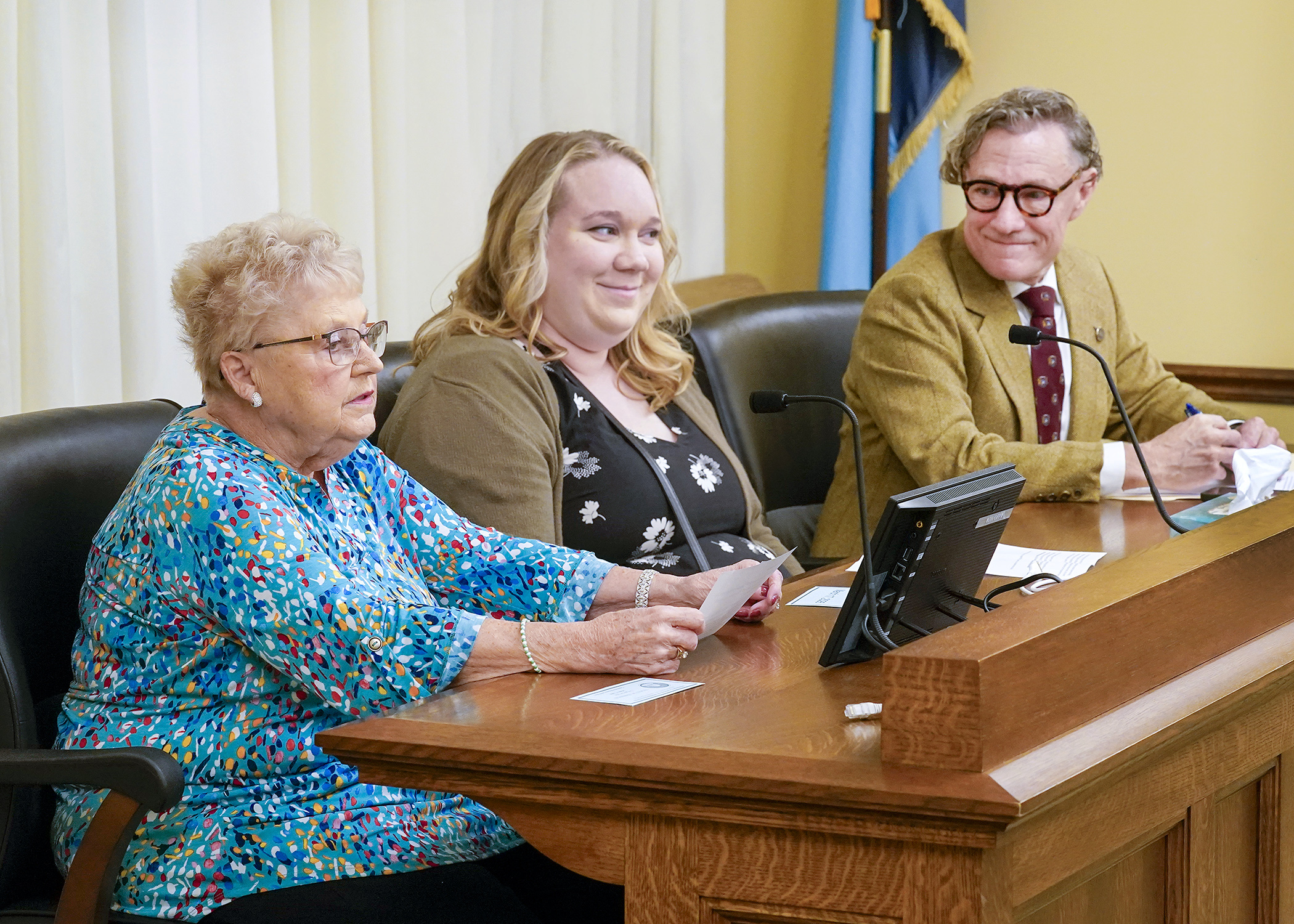
Anita LeBrun and her friends enjoy happy hour as much as other people.
Over a drink, they can reminisce about their lives, their military service, raising families and the loss of friends and celebrate “the golden phase of our lives,” said LeBrun, a resident at Amira Choice, an assisted living facility in Champlin.
But state law currently prohibits the facility from hosting a happy hour at the place they call home.
“Just because we’re older and live in assisted living doesn’t mean that we should have fewer freedoms than anyone else,” LeBrun told the House Commerce Finance and Policy Committee Tuesday.
Dubbed the “Grandparents’ Happy Hour” bill, HF4145, as amended, would allow nursing homes, boarding care homes and assisted living facilities to serve alcohol to residents and their guests during activities or events organized for residents if the facility takes several steps, including notifying the state of its intention to do so.
The bill was approved as one of several amendments added to the omnibus liquor policy bill, HF2027/SF2511*, that was approved and sent to the House Floor.
[READ: Consumer Advocates Coalition letter of support]
Rep. Danny Nadeau (R-Rogers) sponsors HF4145. He said it would provide a “narrow exception” in the state’s liquor laws for nursing homes and assisted living facilities.
“I appreciate the purpose of liquor regulations, but sometimes we recognize they go too far,” Nadeau said.
The issue of alcohol in assisted living homes came up when Amira Choice staff reached out to the city about planning a reception for a completed renovation. Executive Director Abby Dahl was surprised to learn that licensed facilities like Amira Choice weren’t allowed to coordinate a happy hour without a permit. Additionally, her city doesn’t have a liquor permit that fits their situation.
“Assisted living facilities are already accountable to over 500 regulations governing the health, safety and wellbeing of residents in our care,” Dahl said.
Explaining the sanitation and food safety protocols they are required to have in place, she said facilities also have safeguards in place to monitor medication interactions, document resident choices and supervise residents with impaired judgment. “Requiring a liquor license is simply red tape without value. It is duplicative, not protective.”
Omnibus liquor policy bill
The Senate passed the omnibus bill 53-12 in April 2025, but the commerce committee replaced the Senate language with its own delete-all amendment, and then added four amendments, that in total encompass liquor-related bills heard by the committee in 2025 and on Tuesday.
Left on the cutting room floor is the Senate’s language to expand social districts to more cities. Currently only Anoka, Shakopee and Stillwater have the legislative go-ahead to have a social district, which is an outdoor area with clearly defined boundaries where people can drink alcohol. Several bills that have been filed call for an expansion in various forms, and the committee didn’t have time to take that issue up, said Rep. Tim O'Driscoll (R-Sartell), the committee co-chair.
[WATCH: Anoka’s social district presentation]
The delete-all amendment adds provisions not in the Senate’s version that allow liquor licenses to be issued to the Erhard Community Park and to Southwest Minnesota State University for the Schwan Regional Event Center and a recreation/athletic facility.
An approved amendment would allow a liquor license to be issued to the Northern Pacific Center in Brainerd. Allowing county boards to issue seasonal on-sale licenses to resorts was also approved as an amendment. A third approved amendment would allow a manufacturer or wholesaler who sells nonalcoholic products to engage in trade practices of the nonalcoholic product industry.
Rep. Leigh Finke (DFL-St. Paul) cautioned the committee about expanding the availability of alcohol in a state with one of the highest rates of binge drinking in the country.
“As a state, we should be cautious about saying that this thing that kills 2,000 people a year in the state of Minnesota should be more available everywhere,” she said.
The House and Senate versions would both allow liquor licenses for:
- the Science Museum of Minnesota and Union Depot in St. Paul;
- an entity holding a concessions contract with the University of Minnesota Board of Regents;
- the College of Agriculture campus at the University of Minnesota;
- food halls at 501 30th Ave. S.E. and 800 LaSalle Ave. in Minneapolis;
- Minnesota State University, Mankato for sales at the Taylor Center;
- the Historic Chateau Theater in Rochester;
- Dwan Golf Course in Bloomington;
- the Baudette Arena Association;
- an anchor tenant for a food hall at The Shops at West End in St. Louis Park;
- the Springfield Area Community Center; and
- a food truck in Douglas County.
****
The following are bills that have been incorporated in part or in whole into the omnibus liquor policy bill:
- HF472 (Frederick)
- HF509 (Smith)
- HF1089 (Coulter)
- HF1121 (Duran)
- HF1262 (Franson)
- HF1668 (Gander)
- HF1741 (Kraft)
- HF1876 (Jones)
- HF2055 (Pérez-Vega)
- HF2214 (Torkelson)
- HF3382 (Swedzinski)
- HF4009 (Bliss)
- HF4304 (Heintzeman)
Related Articles
Search Session Daily
Advanced Search OptionsPriority Dailies
Could 2026 retirements lead to record turnover in the House?
By Lisa Kaczke In the final weeks of the legislative session, House members not seeking re-election to the body have taken a turn at gaveling in a floor session.
It’s an opportunity to loo...
In the final weeks of the legislative session, House members not seeking re-election to the body have taken a turn at gaveling in a floor session.
It’s an opportunity to loo...
How short are the Legislature's short sessions?
By Lisa Kaczke Rep. Ron Kresha (R-Little Falls) was ready to end the session March 25, making the motion to adjourn sine die. But not enough of his colleagues shared that sentiment, defeating ...
