 Minnesota Legislature
House legislation could alter environmental review process for large-scale livestock operations
The number of family-run farms in Minnesota has been shrinking for several decades.
Reasons for this decline are many, and for small family-run dairy farms, a major reason is competition from economically more efficient large dairy farms with thousands of cows.
Even 18,855 cows.
That’s the number of dairy cows the Riverview corporation proposes to manage in their plan to add 11,000 cows to the 7,855 cows at its West River Dairy farm near Morris in west-central Minnesota.
That’s too many cows, says Rep. Kristi Pursell (DFL-Northfield).
Large-scale dairy operations pack animals indoors, requiring manure to be collected, diluted with massive amounts of water, and stored or spread on nearby fields. As such, Pursell said they need careful monitoring to prevent environmental damage.
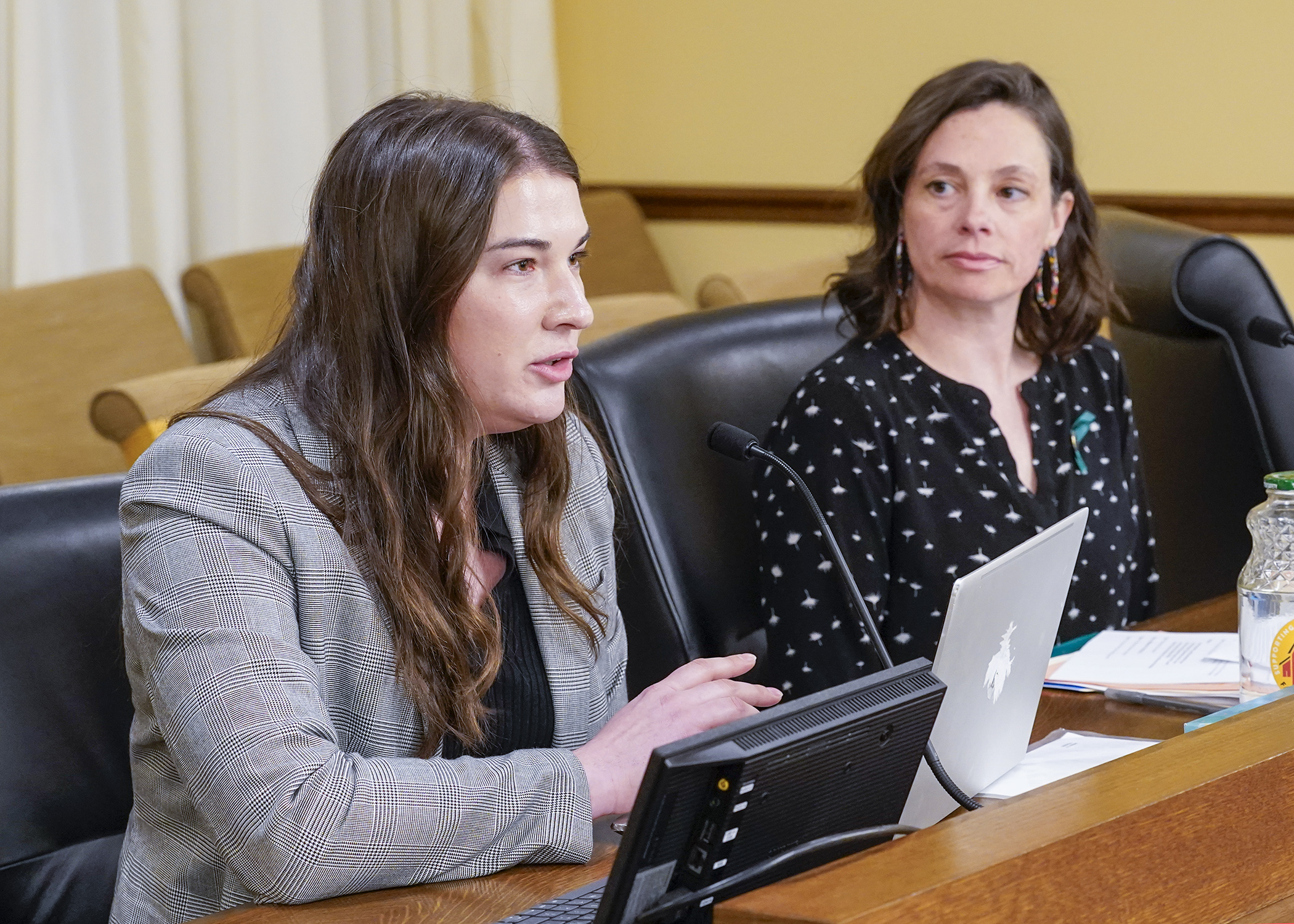
To that end, she sponsors HF3940 that, as amended, would require the preparation of an environmental impact statement for the construction of an animal feedlot facility with a capacity of 10,000 or more animal units.
It was laid over Thursday by the House Environment and Natural Resources Finance and Policy Committee.
“Let’s make sure we are protecting drinking water, runoff, and manure management on and nearby these enormous operations,” Pursell said.
Large animal operations currently go through an environmental review process that generally takes a few months and may trigger a requirement to complete an environmental impact statement that could take a couple of years. Coming at a higher cost, that would include environmental and social impacts and have community input.
The bill would require the Environmental Quality Board to amend its rules to skip the simpler environmental review process and go straight to requiring an environmental impact statement for animal feedlots of 10,000 or more animal units.
“An environmental impact statement is not about stopping projects, it’s about ensuring that we fully understand their environmental, economic and social consequences before they move forward,” said Anne Schwagerl, vice president of the Minnesota Farmers Union.
Current feedlot regulations are decades old, she said, and were written by legislators who had no way to predict the “unprecedented size” of current dairy operations.
Opponents say the proposed legislation would provide no additional environmental safeguards and would only result in cows leaving Minnesota and going to other states.
“This is a solution in search of a problem,” said Committee Co-Chair Rep. Josh Heintzeman (R-Nisswa).
Requiring an environmental impact statement would be “a major disruption” and add significant delays and significant expense, said Lucas Sjostrom, executive director of the Minnesota Milk Producers Association.
The bill would hurt small dairy farmers, he said, because stopping large farms from growing typically results in stopping smaller farms from ever reaching a sustainable scale.
Related Articles
Search Session Daily
Advanced Search OptionsPriority Dailies
Could 2026 retirements lead to record turnover in the House?
By Lisa Kaczke In the final weeks of the legislative session, House members not seeking re-election to the body have taken a turn at gaveling in a floor session.
It’s an opportunity to loo...
In the final weeks of the legislative session, House members not seeking re-election to the body have taken a turn at gaveling in a floor session.
It’s an opportunity to loo...
How short are the Legislature's short sessions?
By Lisa Kaczke Rep. Ron Kresha (R-Little Falls) was ready to end the session March 25, making the motion to adjourn sine die. But not enough of his colleagues shared that sentiment, defeating ...
