 Minnesota Legislature
Proposed redrawn Met Council district map gains committee approval
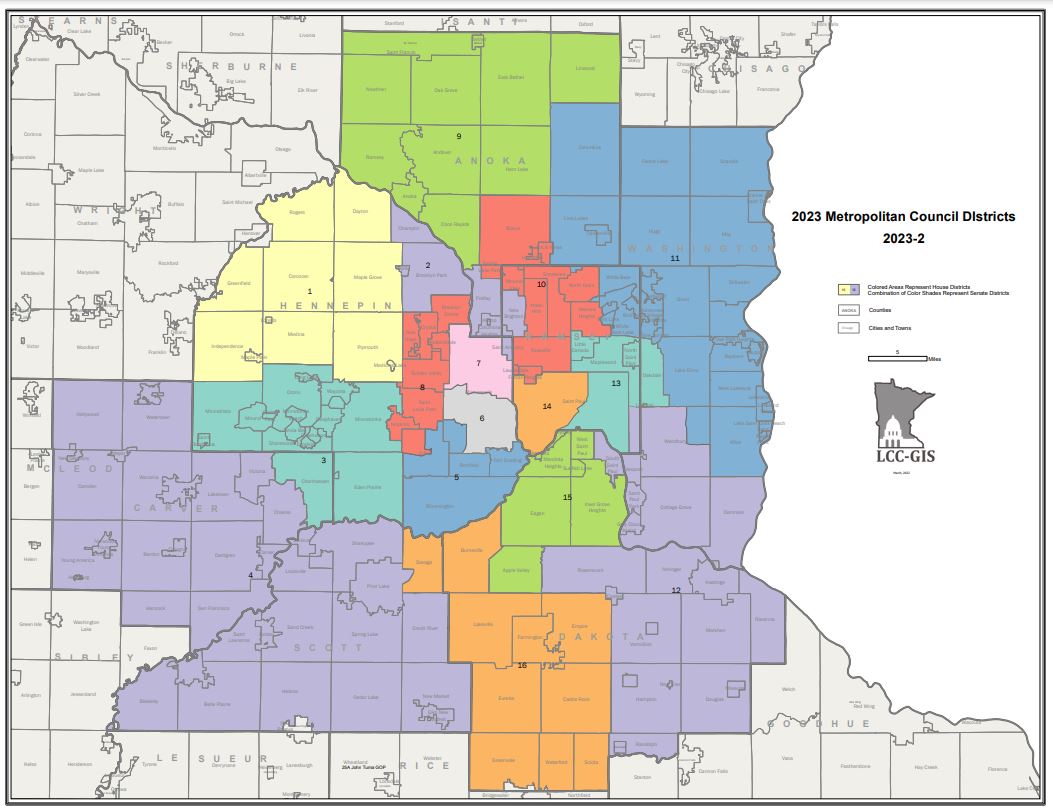
At the state level, House and Senate districts are redrawn after each decennial federal census to create districts of equal population size.
The same is true, albeit less widely known, for members of the Twin Cities metropolitan area regional policymaking body with changes to be effective in a year ending in “3.” By statute, the Legislature is charged with the task.
Approved, as amended, Friday by the House State and Local Government Finance and Policy Committee is HF2204, a redistricting map of the Metropolitan Council’s 16 districts. Its next stop is the House Floor.
Rep. Mike Freiberg (DFL-Golden Valley), the bill sponsor, said the metropolitan area population grew by 11% from the previous census, and each new district has a bit more than 197,000 people.
Related Articles
Search Session Daily
Advanced Search OptionsPriority Dailies
Could 2026 retirements lead to record turnover in the House?
By Lisa Kaczke In the final weeks of the legislative session, House members not seeking re-election to the body have taken a turn at gaveling in a floor session.
It’s an opportunity to loo...
In the final weeks of the legislative session, House members not seeking re-election to the body have taken a turn at gaveling in a floor session.
It’s an opportunity to loo...
How short are the Legislature's short sessions?
By Lisa Kaczke Rep. Ron Kresha (R-Little Falls) was ready to end the session March 25, making the motion to adjourn sine die. But not enough of his colleagues shared that sentiment, defeating ...
