 Minnesota Legislature
House proposal seeks solutions for rural vets facing long drives for mental health care
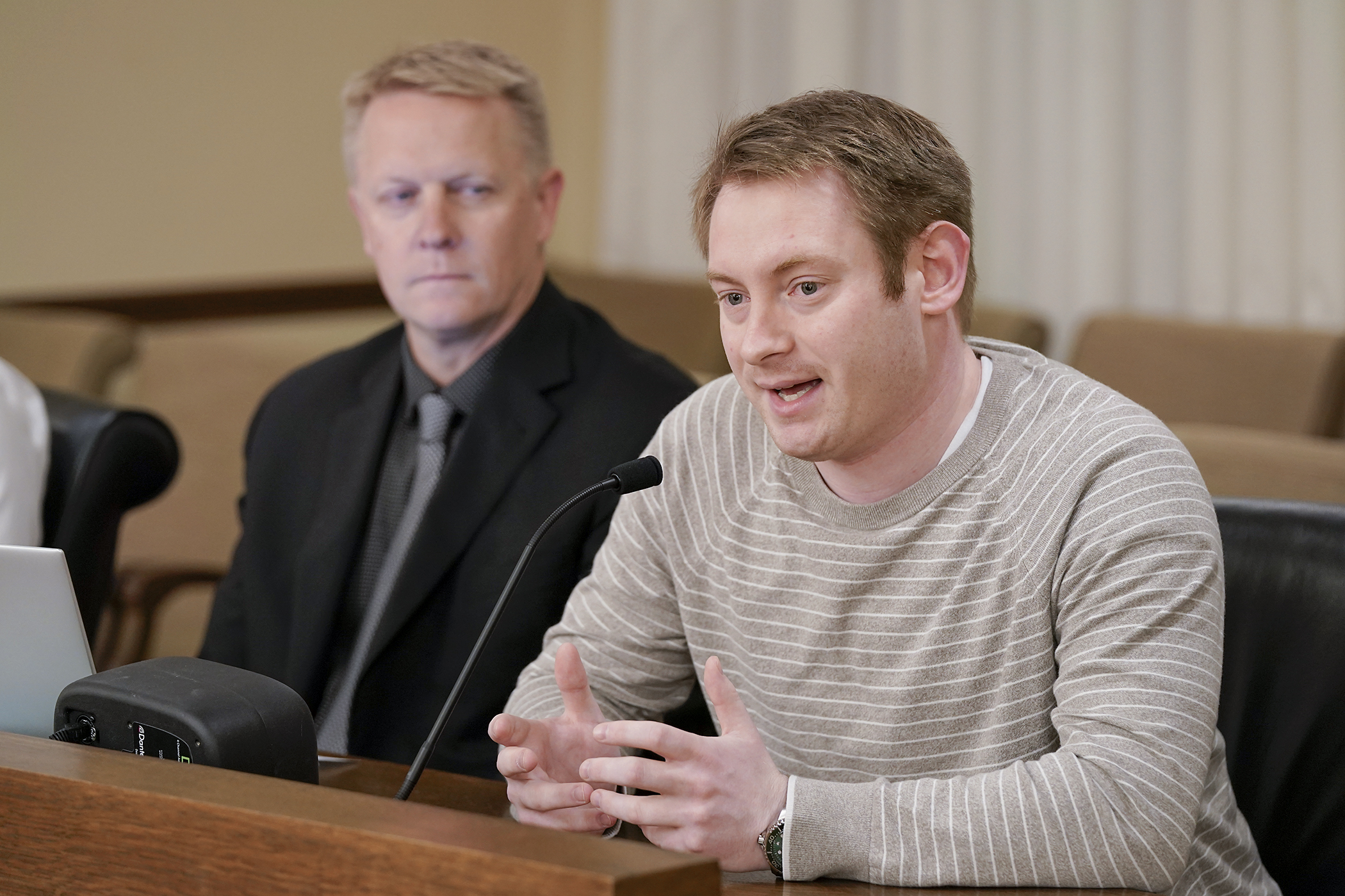
For veterans living in rural areas of Minnesota getting mental health treatment can often be far more arduous than those in the more populated areas.
They often must make a multi-hour drive to the Twin Cities metropolitan area or a larger regional center like Duluth or Fargo, North Dakota to get assistance. If they don’t want to make that trek, the waiting time to get an appointment closer to home can be lengthy.
“A three- or four-hour drive for a veteran managing PTSD, substance abuse disorder or depression is often a difference between getting care and not getting care. The delay becomes a reason to disengage entirely from treatment,” said Bryce Wood, an Air Force veteran and doctoral candidate in clinical psychology at Augsburg University.
He said studies show that veterans in rural areas are 70% less likely to receive mental health treatment and are more likely to die by suicide compared to those in urban areas.
Sponsored by Rep. Andrew Myers (R-Tonka Bay), HF4588 would require a task force be created to improve veterans’ access to mental health services in rural areas.
“I brought this forward to create a structured process bringing stakeholders, experts, veterans advocates together so the Legislature can act on recommendations moving forward … to support every Minnesota veteran no matter where they live and have that access to mental health support,” Myers told the House Veterans and Military Affairs Division Wednesday before it laid the bill over.
Jon Kelly, director of government affairs at the Department of Veterans Affairs, said the department is not fully on board, but vows to continue working with Myers. “We’d like to understand which gaps this task force would be exploring before we can support a full commissioner’s task force.”
The scope would also determine cost. The bill calls for a yet-to-be-determined appropriation.
For veterans seeking mental health help, Kelly said options are available.
“The main VA systems that serve the state of Minnesota are the Fargo-Moorehead VA, Minneapolis VA and the Twin Ports system. They all offer tele-health for mental health services. … In addition, there are community-based outpatient clinics for both in-person and tele-health in Albert Lea, Ely, Hibbing and St. James.”
And a state-funded Minnesota Service CORE program partners with Lutheran Social Services for counseling, case manager outreach, referral and education programs in Alexandria, Bemidji, Brainerd, Detroit Lakes, Duluth, Fergus Falls, Mankato, Moorhead, St. Cloud and Willmar. It, too, offers tele-health.
Related Articles
Search Session Daily
Advanced Search OptionsPriority Dailies
Could 2026 retirements lead to record turnover in the House?
By Lisa Kaczke In the final weeks of the legislative session, House members not seeking re-election to the body have taken a turn at gaveling in a floor session.
It’s an opportunity to loo...
In the final weeks of the legislative session, House members not seeking re-election to the body have taken a turn at gaveling in a floor session.
It’s an opportunity to loo...
How short are the Legislature's short sessions?
By Lisa Kaczke Rep. Ron Kresha (R-Little Falls) was ready to end the session March 25, making the motion to adjourn sine die. But not enough of his colleagues shared that sentiment, defeating ...
