 Minnesota Legislature
House OKs cannabis bill with new license, streamlined supply chain
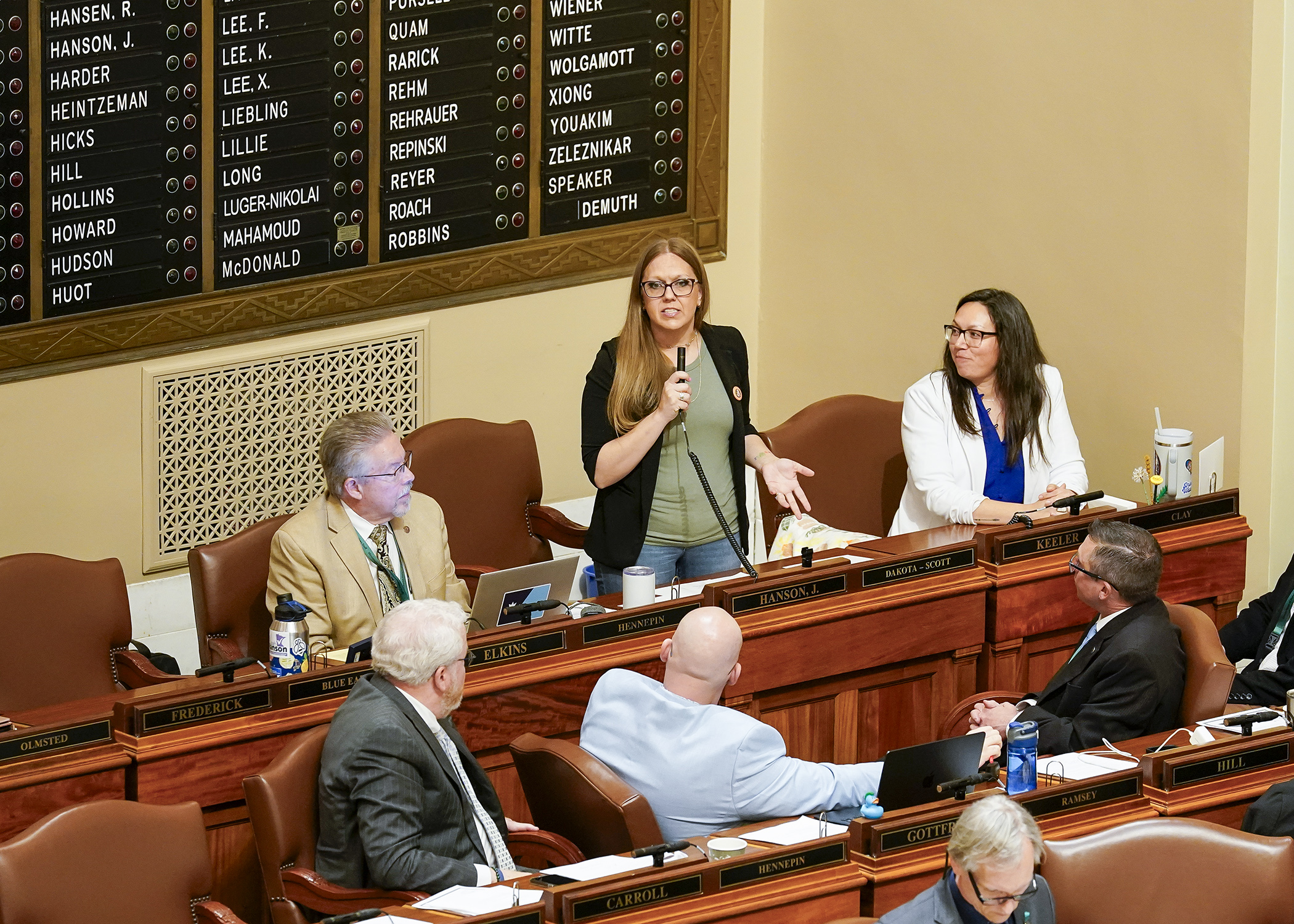
The 2026 omnibus cannabis bill would create a macrobusiness license, merge the medical and adult-use supply chains and give a helping hand to hemp businesses facing federal headwinds.
Rep. Jessica Hanson (DFL-Burnsville) said the bill she sponsors wouldn’t change what’s working in Minnesota’s cannabis industry, would tweak what the industry wants tweaked and “right sizes” medical cannabis licensing. She calls it a “collaborative effort” with more than 80 stakeholders involved and weekly meetings for the past three months.
“Everyone in this working group jumped into the trenches to help thread a needle to create the solutions that this bill will deliver today,” Hanson said.
The House passed HF4203/SF4401* by a 92-42 vote Sunday. Because it was amended by a House committee, the Senate later repassed the bill 34-33.
Rep. Nolan West (R-Blaine) praised the bill, saying regulations “have been absolutely brutal” for businesses and the bill would improve numerous areas of regulations.
“With the changes we see here, we’re fixing all the litany of problems this market has, opening up a little more opportunity so that people can succeed and we can have a thriving market that isn’t dominated by just a few players,” he said of a risky business to get into where access to capital is often a barrier.
West commended that the bill “at least opens up a door” for businesses to attract investments by allowing a person to have up to four social equity licenses holding up to 33% ownership.
For Hanson, one of the most important provisions in the bill would fix the medical cannabis section of the industry.
“Patients have been experiencing limited access on medical products at just a few companies, and these are adults and kids with chronic conditions like epilepsy, cancer, debilitating autoimmune diseases and other conditions for which cannabis can really make life-altering and life-changing impacts,” she said.
The bill would set a more sustainable future for medical cannabis instead of the unsustainable grow-and-sale ratio currently in state law, she said.
It would eliminate the medical combination business license and create a new cannabis macrobusiness license beginning Jan. 1, 2027. The ratio requiring license holders to grow a certain ratio specifically for medical cannabis purposes would be eliminated.
It would also set a new canopy limit based on data, Hanson said.
The bill would set a limit of 38,000 square feet of plant canopy for macrobusinesses that cultivate cannabis at an indoor facility. The proposed limit is a downward move from the law’s current maximum of 90,000 square feet for medical cannabis combination businesses, 60,000 square feet of which is for cannabis sold as medical cannabis flower or used in medical cannabinoid products.
West took issue with the cut to the canopy maximum, which he called “the worst part of the bill.”
Businesses have been operating under existing law and when the rules are changed “mid-stream” the state could find itself in litigation. The 90,000 number is too high, he said, but cutting it down to 38,000 is “ridiculous” and a lawsuit over that cut will cost taxpayers.
The bill would also identify medical cannabis products that patients, especially children, need. It would require macrobusinesses to keep them in stock and require other cannabis business to provide them within 24 hours of a request, Hanson said. It also prioritizes the testing of medical cannabis products.
Hemp ban
A federal ban on hemp products containing more than 0.4 milligrams of THC is coming at the end of 2026. This bill would provide hemp businesses in Minnesota with “a bridge” if they’d like to move into the cannabis industry due to the ban, Hanson said.
The bill would allow a person, cooperative or business holding a hemp business license to also hold a cannabis license.
“That’s really important given the federal government’s choice to kill a $67 billion national hemp industry, and so this is going to make sure the cannabis industry says they are welcome here,” Hanson said.
West said the bill “saves the hemp industry” by creating new products companies can sell and allows them to function in the cannabis industry if they need to.
Other provisions
As a first step in creating a psilocybin therapeutic use program, the bill would require the Office of Cannabis Management to publish and submit a report to the Legislature with recommendations on administering the program for people 21 and older with a qualifying medical condition, as well as regularly look for available federal funding to support the state in establishing a program.
Other provisions in the bill would:
- allow the sales of a “ratio hemp-infused cannabis product” that contains no more than 100 milligrams of cannabidiol, cannabigerol, cannabinol or cannabichromene per serving, a maximum of 10 milligrams of THC per serving and 200 milligrams of THC per package for edibles and a maximum of 10 milligrams of THC per serving and two servings per container for beverages;
- require the Office of Cannabis Management to complete an annual market analysis of the cannabis industry and submit an annual report to the Legislature;
- require local governments to adopt an ordinance to place reasonable restrictions on a cannabis business’ operations;
- clarify that local governments, who are required to have one business registration per 12,500 residents, to round up to the next whole number of registrations after each increment of 12,500;
- allow the Office of Cannabis Management to revoke an applicant’s qualified applicant status if it determines the applicant isn’t eligible for a license under state law and allow the office to deny final license authorization if the applicant’s location would violate local zoning ordinances or state fire or buildings codes;
- give the Office of Cannabis Management the authority to inspect unlicensed facilities where lower-potency hemp edibles are manufactured, processed or sold and allow the office to assess civil penalties to those facilities; and
- require local governments with retail registration authority that perform compliance checks to annually submit data on those checks to the Office of Cannabis Management.
Related Articles
Search Session Daily
Advanced Search OptionsPriority Dailies
Could 2026 retirements lead to record turnover in the House?
By Lisa Kaczke In the final weeks of the legislative session, House members not seeking re-election to the body have taken a turn at gaveling in a floor session.
It’s an opportunity to loo...
In the final weeks of the legislative session, House members not seeking re-election to the body have taken a turn at gaveling in a floor session.
It’s an opportunity to loo...
How short are the Legislature's short sessions?
By Lisa Kaczke Rep. Ron Kresha (R-Little Falls) was ready to end the session March 25, making the motion to adjourn sine die. But not enough of his colleagues shared that sentiment, defeating ...
