 Minnesota Legislature
Party-line vote moves omnibus agriculture policy bill forward
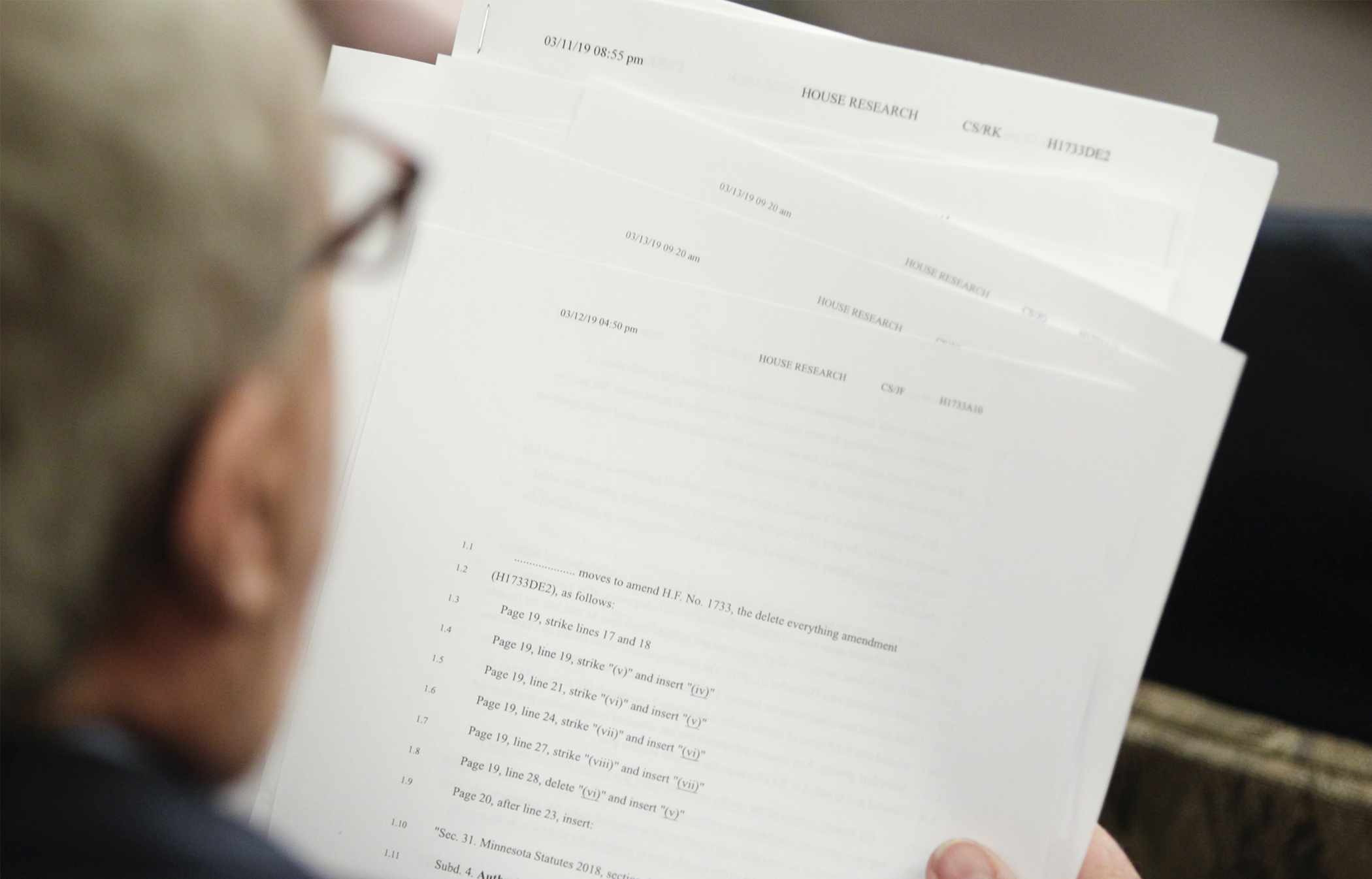
Disagreement over an amendment led to a party-line vote to move the omnibus agriculture policy bill forward Thursday.
The House Agriculture and Food Finance and Policy Division voted 8-6 to approve HF1733, as amended, and refer it to the House Ways and Means Committee. Rep. Jeanne Poppe (DFL-Austin) is the sponsor.
Contention arose over an amendment successfully offered by Rep. Brad Tabke (DFL-Shakopee). It would require euthanizing and disposing of farmed cervid herds when any of the animals test positive for chronic wasting disease, the fatal neurological disease affecting state deer populations.
Of concern to several Republicans is a requirement that the depopulation expense be borne by the deer or elk farm when state or federal funds were not available.
“I understand what you are trying to get to, and I think we can agree on the end result,” said Rep. Rod Hamilton (R-Mountain Lake).
Hamilton unsuccessfully moved an oral amendment that depopulation only be mandated when state or federal funding is available. He contends that by removing the farmer obligation, the state would be forced to allocate resources to ensure the response was consistent with other past animal disease efforts.
Tabke refuted Hamilton’s statement, saying amending the provision neutralized his intent.
Rep. Rick Hansen (DFL-South St. Paul) said testimony in other committees identified the disease as a risk to human health. “The precautionary principle says that we should do what we need to, to protect human health.”
Taxpayers already pay the cost of responding to the disease, Hansen said, with the cost of infected farm surveillance far outstripping what is paid in licensing.
Other amendments which found their way into the bill are:
- changes to the incentive program for biofuels;
- inclusion of highly contagious viral and bacterial diseases to events for which a farmer would be eligible for recovery loans; and
- a change allowing the Department of Agriculture to delegate authority regarding the use, application, or disposal of pesticides to Minnesota’s four first-class cities.
The Senate omnibus agriculture policy bill, SF1414, awaits action by the full Senate. Sen. Bill Weber (R-Luverne) is the sponsor.
Related Articles
Search Session Daily
Advanced Search OptionsPriority Dailies
Could 2026 retirements lead to record turnover in the House?
By Lisa Kaczke In the final weeks of the legislative session, House members not seeking re-election to the body have taken a turn at gaveling in a floor session.
It’s an opportunity to loo...
How short are the Legislature's short sessions?
By Lisa Kaczke Rep. Ron Kresha (R-Little Falls) was ready to end the session March 25, making the motion to adjourn sine die. But not enough of his colleagues shared that sentiment, defeating ...
