 Minnesota Legislature
Tax credits go under the microscope in commission report
Minnesota has a lot of tax credits, deductions and exemptions that allow residents to keep more of their own money come tax time. But do all those credits accomplish the purpose for which they were created?
That question led to the formation of the Tax Expenditure Review Commission in 2021. Each year, a group of legislators and the commissioner of revenue get together between legislative sessions to examine a handful of these measures, called “tax expenditures,” that result in reduced tax revenue and decide if they’re working.
The commission’s mission is to evaluate the effectiveness of each of the state’s 327 tax expenditures (as of the commission’s 2024 report) at least once every 10 years.
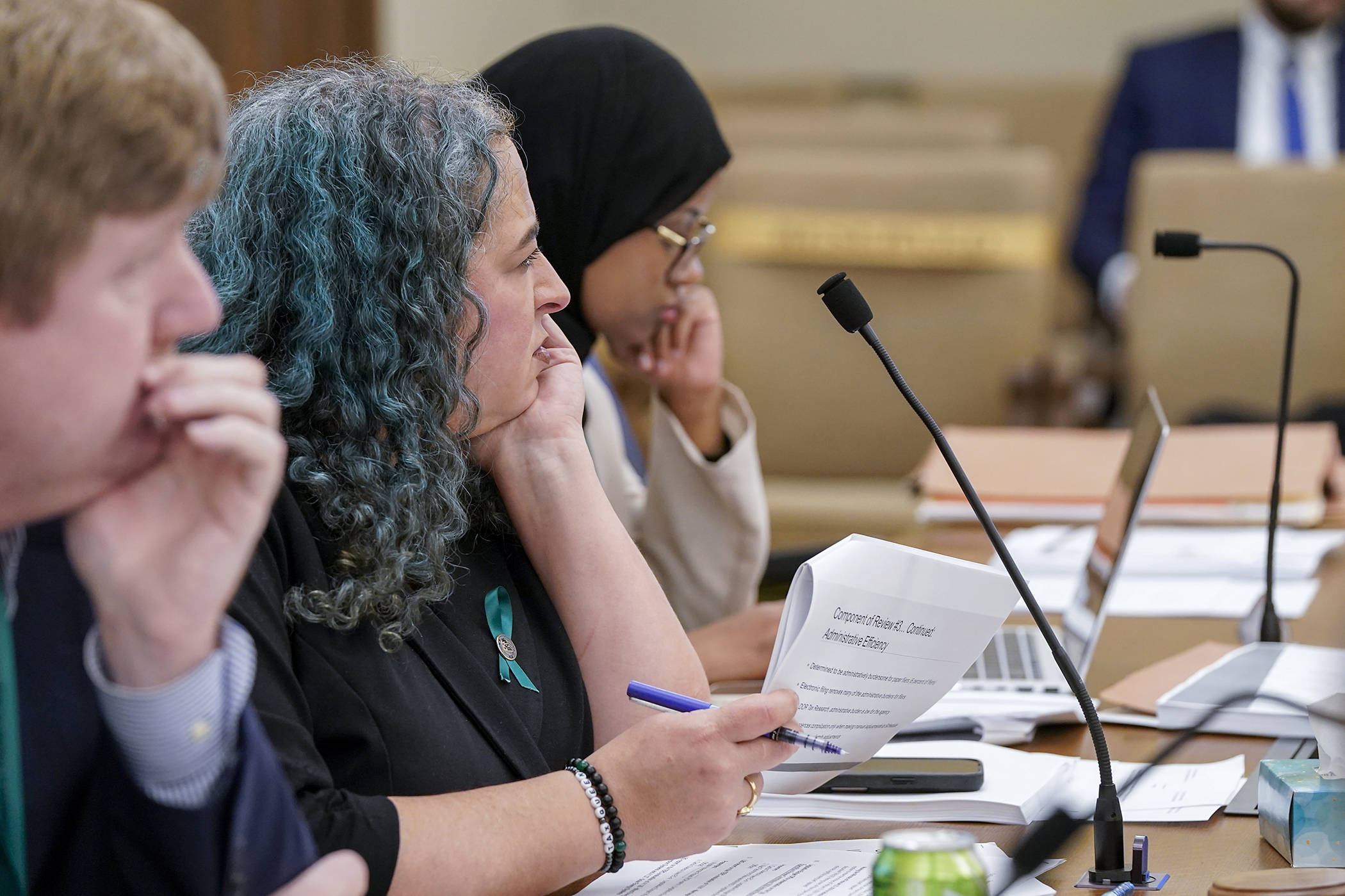
On Thursday, the House Taxes Committee received a briefing on the 2025 annual report, which took a look at 15 of these expenditures and recommended modifications.
“It constitutes billions of dollars of spending,” said the taxes committee’s co-chair, Rep. Aisha Gomez (DFL-Mpls). “And it’s a part of the budget that doesn’t receive a lot of scrutiny.”
The expenditures were grouped into five categories.
The Marriage Credit: Created to try to circumvent “the marriage penalty” — which caused some married couples to pay more in taxes if they’re married filing jointly, as opposed to filing separately — this tax credit took care of that problem for approximately 59% of filers, with a cumulative impact of $139,720 in revenue. Still, some receive overpayments, some underpayments, and the credit’s non-refundability means that some couples don’t realize the credit’s full benefit.
Tax exemptions for solar energy systems and wind energy conversion systems: Yes, these exemptions were designed to promote implementation of renewable energy, and, yes, the contribution of wind and solar to the state’s electricity fuel generation has increased over the last several decades. But what explicit role the tax expenditures played in that process is unclear.
Credits for small brewers, small wineries and microdistilleries: The idea was to increase the development and survivorship of those in the small-scale alcohol industry, and those who participated have said in surveys that the credits definitely helped their businesses survive. And Minnesota businesses in these industries have out-survived counterparts in neighboring states. But the report concludes that the estimated amount of tax revenue forgone by the state is more than the estimated economic impact attributed to the tax credits.
Lawful gambling exclusions and exemptions: The idea was to simplify the tax requirements for charities hosting bingo and small raffles as fundraisers and direct a higher amount of net raffle proceeds to relieve the effects of poverty, homelessness or disability. The commission concluded that these missions are being accomplished.
Heating fuel and utility service exemptions: The objective is to lessen the effective tax burden of lower-income households and reduce the regressivity of the sales and use tax. The commission concluded that the three tax credits reduce the regressivity of sales tax and use tax. On average, Minnesota households using the credit had $109 in tax savings in 2024, while higher-income households receive more monetary benefits than lower-income households and a larger percentage of the change in tax share. In 2024, households making less than $25,000 saved on average $68, while households making above $127,000 saved on average $183.
In addition to being the taxes committee co-chair, Rep. Greg Davids (R-Preston) is also co-chair of the Tax Expenditure Commission with Rep. Esther Agbaje (DFL-Mpls). He appreciated the effort that went into the report.
“It’s a lot of money,” he said. “So I’m really excited about the attention to this we’ve put forward over the past few years.”
Related Articles
Search Session Daily
Advanced Search OptionsPriority Dailies
Could 2026 retirements lead to record turnover in the House?
By Lisa Kaczke In the final weeks of the legislative session, House members not seeking re-election to the body have taken a turn at gaveling in a floor session.
It’s an opportunity to loo...
In the final weeks of the legislative session, House members not seeking re-election to the body have taken a turn at gaveling in a floor session.
It’s an opportunity to loo...
How short are the Legislature's short sessions?
By Lisa Kaczke Rep. Ron Kresha (R-Little Falls) was ready to end the session March 25, making the motion to adjourn sine die. But not enough of his colleagues shared that sentiment, defeating ...
