 Minnesota Legislature
Supporters say renovations to ‘Starter Homes Act’ would expand housing options, allow city choice
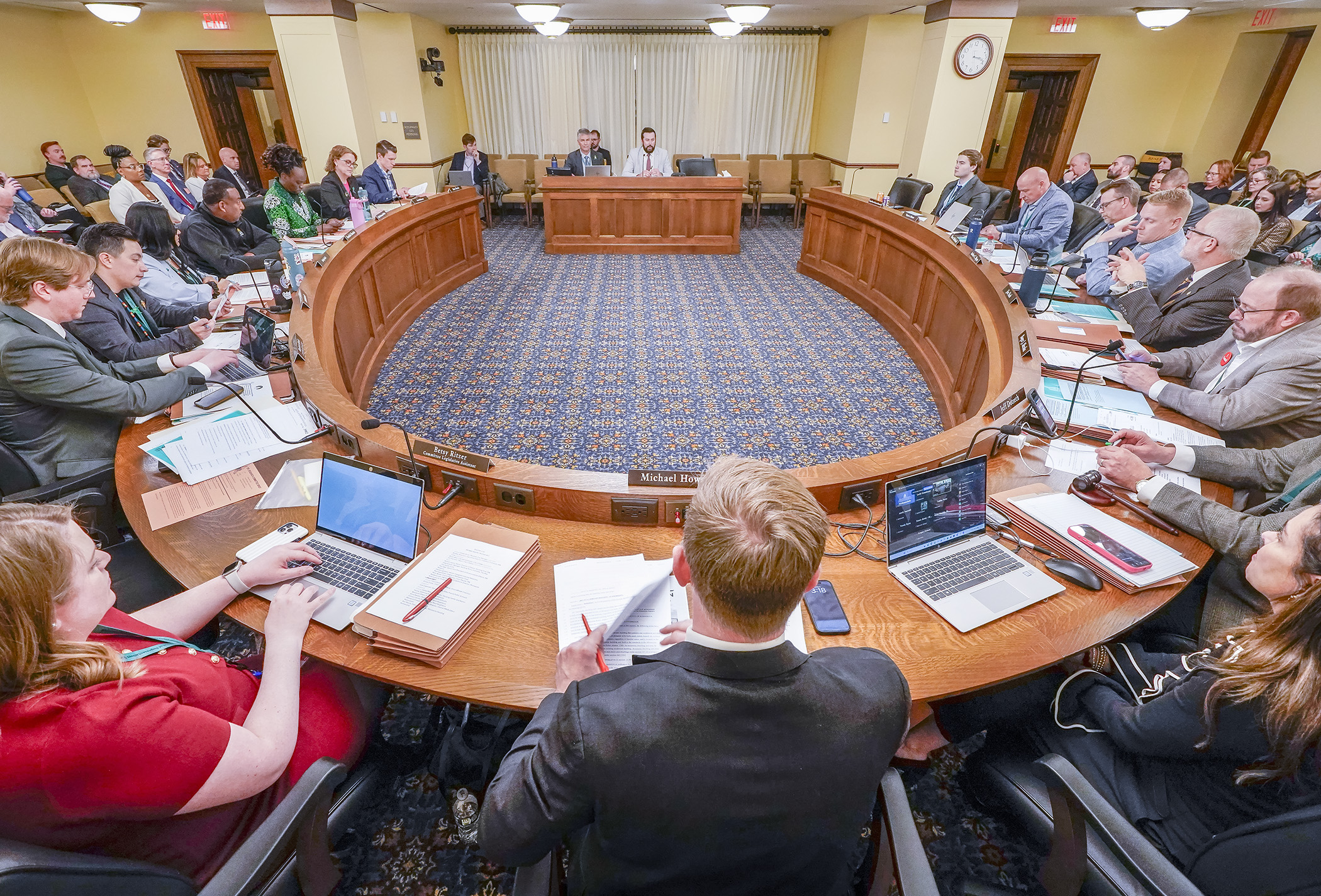
Supporters of statewide zoning reforms say Minnesota’s chronic housing shortage is driven in part by complex local regulations that delay permits, add to land costs, and kill viable housing projects.
Opponents argue that rules sometimes labeled as “red tape” are the tools cities need to responsibly manage growth and efforts to limit local zoning ordinances amount to a “one-size-fits-all” state mandate.
Attempting to address some of those issues is an updated version of the Starter Homes Act, which was heard by the House Housing Finance and Policy Committee Tuesday on an informational basis.
Sponsored by Rep. Spencer Igo (R-Wabana Township), HF3895 aims to create more housing choices where cities choose to put them and includes a “menu” of zoning reforms that cities could implement.
“This bill is the exact opposite of one-size-fits-all,” said Rep. Michael Howard (DFL-Richfield). “It’s more of a do-it-your-own-way.”
Cities would choose areas for higher density housing in residential zones and allow residences in some of their commercial areas.
Under the bill, cities would have to:
• allow accessory dwelling units, such as mother-in-law suites or tiny homes, in residential areas;
• drop certain local design standards such as requiring porches, shutters, or minimum garage size; and
• prohibit mandating amenities that require a homeowners’ association.
The bill also outlines 11 possible zoning changes for cities, including eliminating minimum parking rules, allowing 8-plexes or offering subsidies. Large cities would need to adopt six of the options, mid-sized cities four, and smaller cities three.
Rep. Larry Kraft (DFL-St. Louis Park), who presented the bill with Igo, said a key provision is that cities could not be forced to allow developments where infrastructure won’t allow or where they might be restricted to preserve the public health, the environment or scenic areas. “We’ve been pushed by cities very hard if this is implementable.”
[MORE: Read testimony here, here and here]
However, many city leaders oppose preemptions in the bill. They say implementation would require staff expense or paying outside consultants. Local officials also argue that market forces, not zoning rules alone, are the primary drivers of housing costs.
Hugo City Administrator Bryan Bear said his city already allows small lots, missing middle housing and accessory dwelling units. Builders haven’t responded with more affordable housing. In fact, some are converting duplexes into single family homes. Hugo’s laws allowing smaller lot sizes has not resulted in more affordable homes, but huge homes on smaller lots.
Moreover, he said, the bill would shift decisions away from communities to for-profit builders and developers.
Related Articles
Search Session Daily
Advanced Search OptionsPriority Dailies
Could 2026 retirements lead to record turnover in the House?
By Lisa Kaczke In the final weeks of the legislative session, House members not seeking re-election to the body have taken a turn at gaveling in a floor session.
It’s an opportunity to loo...
In the final weeks of the legislative session, House members not seeking re-election to the body have taken a turn at gaveling in a floor session.
It’s an opportunity to loo...
How short are the Legislature's short sessions?
By Lisa Kaczke Rep. Ron Kresha (R-Little Falls) was ready to end the session March 25, making the motion to adjourn sine die. But not enough of his colleagues shared that sentiment, defeating ...
