 Minnesota Legislature
Companies may be banned from using personal data to set different prices for customers
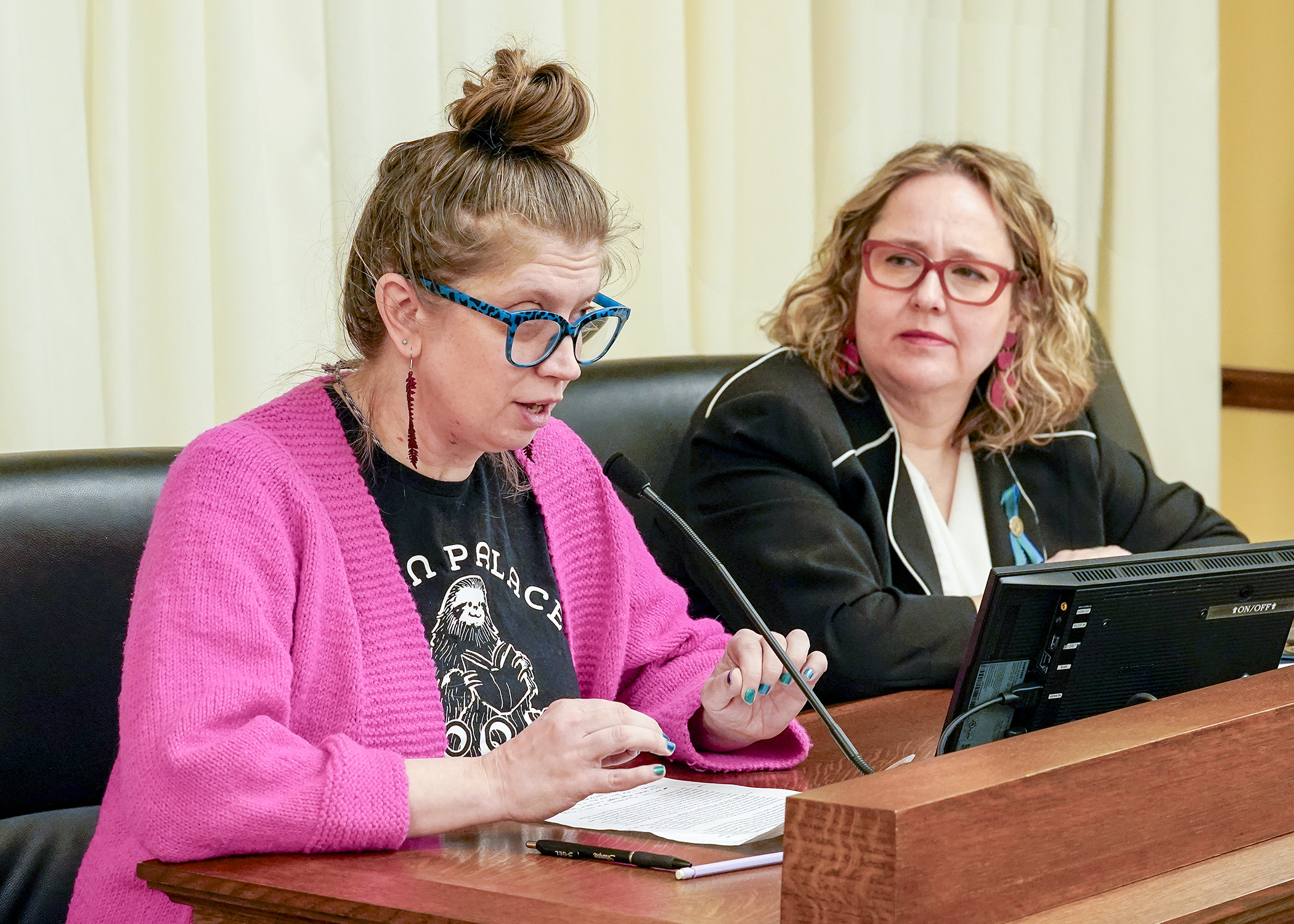
Avant Garden Bookstore in Anoka has built goodwill in the community through events and fundraising, but the independent bookseller can’t compete with the big box stores and online retailers.
“Every day, we encounter readers who are delighted to find our store and enjoy the browsing experience and exposure to titles they likely would not have discovered if it were not for us. It is very common to have an in-depth conversation about their discovery in the hopes they will buy the book from us and support our business, only to have them take a picture of it instead and find it available for sometimes less than cost on Amazon,” owner Jenni Hill said.
Hill said companies’ use of surveillance pricing could further hurt her business.
Surveillance pricing is when a company uses data collected on customers to individualize prices, essentially setting different prices for different customers buying the same product instead of the same price for all customers. Concerns about the practice raised before the House Commerce Finance and Policy Committee Wednesday included companies setting higher prices for some customers to increase their profits and the lack of transparency for consumers on the true price of a product.
[READ: Small Business Majority letter]
Rep. Emma Greenman (DFL-Mpls) is sponsoring HF3794 to ban surveillance-based price and wage discrimination. Companies would be prohibited from using data obtained through observation, inference or surveillance to set a price for a customer or a wage for an employee. Companies would still be able to offer discounts for loyalty or membership programs or to certain groups, such as seniors or veterans.
It was laid over, as amended, for possible inclusion in an omnibus bill.
While DFLers on the committee spoke in favor of the bill, Co-Chair Rep. Tim O'Driscoll (R-Sartell) said Republicans see value in the prohibition but have concerns it could have unintended consequences for businesses.
Jonathan Cotter, director of health care and commerce policy at the Minnesota Chamber of Commerce, said the organization has “significant concerns” about the bill. The terms are broad enough to ban routine behavioral and transaction information used in business analytics. In practice, he said, it could be challenging for businesses to determine which tools used in modern business operations qualify under the bill.
The bill’s wage section also oversteps into workplace management, Cotter said. Employers need autonomy to make staffing decisions and provide wages that are appropriate for and responsive to workplace needs.
“Workplaces in Minnesota already are heavily regulated. The chamber continues to oppose the increasing number of workplace mandates by the Legislature to interfere with this dynamic,” he said.
[READ: SEIU Local 26 letter]
Additionally, the committee laid over HF3408, sponsored by Rep. Carlie Kotyza-Witthuhn (DFL-Eden Prairie), that has a narrower scope of a surveillance-pricing ban only for online and brick-and-mortar grocery stores.
Testifying on both bills, Will Hagen, vice president of the Minnesota Retailers Association, said surveillance pricing isn’t a widespread practice in the state and competitive pricing to bring in customers is the protection against businesses using surveillance pricing.
At times, the committee’s discussion on the two bills turned to the larger question about the point at which the Legislature should step in to regulate new technology trends that may not be happening yet in Minnesota.
“We’re told it’s not happening, we don’t end up regulating it and then we spend 10 years trying to catch up to technology that is out of control,” said Rep. Leigh Finke (DFL-St. Paul).
[READ: TechNet letter]
Rep. Scott Van Binsbergen (R-Montevideo) said he doesn’t see surveillance pricing happening and asked for specific examples.
“That’s exactly what they want you to think, right?… Some healthy skepticism is just fine when we’re looking at preventing harm, but that is what the corporations want you to think,” Kotyza-Witthuhn replied. She said the proposed bans are about protecting local businesses against corporations who have the money and access to the technology needed for surveillance pricing.
In addition to a Consumer Report study that found different prices for different customers at a St. Paul Target on Instacart, Co-Chair Rep. Erin Koegel (DFL-Spring Lake Park) said the DFL committee administrator and his twin brother did an experiment where they ordered an Uber from the same house to Mall of America. One brother’s price was consistently $9 more for the trip, she said.
Related Articles
Search Session Daily
Advanced Search OptionsPriority Dailies
Could 2026 retirements lead to record turnover in the House?
By Lisa Kaczke In the final weeks of the legislative session, House members not seeking re-election to the body have taken a turn at gaveling in a floor session.
It’s an opportunity to loo...
In the final weeks of the legislative session, House members not seeking re-election to the body have taken a turn at gaveling in a floor session.
It’s an opportunity to loo...
How short are the Legislature's short sessions?
By Lisa Kaczke Rep. Ron Kresha (R-Little Falls) was ready to end the session March 25, making the motion to adjourn sine die. But not enough of his colleagues shared that sentiment, defeating ...
