 Minnesota Legislature
Energy committee zaps bill to limit pay for utility executives
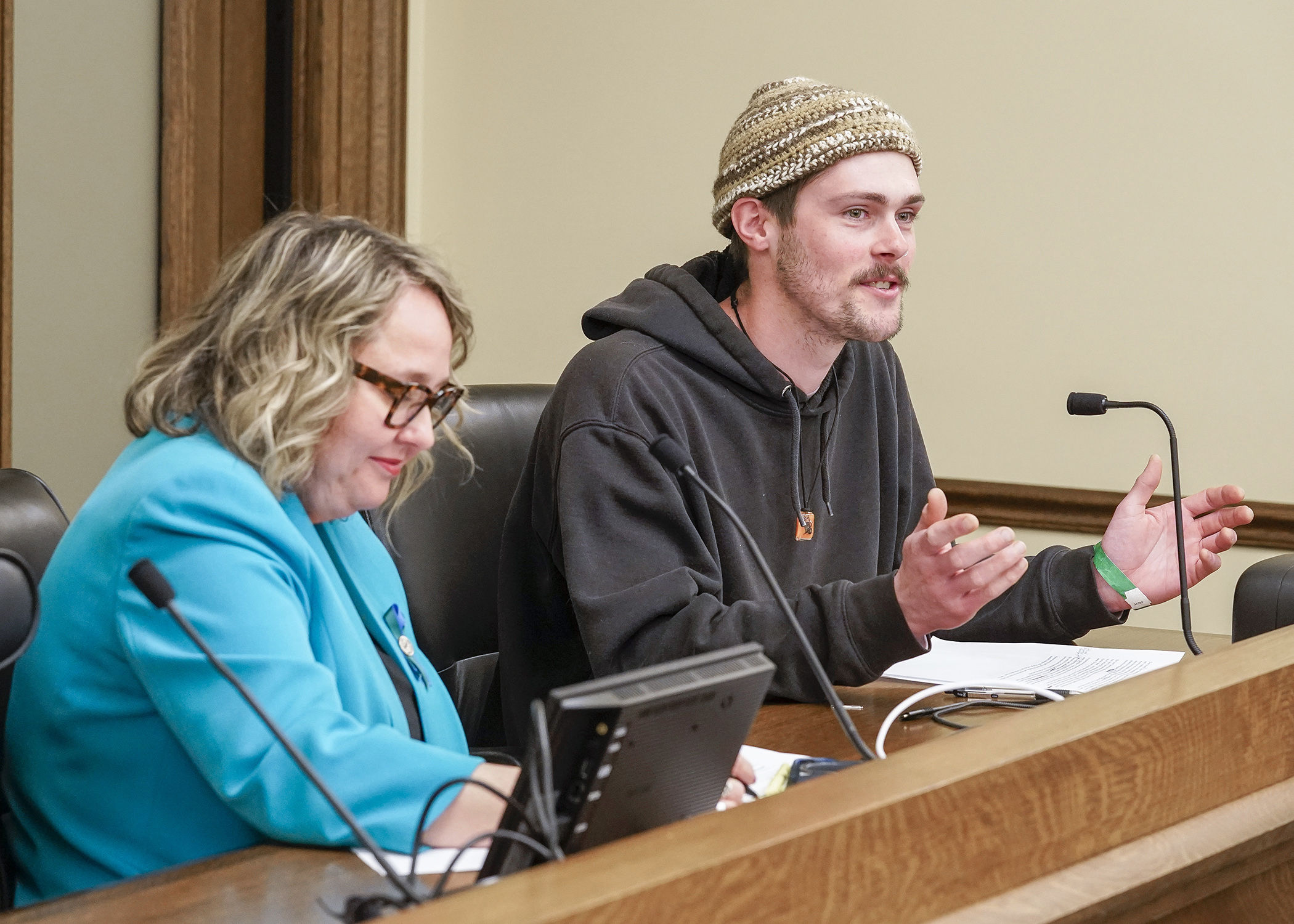
Should the executive who oversees the utility that provides your electricity or natural gas be paid more per year than the governor of Minnesota?
Rep. Emma Greenman (DFL-Mpls) thinks not.
She sponsors HF76 that, as amended, would prohibit a public utility doing business in the state from using money recovered from ratepayers to compensate any of its 10 highest-paid officers or employees at a level exceeding the governor’s pay package of $127,629 annually, although the official salary for the office is set to increase to $200,000 this July.
“The bill is just common sense,” Greenman said. “Why should Minnesota ratepayers be on the hook for paying more to a private, for-profit executive than to our own chief executive who voters get to elect?”
But the bill fizzled via a tied party-line vote Tuesday by the House Energy Finance and Policy Committee.
The changes would apply to five public utilities with more than 120,000 retail customers each:
- CenterPoint Energy;
- Xcel Energy;
- Minnesota Power;
- Minnesota Energy Resources; and
- Otter Tail Power Company.
“This legislation would in no way restrict a utility’s ability to compensate its executives at whatever level it deems appropriate,” said Karlee Weinmann, research and communications manager for the Energy and Policy Institute. “Any utility could still pay any of its employees at any level of its choosing, using financial resources other than ratepayer money.”
“Historically, the Public Utilities Commission has permitted only a small portion of executive compensation to be recovered from customers,” said Jim Pearson, director of regional government affairs for Xcel Energy. “Xcel Energy serves across eight states. For many of our executives, their compensation is also shared over multiple jurisdictions. This means that we generally ask Minnesota regulators to include only a percentage of the costs associated with our executive team.”
Rep. Shane Mekeland (R-Clear Lake) clarified with Greenman that the Public Utilities Commission already has the power to impose restrictions detailed in the bill, and asked why it shouldn’t be left to their jurisdiction.
“It took two years to reach a decision for 2024,” Greenman replied. “This is us doing our job as lawmakers and just setting a clear, bright line rule.”
Rep. Athena Hollins (DFL-St. Paul) objected to Xcel’s chief executive officer earning more than the CEO of a publicly traded Fortune 500 company like Thomson Reuters and “108.3 times more than the average lineman.”
But the committee’s co-chair, Rep. Chris Swedzinski (R-Ghent), doesn’t see a need for the proposal.
“I appreciate the bill as it’s written. But it sounds like the PUC does kind of handle this when it comes to executive compensation and rates.”
Related Articles
Search Session Daily
Advanced Search OptionsPriority Dailies
Could 2026 retirements lead to record turnover in the House?
By Lisa Kaczke In the final weeks of the legislative session, House members not seeking re-election to the body have taken a turn at gaveling in a floor session.
It’s an opportunity to loo...
In the final weeks of the legislative session, House members not seeking re-election to the body have taken a turn at gaveling in a floor session.
It’s an opportunity to loo...
How short are the Legislature's short sessions?
By Lisa Kaczke Rep. Ron Kresha (R-Little Falls) was ready to end the session March 25, making the motion to adjourn sine die. But not enough of his colleagues shared that sentiment, defeating ...
