 Minnesota Legislature
State eyes $3 million study to harness heat from wastewater
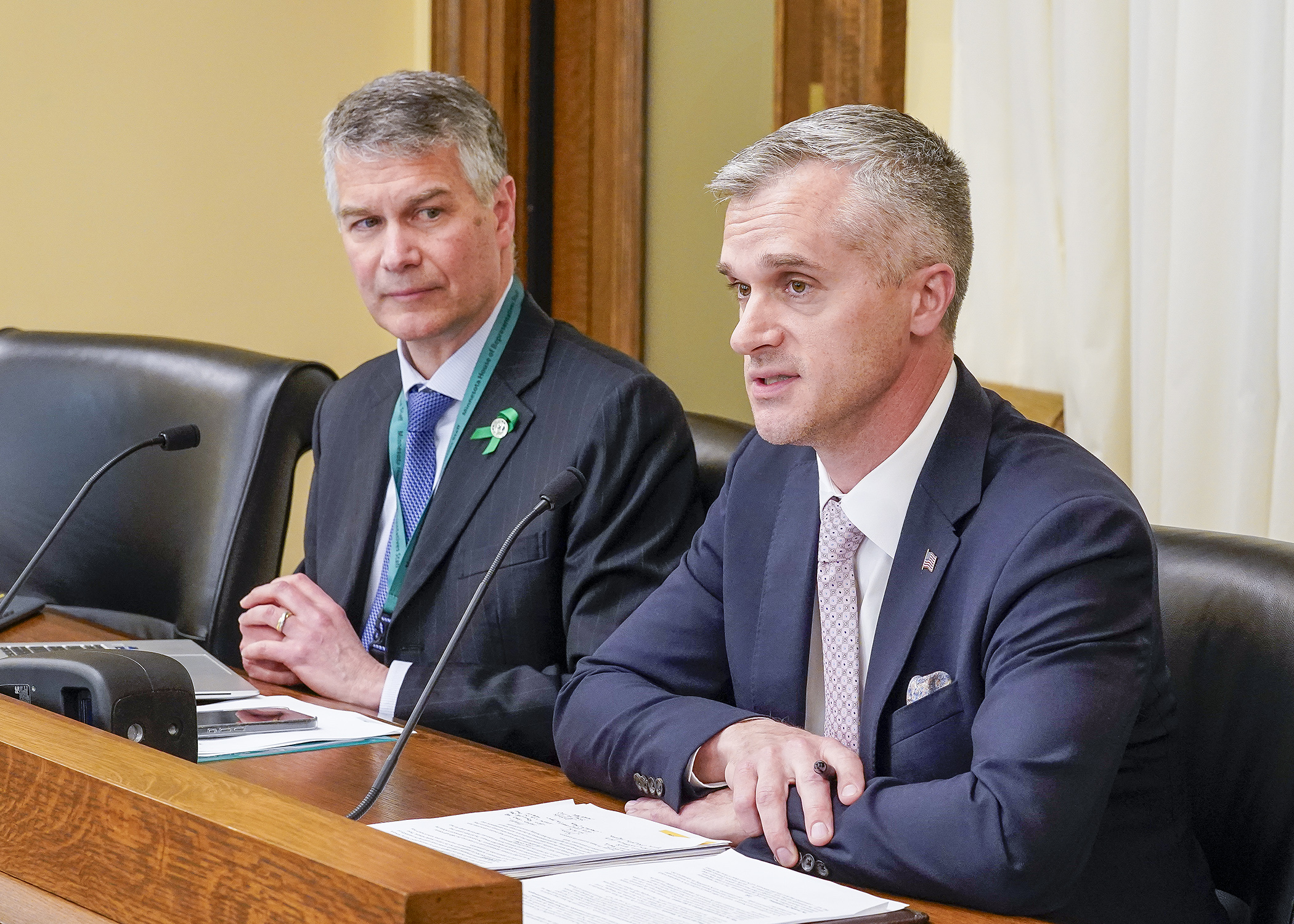
What goes down the drain could come back to heat your home or business. That’s the principle behind using wastewater as a heating source.
Rep. Larry Kraft (DFL-St. Louis Park) would like to see Minnesota take the lead on this relatively new technology.
He sponsors HF2317, which, as amended, would appropriate $3 million from the Renewable Development Account to the Pollution Control Agency to conduct a study that would identify wastewater treatment plants in the state at which waste heat could be recovered and used to provide heat to buildings through an existing or new district heating system.
The bill was laid over for possible omnibus bill inclusion Tuesday by the House Energy Finance and Policy Committee.
The one-time appropriation would also fund engineering review and design costs for a pilot waste heat recovery project within the seven-county Twin Cities metropolitan area and one in Greater Minnesota.
“Many wastewater facilities already recover some of their wastewater heat for use internally in their own processes,” Kraft said. “What this bill targets is different: the thermal energy in the treated wastewater itself, which is currently being discharged into our rivers and waterways. This is energy communities have already paid to generate and, right now, we’re not using it.
“Recent studies conducted in St. Paul and Duluth in conjunction with federal grant opportunities identified enough recoverable thermal energy at wastewater treatment facilities to serve as the primary energy source for the district heating networks serving approximately 40 million square feet of building space.”
The Renewable Development Account provides grants to projects that employ non-fossil-fuel-based energy generation, with its funds coming from fees that investor-owned utility Xcel Energy pays in order to store nuclear waste at its Prairie Island and Monticello nuclear power plants.
“It seems like an excellent fit for the RDA,” Kraft said.
Ever-Green Energy operates the thermal energy system that heats and cools much of Downtown St. Paul and the State Capitol area. Its president and chief executive officer is Luke Gaalswyk.
“In St. Paul, we’re working with the Metropolitan Council Environmental Services and the city on Clean Heat St. Paul, an effort to capture waste heat from the state’s largest wastewater treatment facility and integrate it with our existing District Heating network,” he said.
“The technology is proven, deployed at scale in Europe since the 1980s, with several smaller projects in operation across North America.”
Related Articles
Search Session Daily
Advanced Search OptionsPriority Dailies
Could 2026 retirements lead to record turnover in the House?
By Lisa Kaczke In the final weeks of the legislative session, House members not seeking re-election to the body have taken a turn at gaveling in a floor session.
It’s an opportunity to loo...
In the final weeks of the legislative session, House members not seeking re-election to the body have taken a turn at gaveling in a floor session.
It’s an opportunity to loo...
How short are the Legislature's short sessions?
By Lisa Kaczke Rep. Ron Kresha (R-Little Falls) was ready to end the session March 25, making the motion to adjourn sine die. But not enough of his colleagues shared that sentiment, defeating ...
