 Minnesota Legislature
Expanded child care credits, federal conformity key to governor’s tax bill
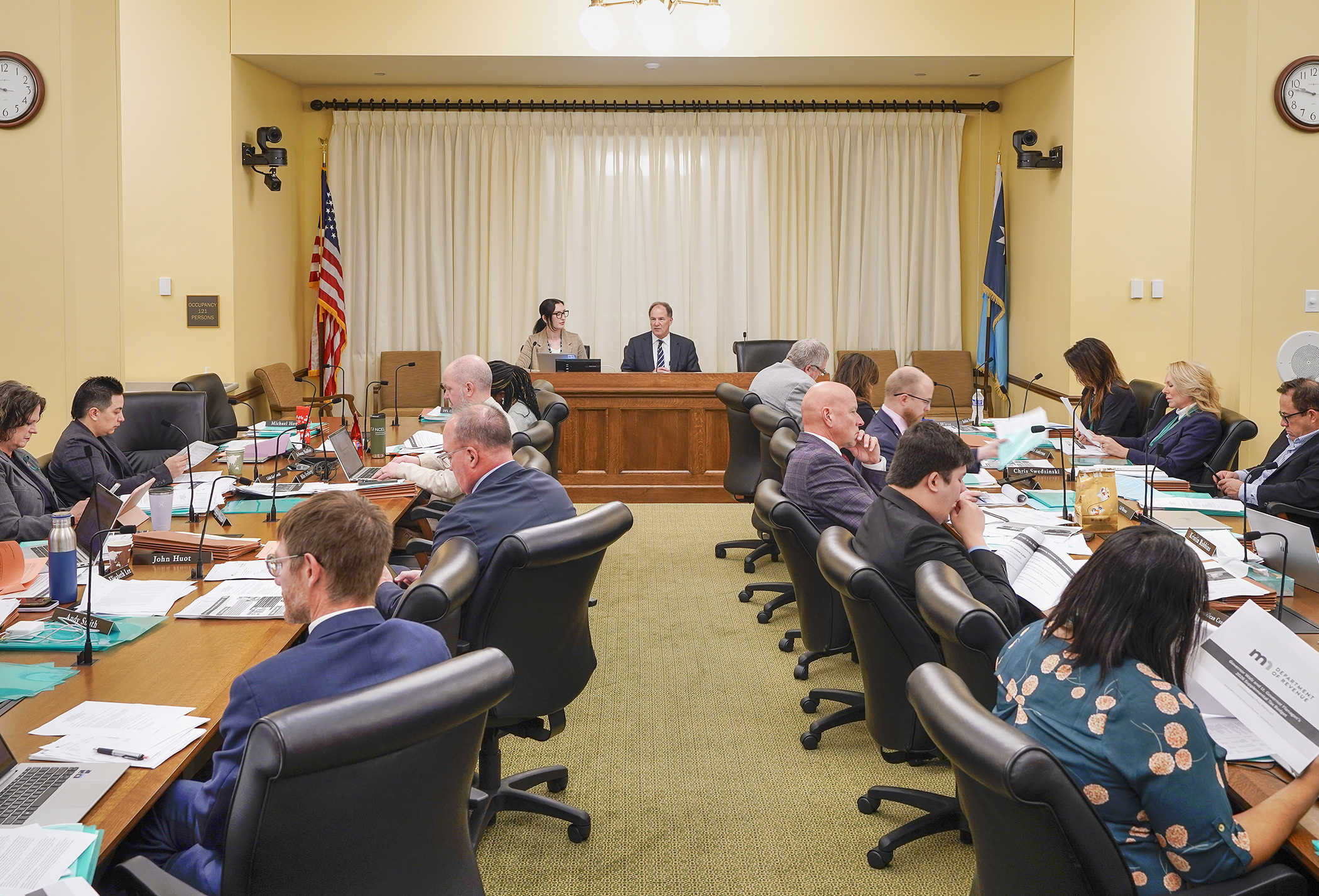
Before the House Taxes Committee puts the 2026 edition of its tax bill together, Gov. Tim Walz has some suggestions as to what he’d like to see coming across his desk before session’s end.
On Thursday, Revenue Commissioner Paul Marquart presented the governor’s proposals for changes in state tax policy to the committee. Sponsored by the committee’s co-chair, Rep. Aisha Gomez (DFL-Mpls), HF5055, as amended, was presented on an informational basis, since the bill has been referred to the House Rules and Legislative Administration Committee and is not yet in the taxes committee’s possession.
“The entire governor’s budget is based on to have a responsible and balanced budget,” Marquart said. “This leaves $3.7 billion on the bottom line in this biennium, and $1.8 billion to the good in ’28-’29. And, if you include inflation, there’s still about $800 million to the good.”
Here’s what Marquart emphasized among the governor’s proposals:
An enhanced child and dependent care credit. Families with children under age 5 would see the maximum credit increase to $3,000 for one child and $6,000 for two or more. Those with children over 5 would see a maximum of $1,500 for one child and $3,000 for two or more. The department estimates that 104,800 families would qualify for the credit (up from 44,300), with an average credit of $1,818.
Conforming to changes in the federal tax code. The bill would pull the state into alignment with several federal tax changes signed into law last year. This is projected to cost the state in some areas, most notably in agreeing to modify a limit on business interest and an increased dollar limitation for Section 179 expensing. But it’s projected to raise revenue through enhancement of an employer-provided child care credit and a 0.5% floor on the deduction on individual charitable contributions.
Marquart said the bill would also:
- repeal the sunset for Minnesota’s pass-through entity tax;
- expand the existing sustainable aviation fuel tax credit;
- decrease the state’s general sales tax rate from 6.5% to 6.425%;
- expand the state’s sales tax to include accounting services, banking and brokerage services, and legal services;
- establish a tax on the collection of consumer data by social media platform businesses;
- create gross receipts taxes of 10% on the sales of handguns and 11% on the sales of long guns and ammunition;
- make technical changes to cannabis sales tax statutes;
- remove the historic structure rehabilitation tax credit’s three-year timeline for completion; and
- create a corporate franchise tax division pass-through audit unit.
[MORE: How the bill is expected to impact state revenues]
Lawmakers’ questions about the bill centered mostly around how to estimate the value of consumer data collected by social media businesses, how the Revenue Department will handle the new conformity pieces in processing this year’s tax returns, and how the new taxes on gun purchases would work for guns purchased out of state.
The committee’s co-chair, Rep. Greg Davids (R-Preston), looks forward to working with the commissioner on a tax bill.
“We’ve got a lot of work to do the next few weeks,” he said.
Related Articles
Search Session Daily
Advanced Search OptionsPriority Dailies
Could 2026 retirements lead to record turnover in the House?
By Lisa Kaczke In the final weeks of the legislative session, House members not seeking re-election to the body have taken a turn at gaveling in a floor session.
It’s an opportunity to loo...
In the final weeks of the legislative session, House members not seeking re-election to the body have taken a turn at gaveling in a floor session.
It’s an opportunity to loo...
How short are the Legislature's short sessions?
By Lisa Kaczke Rep. Ron Kresha (R-Little Falls) was ready to end the session March 25, making the motion to adjourn sine die. But not enough of his colleagues shared that sentiment, defeating ...
