 Minnesota Legislature
New fifth income tax tier proposed to boost local government, county aid
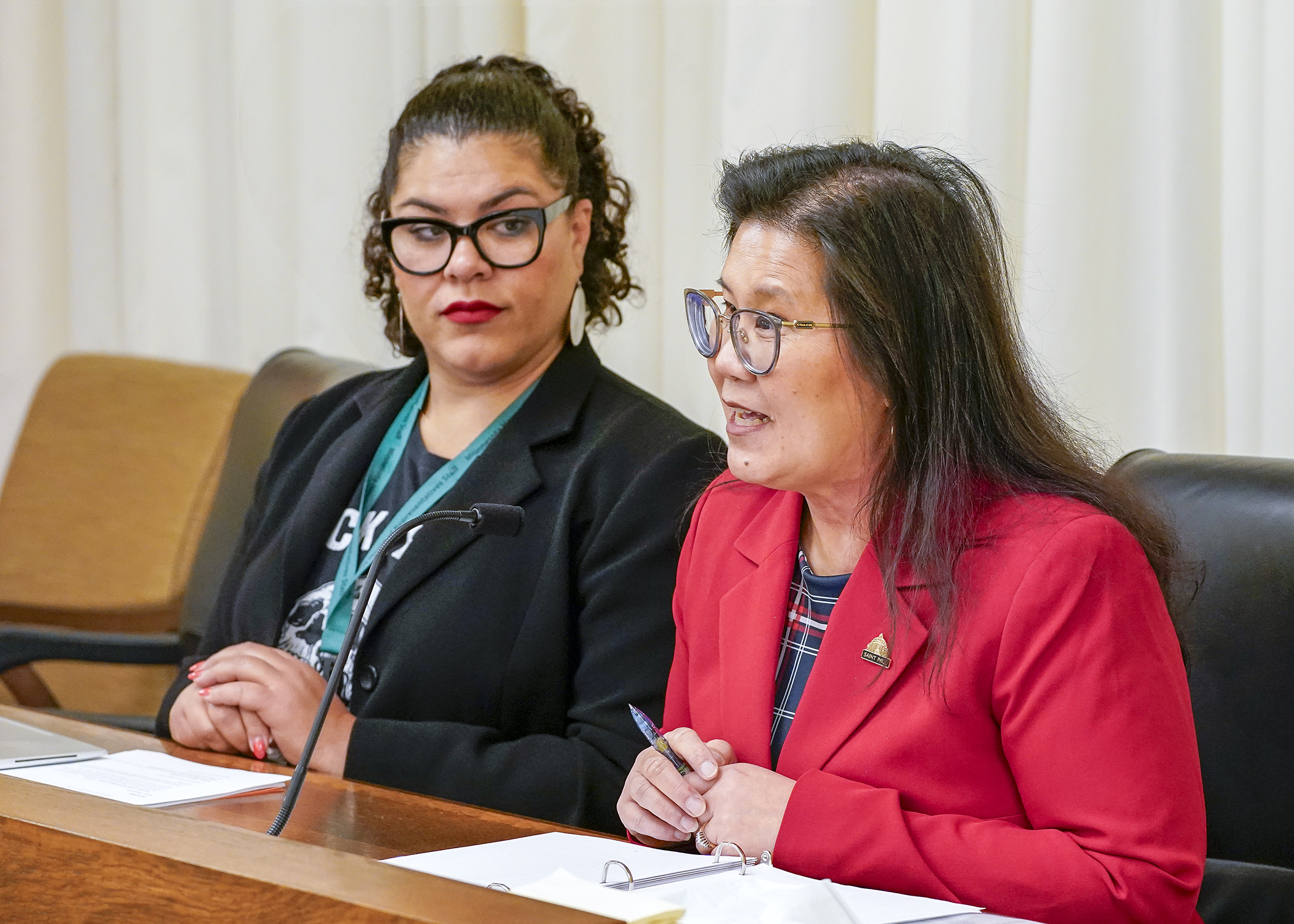
“How much is enough?” That was a central question in Wednesday’s House Taxes Committee debate over HF4845, a bill sponsored by Rep. Athena Hollins (DFL-St. Paul) that would create a new fifth income tax tier, an idea that seems to surface annually.
Hollins’ bill would establish the tier at a rate of 10.85%, applying it to Minnesota taxable income in excess of $1 million for married joint returns and $600,000 for single returns.
What’s different about this year’s model is the recipient of the revenue from the tax: It would increase local government aid (LGA) and county program aid (CPA) by $155.5 million each annually.
The bill was laid over for possible omnibus bill inclusion.
The Revenue Department estimates that the change would impact 30,900 tax returns, with an average tax increase of $9,591.
While Rep. Jim Joy (R-Hawley) appreciates the idea of an increase in LGA and CPA, he feels that a fifth income tax tier is the wrong way to raise the revenue for it, especially since recent estimates are that state revenue collected from income taxes is down. Rep. Mike Wiener (R-Long Prairie) concurred, adding, “If we hit the top tier, those are the people that can leave.”
Hollins responded that rural legislators should see the bill as a win for their constituents, as the state’s top earners live in the Twin Cities metropolitan area and the bill’s projected revenues would go largely toward rural counties and help lower residents’ property taxes.
Rep. John Huot (DFL-Rosemount) framed the proposed increase in LGA and CPA funding in terms of emergency medical services.
“We are all in trouble because our cities are starting to have issues with their public services,” he said. “I don’t know if it’s a fifth tier; I don’t know what it is, but something has to be done. … We will be looking at how you cannot have a three-hour response time for an ambulance. … I think we need to take a deep breath in a bipartisan way and see how we’re going to raise this.”
While both Rep. Drew Roach (R-Farmington) and Rep. Bobbie Harder (R-Henderson) said lifting “unfunded mandates” on counties was a better approach for lowering property taxes, the committee’s co-chair, Rep. Greg Davids (R-Preston) declared the bill to be a case of “class warfare,” repeating the question, “How much is enough?”
The other committee co-chair, Rep. Aisha Gomez (DFL-Mpls), replied by reframing the question.
“How much is enough for the people who are hoarding wealth while the rest of us struggle to make our monthly bills?”
Related Articles
Search Session Daily
Advanced Search OptionsPriority Dailies
Could 2026 retirements lead to record turnover in the House?
By Lisa Kaczke In the final weeks of the legislative session, House members not seeking re-election to the body have taken a turn at gaveling in a floor session.
It’s an opportunity to loo...
In the final weeks of the legislative session, House members not seeking re-election to the body have taken a turn at gaveling in a floor session.
It’s an opportunity to loo...
How short are the Legislature's short sessions?
By Lisa Kaczke Rep. Ron Kresha (R-Little Falls) was ready to end the session March 25, making the motion to adjourn sine die. But not enough of his colleagues shared that sentiment, defeating ...
