 Minnesota Legislature
House lawmakers OK bill to bring Minnesota into compliance with 'One Big Beautiful Bill'
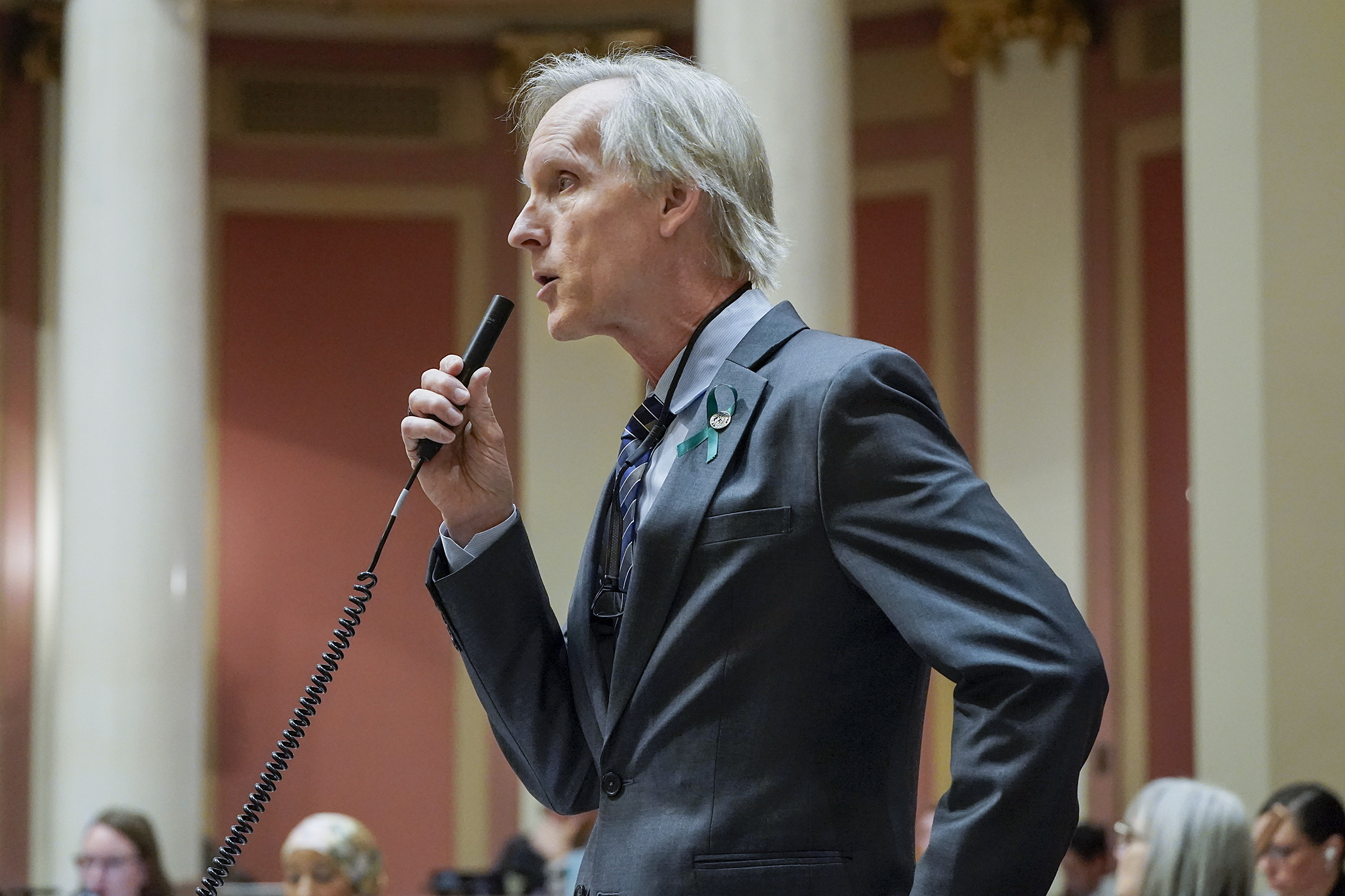
Some legislators aren’t fond of what could happen if the state conforms with Medicaid cuts, changes and restrictions included in HR1, known as the “One Big Beautiful Bill.”
But the fear of possibly losing billions of dollars of federal funding due to nonconformity narrowly won out during the House’s floor debate Thursday.
[MORE: Omnibus health finance bill advances narrowly in Ways and Means Committee]
The federal law will set the state and country back a decade, said Rep. Robert Bierman (DFL-Apple Valley), who co-sponsors the health supplemental budget bill focused on this conformity. “We will not do this because it’s a good thing for our constituents, but because we’re forced to.”
The House passed that bill, HF4466/SF4612*, 69-63 Thursday, as amended to include the House language and language to allow psilocybin therapy programs. It now returns to the Senate for concurrence.
With a 67-67 tie in the House, Bierman said this bill remains a work in progress and he’s hopeful “we can do better” in a conference committee with the Senate on the bill.
The bill would codify federal changes in state law that include:
- implementing new federally mandated work requirements for adults without children using Medicaid;
- establishing new six-month renewal requirements;
- establishing cost sharing requirements across departments; and
- shortening retroactive coverage for adults without children from three months to one month.
[MORE: Health finance bill would prioritize compliance with federal ‘One Big Beautiful Bill’]
With amendments that failed to gain bipartisan approval, DFLers attempted to add language that would soften the blow of the federal law on Medicaid users and hospitals.
The state has some discretion and time, said Rep. Tina Liebling (DFL-Rochester). “We don’t need to fully align until Oct. 1, 2028. Now think about this. We haven’t received guidance from the federal government. We don’t know what that’s going to be.”
[MORE: State law change required for compliance with ‘Big Beautiful Bill’]
Republicans argued compliance with federal law, particularly work requirements, would not impact people as much as DFL members believe.
“The idea that this is going to be some kind of an apocalypse is a complete misrepresentation,” said Rep. Nolan West (R-Blaine).
Rep. Jeff Backer (R-Browns Valley), who co-sponsored the bill with Bierman, said the state risks losing $3.5 billion to $4 billion a year without the bill. While he said he doesn’t agree with every federal mandate, he does support work requirements for the state’s Medicaid expansion population.
“This bill is about values,” Backer said. “That’s really what it’s about. It is good to have individuals work. It is good to have a work ethic. It’s good for individuals to volunteer. It’s good to have individuals contribute to society in a positive way.”
[More: Bill that would legalize psilocybin-assisted therapy gets committee OK]
Two dozen amendments and amendments to amendments were proposed by lawmakers Thursday, but few passed. The most notable to gain a majority of support was the amendment to add the legalization of psilocybin assisted therapy to the bill.
Related Articles
Search Session Daily
Advanced Search OptionsPriority Dailies
Could 2026 retirements lead to record turnover in the House?
By Lisa Kaczke In the final weeks of the legislative session, House members not seeking re-election to the body have taken a turn at gaveling in a floor session.
It’s an opportunity to loo...
In the final weeks of the legislative session, House members not seeking re-election to the body have taken a turn at gaveling in a floor session.
It’s an opportunity to loo...
How short are the Legislature's short sessions?
By Lisa Kaczke Rep. Ron Kresha (R-Little Falls) was ready to end the session March 25, making the motion to adjourn sine die. But not enough of his colleagues shared that sentiment, defeating ...
