 Minnesota Legislature
Who should be included in Minnesota's school funding?
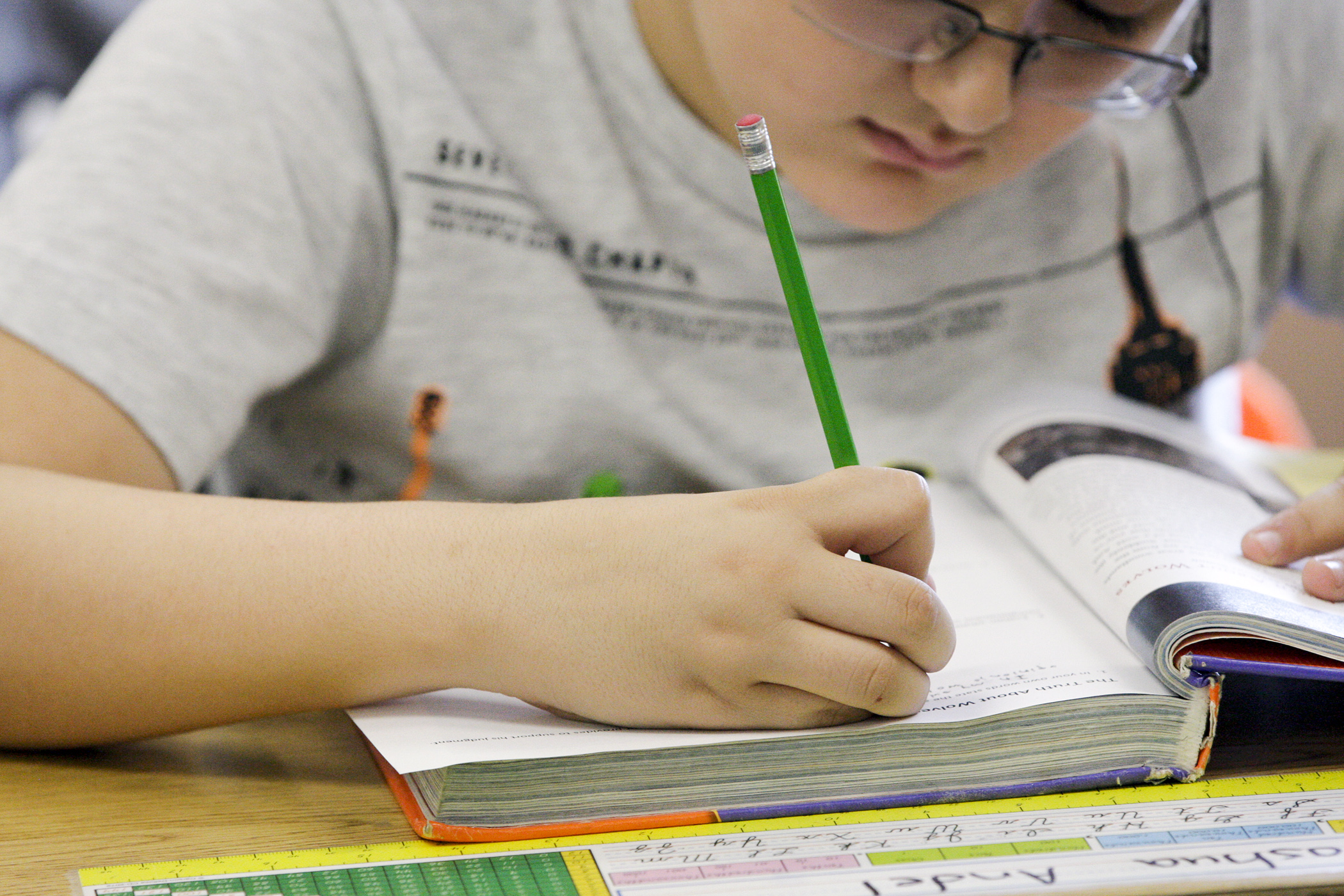
While public schools are largely funded through state and federal dollars, Minnesota provides funds and services that extend beyond public and charter schools to reach the roughly 72,000 students attending Minnesota’s 467 nonpublic schools.
These amenities like busing, student healthcare, counseling and textbooks, are seen as baselines for students that the state supplements even if students aren’t attending its public schools.
Questions of which programs should be included in that baseline — from school safety grants to federal tax credits — have been a common point of debate in the House this biennium.
“All kids should feel safe when they go to school,” Rep. Ben Bakeberg (R-Jordan) said in a February House Education Finance Committee meeting about a proposal that would open school safety grants to nonpublic schools.
While the programs that affect nonpublic schools have shifted over the years, in Fiscal Year 2026, Minnesota spent roughly $101 million on programs and services for nonpublic school students and their families.
How does that figure break down and where do those funds go?
Textbooks, health services and guidance counseling
Since 1975, Minnesota has provided funding for education materials like textbooks and health services at nonpublic schools “so that every school pupil in the state will share equitably in education benefits,” according to the law’s declaration of policy.
Funds provided in state law fall into three categories with the amount based on the average per-pupil cost in public schools from the previous year. For Fiscal Year 2026 they are:
- $132.95 for textbooks, standardized tests and individualized instructional materials (which was expanded in 2012 to include software and educational technology);
- $85.48 for pupil health services; and
- $358.75 for secondary pupil guidance and counseling services.
In Fiscal Year 2026 the total cost of those items was estimated at $25.3 million.
K-12 education subtraction and education credit
Minnesota also provides aid to families with students attending nonpublic schools through two tax relief programs: the K-12 education subtraction and K-12 education credit.
These tax incentives, which became law in 1997, allow families to write off and be refunded for various education expenses ranging from textbooks to extracurricular activities to private school tuition.
The education subtraction allows families, regardless of their income, to subtract up to $2,500 from their state income per student . These expenses are directly related to private school tuition and other education expenses like textbooks, school supplies and after-school enrichment programs.
In tax year 2024, 143,700 income tax returns claimed the K-12 education income tax subtraction for a cost to the state of $13.9 million. For Fiscal Year 2026 the cost was $14.6 million.
The education credit, on the other hand, allows taxpayers to claim a refundable tax credit for 75% of certain education expenses up to $1,500 per student if the household falls under certain income thresholds.
Refundable expenses include textbooks and instructional materials, rental fees for instructional equipment, after-school enrichment programs, tutor fees, computer hardware and educational software, and instructor fees for driver’s education classes.
In tax year 2024, 43,600 returns claimed $14.5 million in credits. For Fiscal Year 2026 the total cost was about $15 million.
Transportation
School districts are statutorily mandated to provide transportation for all students regardless of whether they attend public or nonpublic schools, often referred to as Minnesota’s “Fair Busing Bill.”
For example, if a school district’s policy is to transport all public elementary students who live more than a mile away from their public school, it must also provide transportation for students who live more than a mile away from their nonpublic school.
“It is in the public interest to provide equality of treatment in transporting school children of the state who are required to attend elementary and secondary schools,” according to the policy.
Nonpublic pupil transportation costs in Fiscal Year 2026 totaled $28.1 million.
Shared Time
Nonpublic school students can attend public school programs for part of the school day. Districts that allow nonpublic school students to attend their classes receive general education basic revenue for these students based on the number of pupils and the time they spend in public schools.
In Fiscal Year 2026, 578 students are estimated to attend classes at public schools with an associated aid cost of $4.3 million.
Similar to nonpublic school student aid, the shared time program has grown in recent years due to, in part, more students attending private schools. Since 2022, the program’s aid has increased $600,000 or 19.93%.
Postsecondary enrollment options
Postsecondary Enrollment Options allows Minnesota high school juniors and seniors to attend college courses and receive college credit while in high school. Tuition, textbooks, and required course materials are provided at no charge to students and their families.
In 2024, 10,104 public school pupils, 1,705 nonpublic school pupils, and 2,141 homeschool pupils attended PSEO classes for a total cost of almost $48.62 million.
Assuming the nonpublic students’ courses are equally distributed with public school pupils and taking that percentage of the cost presents a rough estimate of costs for nonpublic school students.
Based on that assumption, nonpublic school students represent 12.3% of PSEO students in Fiscal Year 2024, meaning the state spent roughly $5.98 million for nonpublic school student PSEO enrollment.
Related Articles
Search Session Daily
Advanced Search OptionsPriority Dailies
Could 2026 retirements lead to record turnover in the House?
By Lisa Kaczke In the final weeks of the legislative session, House members not seeking re-election to the body have taken a turn at gaveling in a floor session.
It’s an opportunity to loo...
In the final weeks of the legislative session, House members not seeking re-election to the body have taken a turn at gaveling in a floor session.
It’s an opportunity to loo...
How short are the Legislature's short sessions?
By Lisa Kaczke Rep. Ron Kresha (R-Little Falls) was ready to end the session March 25, making the motion to adjourn sine die. But not enough of his colleagues shared that sentiment, defeating ...
