 Minnesota Legislature
Conference committee strikes agreement on proposed school funding constitutional amendment
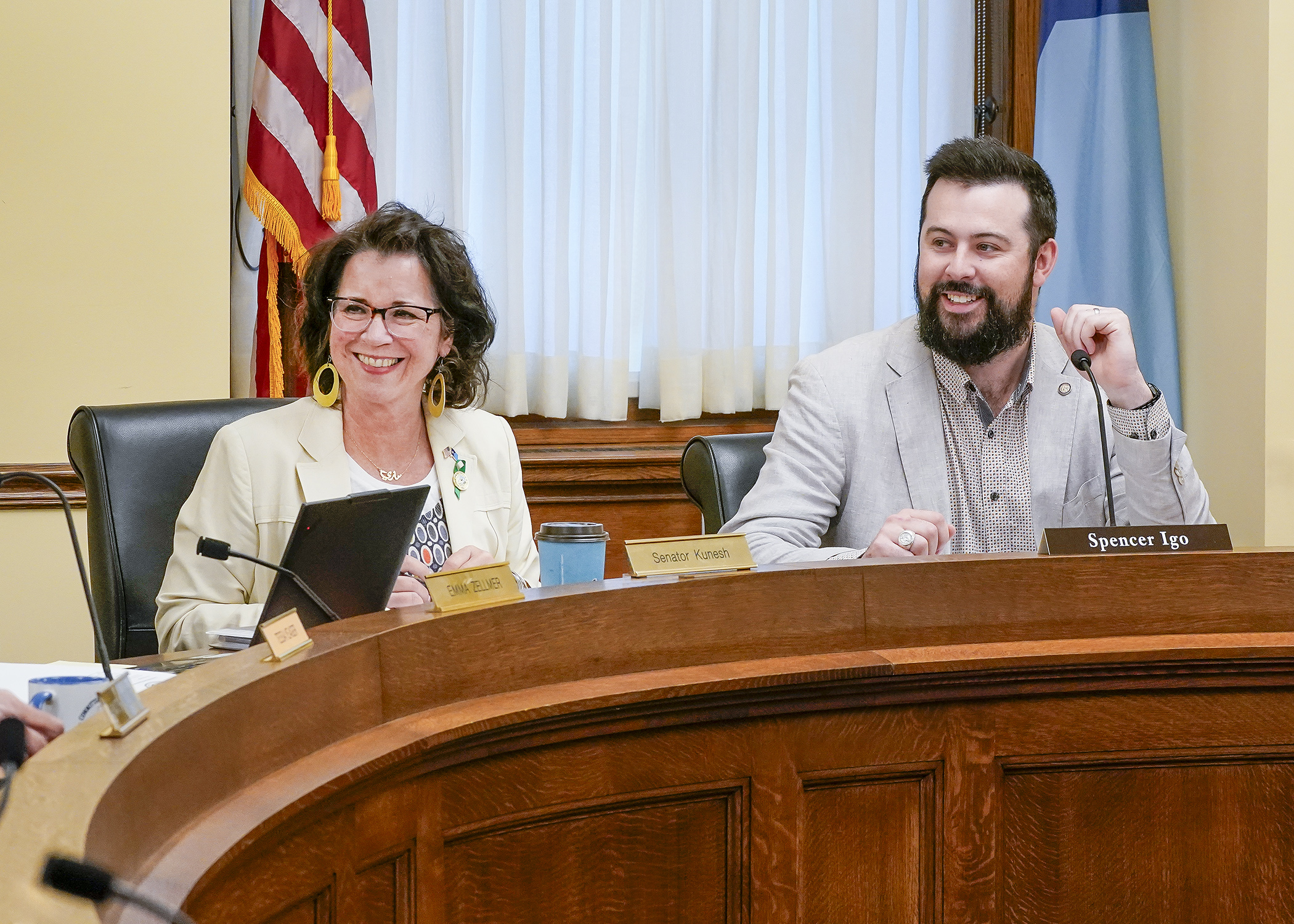
Representatives and senators agree on asking voters in November 2026 about a constitutional amendment that would increase the distribution from the permanent school fund from 2.5% to 4.5%.
They disagree about how that distribution should be able to be changed in the future.
The only difference between the House and Senate bills on the proposed constitutional amendment was if a two-third supermajority from the House and Senate could make future changes to the distribution policy.
On a 7-1 vote Wednesday, the conference committee on HF3900/SF3593* adopted a report saying they could not.
“If this were to be adopted as a two-thirds supermajority, I am very afraid it would become very politicized and that it would be used as a pawn by future legislators,” said Sen. Mary Kunesh (DFL-New Brighton).
She and Rep. Spencer Igo (R-Wabana Township) sponsor the bill calling for a constitutional amendment before voters asking if the maximum annual distribution from the permanent school fund should be increased to 4.5%.
The fund currently distributes dividends and interest up to 2.5% of the fund’s value to Minnesota schools from money invested from the sale of timber, minerals and land on 2.5 million acres of land across the state.
As of March 2025, the fund’s principal was $2.2 billion.
Sen. Robert Farnsworth (R-Hibbing) openly worries about a future single-party trifecta being able to change the distribution amount. He supports supermajorities for future changes in the distribution amount to stop the funds from becoming a political bargaining chip and further protect the fund from being drawn down.
“I think we need to make sure that this doesn’t turn into something that is used politically,” he said.
“I don’t have an intention personally of adjusting the 4.5% next year,” replied House DFL Floor Leader Jamie Long (DFL-Mpls), who presumably would lead the chamber if his caucus is the majority party in 2027.
Igo disagrees with Farnsworth, saying, “If there’s anything that would be done by the Legislature that would threaten the constitutional language, the bill that would be moving through the House and Senate would be deemed unconstitutional.”
“If anybody wanted to play shenanigans with this, I think the system would put checks and balances on itself,” said Rep. Tim O'Driscoll (R-Sartell).
Related Articles
Search Session Daily
Advanced Search OptionsPriority Dailies
Could 2026 retirements lead to record turnover in the House?
By Lisa Kaczke In the final weeks of the legislative session, House members not seeking re-election to the body have taken a turn at gaveling in a floor session.
It’s an opportunity to loo...
In the final weeks of the legislative session, House members not seeking re-election to the body have taken a turn at gaveling in a floor session.
It’s an opportunity to loo...
How short are the Legislature's short sessions?
By Lisa Kaczke Rep. Ron Kresha (R-Little Falls) was ready to end the session March 25, making the motion to adjourn sine die. But not enough of his colleagues shared that sentiment, defeating ...
