 Minnesota Legislature
House and Senate pass $1.24 billion bonding bill, send to governor
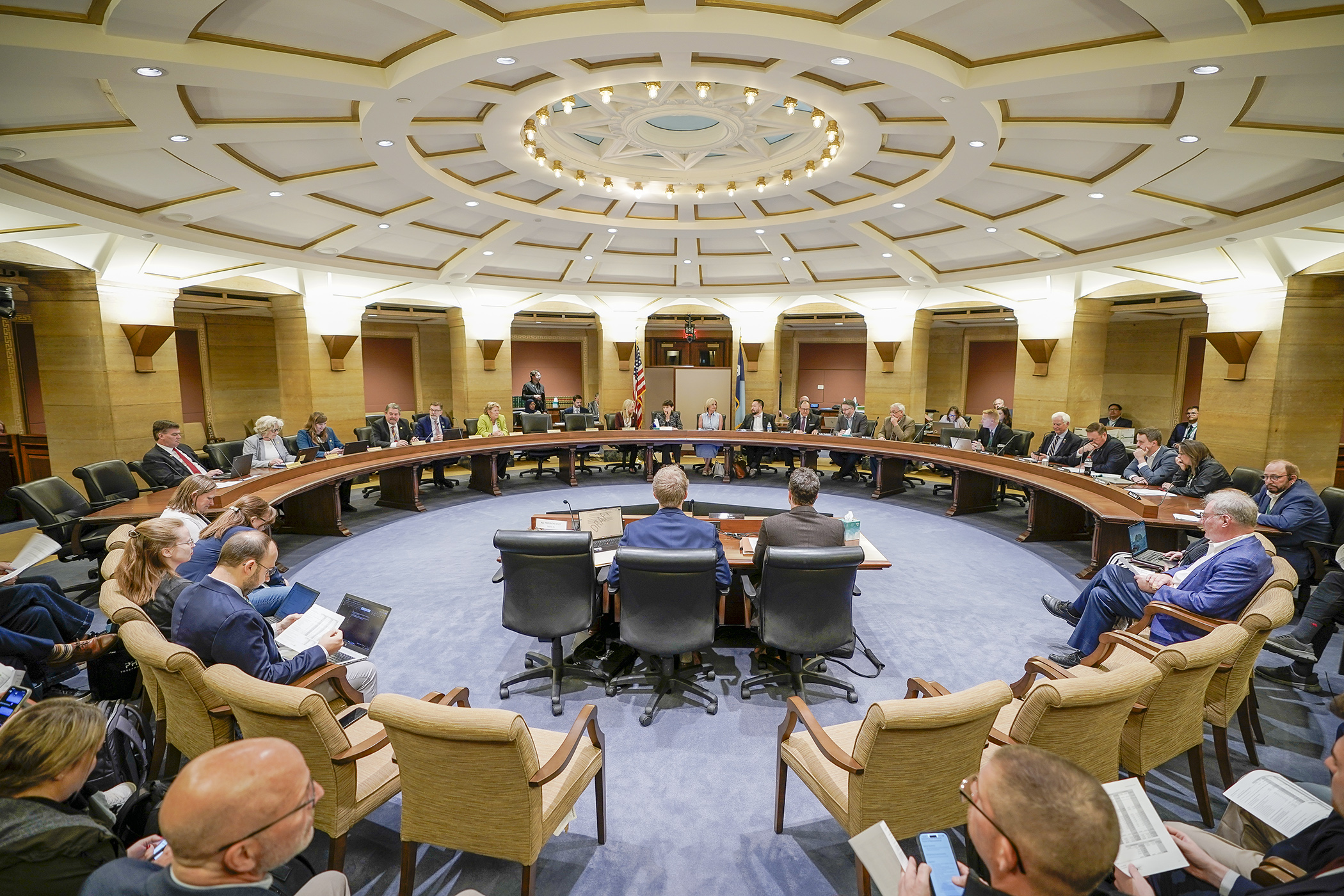
Hours after the House Capital Investment Committee unveiled details of the $1.24 billion capital investment bill and shortly before the legislative deadline to complete its work, the House and Senate passed a bonding bill.
It’s on its way to the governor following the 122-11 and 60-7 respective votes.
“Let us rejoice and be glad that we have a bonding bill in front of us,” Rep. Mary Franson (R-Alexandria) said when the committee met Sunday afternoon.
The bill also includes the motor vehicle registration tax changes struck between legislative leaders and Gov. Tim Walz four days ago, which would reduce the Highway User Tax Distribution Fund by $119 million in Fiscal Year 2027 and $135 million in Fiscal Year 2028. And the bill would allocate $800,000 for a memorial to the late Speaker Emerita Melissa Hortman, also part of the deal.
When it comes to capital investment, the Franson-sponsored HF719, as amended, would provide wide-ranging funding to projects across the state including $420 million for water infrastructure, $177 million for transportation and $75 million for the University of Minnesota.
“It’s not a Republican bill; it’s not a Democrat bill. It’s a bill that benefits the entire state,” Franson said.
Alongside the bonding bill, both bodies passed an amended HF2484, the House 96-38 and Senate 50-17. Sponsored by Rep. Fue Lee (DFL-Mpls), it is the $46.47 million cash bonding portion of the infrastructure package; however, it includes five cancellations of previous appropriations to total just $28.7 million in new spending.
General obligation bonding projects in HF719 include:
- $64.81 million for asset preservation at Minnesota State;
- $47 million for local road improvement fund grants;
- $45.17 million for renovations to the Minnesota Veterans Home Hastings Campus;
- $40 million for asset preservation at the University of Minnesota;
- $40 million in for improvements to the Roy Wilkins Auditorium in St. Paul;
- $39.21 million for Department of Corrections asset preservation;
- $35 million for the first phase of the St. Paul Campus Center at the University of Minnesota;
- $30 million in drinking water grants;
- $30 million for Department of Natural Resources’ asset preservation;
- $26 million for clean water grants;
- $25 million for the local bridge replacement program;
- $17.5 million for public housing rehabilitation;
- $15 million for lead service line replacement;
- $10 million for emergency shelter capital grants;
- $10 million for the Mahnomen hospital
- $9 for flood hazard mitigation; and
- $6 million for a Lake of the Woods County jail.
The proposal’s size is larger than both Walz’s $907 recommendation and the $700 million bonding law passed in 2025.
The larger scope reflects the vast number of requests to the state, which this year totals $3.19 billion, still nearly three times the total bonding package.
While the committee was generally positive on the bill, Sen. D. Scott Dibble (DFL-Mpls) was only “83.9% happy,” citing a lack of transit dollars.
“There is zero for transit in this bill, and that is a huge and glaring omission … I don’t really buy the argument that transit is doing well. I just know that folks that argue for transit aren’t as politically powerful as those that argue for pavement and concrete.”
Related Articles
Search Session Daily
Advanced Search OptionsPriority Dailies
Could 2026 retirements lead to record turnover in the House?
By Lisa Kaczke In the final weeks of the legislative session, House members not seeking re-election to the body have taken a turn at gaveling in a floor session.
It’s an opportunity to loo...
In the final weeks of the legislative session, House members not seeking re-election to the body have taken a turn at gaveling in a floor session.
It’s an opportunity to loo...
How short are the Legislature's short sessions?
By Lisa Kaczke Rep. Ron Kresha (R-Little Falls) was ready to end the session March 25, making the motion to adjourn sine die. But not enough of his colleagues shared that sentiment, defeating ...
