Dear Neighbor, Another busy week in the House began with officials from the Department of Human Services skipping a Fraud Prevention and State Agency Oversight Committee hearing. Their testimony was essential to understand their mismanagement and a new discovery of their violations of state law. The hearing focused on the O’Malley report, which was meant to help strengthen oversight and stop future fraud. The committee also addressed the statutory requirement for DHS to conduct periodic data matching to verify Medicaid and Medicare eligibility. This requirement was pushed by the Republican-controlled House in 2015 and passed into law after intense negotiations with then-Gov. Mark Dayton, only to have the implementation delayed by the Dayton Administration for three years. After finally being implemented on Sept. 1, 2018, it was very effective for the next 18 months. But, it was once again stopped by Gov. Tim Walz in March 2020 when he declared a state of emergency. In those short 18 months, the program reviewed 580,000 individuals on Medicaid and Medicare and permanently removed 37,552 ineligible people. After the state of emergency was finally lifted on July 1, 2021, the Walz Administration never restarted the program, and they have now missed two years of legislative reports required by law. In addition, whistleblower Faye Bernstein testified during he hearing about the retaliation she said she experienced after raising concerns within DHS. Seven years ago, while working as a compliance officer, she alerted leadership to grant noncompliance (not even considered fraud) she discovered. She was then trespassed from all DHS agency properties and subjected to an intense internal investigation. During the hearing she said, “I’m very much questioning the competency of the leadership at the Department of Human Services. There simply has to be firings. I hate to say that because I hate to see people lose their jobs, but there is no other way to turn this around.” It was troubling enough that DHS officials refused to attend the fraud hearing, but then they appeared in the same Capitol committee room moments after the Fraud Committee adjourned in order to attend a Ways and Means hearing to request additional state funding. Fraud Committee Chair Rep. Kristin Robbins asked them why they didn’t attended the fraud hearing. They responded that they were just too busy. When asked if they had to be at another committee instead, they said no. DHS’s absence only leaves me to wonder whether Walz Administration is avoiding questions about whistleblowers’ retaliation or their failure to produce the required eligibility data-matching reports. 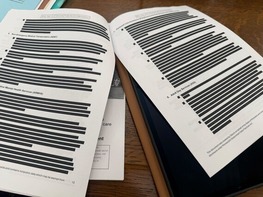 This marks the second time in a week DHS has undermined a House hearing. Last week, the agency also failed to provide witnesses to the Judiciary Committee who could explain the extensive redactions in the recent Optum report. Rep. Peggy Scott, chair of the Judiciary Committee, said that without testimony from attorneys or officials involved, lawmakers have no way of determining whether the law was followed in producing that report. Despite DHS claims, I find it impossible to believe that the nearly fully redacted report was filled with sensitive information and nonpublic data. The Walz administration’s blocking of vital information, and refusal to attend hearings, is yet another attempt at covering up the fraud and protecting those responsible for creating a culture where fraud thrived. Autism licensure renewals down 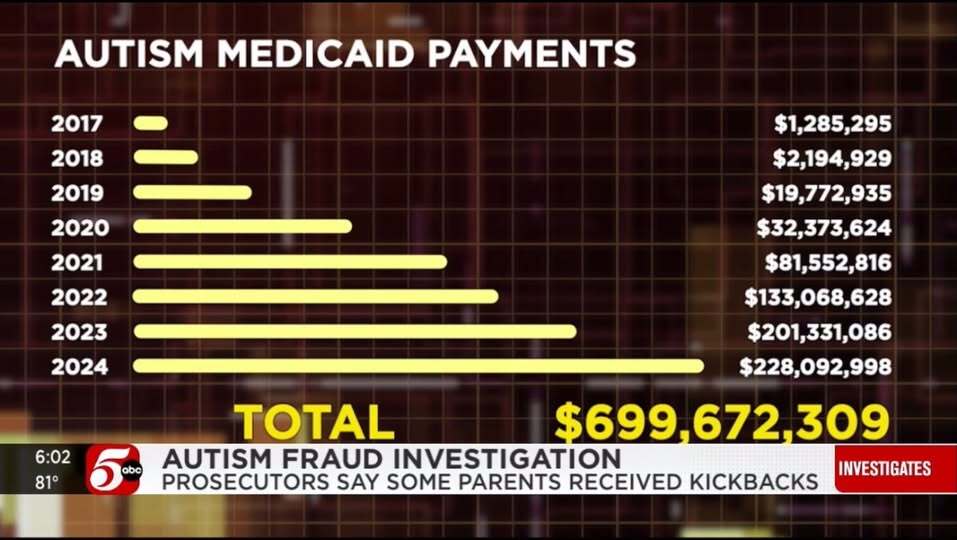 Prior to 2025, autism centers were not legally required to be licensed, and therefore were not subject to unannounced state inspections and had minimal state oversight. During that same time, spending on the state’s autism therapy program surged from about $1 million in 2017 to roughly $343 million by 2024. Following anti-fraud reforms passed in 2025 (thanks to the work of the Fraud Prevention Committee), autism centers must now obtain a license by May 31, 2026. Recent reports indicate that only six of the roughly 500 previously unlicensed centers have applied for the required provisional license so far. A third-party review has also flagged a large number of the claims as not meeting the legal requirements. This new licensing requirement is an important step to ensure funds are spent on those who actually need the services. Non-emergency rides plummet Non-emergency medical transportation was another focus of the Fraud Committee last week. This program helps seniors and vulnerable Minnesotans get to medical appointments, but it has also been vulnerable to abuse. Michael Weidner, with the Minnesota Paratransit Providers Association, testified that there has been a 62-percent drop in ridership since the program was designated high-risk for fraud. DHS disputes the exact number, but such a sharp decline in claims raises serious questions. House Republicans are working on reforms to improve accounting practices and strengthen the vetting process for all transportation providers. Affordability in MN On the same day House Democrats unveiled their so-called “affordability” package, they also introduced their Climate Superfund bill and held a press conference promoting it. This proposal would impose significant new taxes and fees that could drive up the cost of energy, gasoline, and nearly every good or service that depends on energy to produce or transport. Meanwhile, groceries, childcare, housing, insurance, and energy costs continue to rise. Policies enacted under the previous trifecta added billions in new taxes and fees, including hidden costs such as the delivery fee, a new payroll tax, and unfunded mandates on local governments that ultimately get passed on to taxpayers. House Republicans are working to reverse those policies and lower costs for Minnesota families because the American Dream should be within reach for everyone. Some bills introduced this session aimed at lowering costs include: - Permanent reinsurance program (HF 3388)
- Creation of a direct primary care health care program (HF 1724)
- Requirement for cost defrayal for new health care mandates (HF 400)
- Property tax commission to reduce property taxes (HF 3396)
- No Tax on Tips or Overtime (HF 3524 and HF 3525)
|