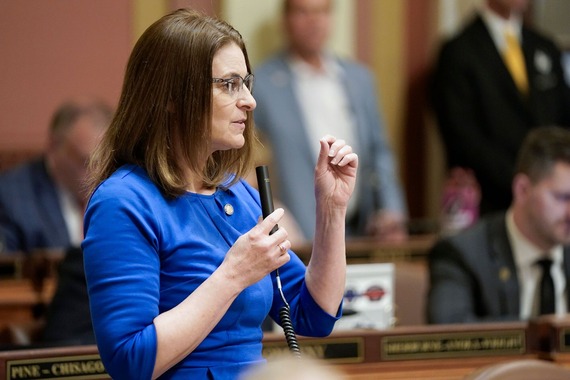
 Dear Neighbor, The legislature has returned to the Capitol to begin the 2026 Session and time is precious with only 82 days until our May 17 date to adjourn. As mentioned in my last newsletter, a new two-year state budget was enacted last year, but many important policy decisions are on the docket for this session. Here is a look at the latest from St. Paul: Session priorities A top priority last session was to restore balance in our state after two years of one-party control in St. Paul. That was especially important after the former majority spent our $18 billion surplus, passed billions in tax increases, and added new mandates that have left Minnesota families and employers feeling added strain. We made significant progress last year and we are working to build on those achievements. This year, House Republicans will keep working to stop fraud, make the state more affordable and safe, scale back mandates, strengthen education, and make sure public dollars reach Minnesotans who need them most. Here is a list of top priorities we have laid out for 2026: - Stop the Fraud
- Make Minnesota Affordable
- Make Minnesota Safe
- Raise Standards, Reduce Mandates
- Make Minnesota Competitive
- Minnesota Tax Dollars for Minnesotans
Cracking down on fraud Minnesota’s well-publicized fraud problem is front and center as we begin the new session. Cracking down on taxpayer theft remains a top priority of mine, especially as we continue to learn more about the depths of fraud in our state. House Republicans are authoring a series of bills to enhance transparency and accountability that has been lacking in state programs, including: - H.F. 1 creates an Office of the Inspector General.
- H.F. 2 provides enhanced requirements for state grants to step up oversight in what has been a lax system.
- H.F. 3395 (aka, the Fraud isn’t Free Act) establishes consequences for those who have turned a blind eye to fraud, particularly in the executive branch where a complete lack of accountability has existed.
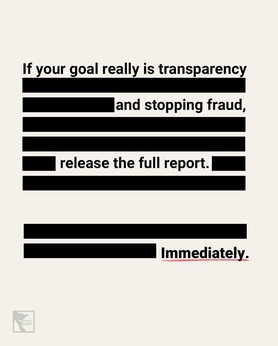 Social services fraud The state recently released a long-awaited review of fraud risks in its social services programs, but much of the report was heavily redacted by DHS. The review is meant to identify weaknesses in oversight and billing systems to help us make improvements to prevent future fraud. However, the extensive blackouts make it difficult to assess the full scale of the problems and implement fixes. This is just the latest example of how a lack of transparency in our government undermines public trust and accountability at a time our state continues grappling with high-profile fraud scandals across multiple programs. Hospice fraud A Minnesota hospice provider already facing fraud complaints is now drawing additional scrutiny because its owner is tied to several other businesses raising questions. Reports indicate former employees and clients alleged the hospice billed Medicare for services that may not have been provided. The owner denies wrongdoing and has not been charged. Records show the same person also runs another hospice venture in Wisconsin that appeared inactive during a site visit and is still seeking certification. He is additionally connected to a land-development project in Minnesota that solicited investor money despite limited property ownership and no pending city approvals, prompting further public and regulatory concern. This disturbing situation is yet another warranting further investigation so watch for further developments. OIG bill 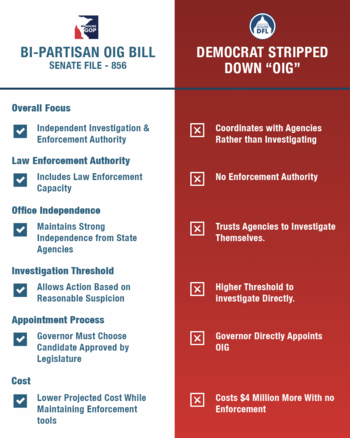 The OIG bill (H.F. 1) has already caused a stir at the Capitol during the first week of session when Democrats first tried to amend the bill in a committee meeting by removing direct investigation and law enforcement power from the OIG, instead trusting the agencies to follow recommendations, which they already don’t do. Furthermore, the amendment gives the governor ultimate authority, ceding power to his agency’s inspector general instead of allowing the OIG to operate independently. In short, this amendment would create a ceremonial OIG that lacks teeth and is ripe for even more abuse to bypass the Commission’s recommendation and install an OIG loyal to Democrats instead. Mere hours after we saw this unserious approach to a serious problem in a committee meeting, the OIG issue arose on the House floor. House Republican Floor Leader Harry Niska moved to declare urgency on H.F. 1 so we could pass the bill the Senate approved 60-7 last session before House Democrats blocked it from advancing to the governor for enactment. This is the version that creates a fully independent OIG with law-enforcement authority. But, true to form, House Democrats struck down this effort and continue making a partisan issue out of legislation the Senate approved with overwhelming support. This certainly isn’t the last chapter on this bill, so stay tuned. “Ghost students” 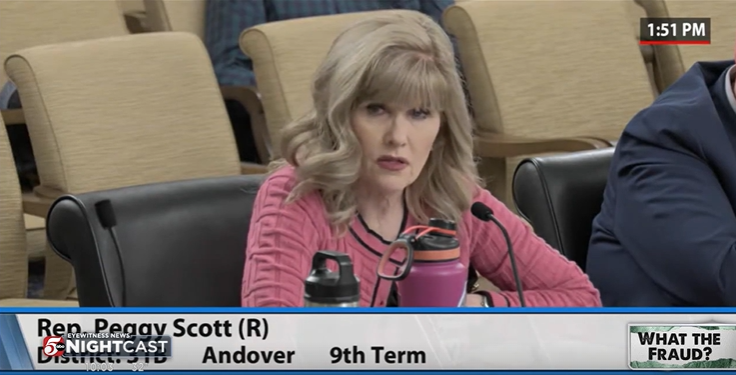 A growing fraud problem involving “ghost students” is affecting colleges across Minnesota. Scammers using stolen identities are enrolling in online classes to collect financial aid. The Minnesota State system flagged more than 7,700 suspicious applications last academic year, though the vast majority were caught before funds were released. In response, an enrollment-fraud working group was created last year. We addressed this issue during a Higher Education Committee meeting last week and I thank Rep. Peggy Scott for asking the hard questions on this subject. For example, she pressed to find out what needs to be changed internally to prevent it from happening in the future. Craig Munson, the chief information security officer for the Minnesota State system, said “I believe we are making very good progress.” According to KSTP, Munson later added that “an automated identity solution is kind of that gold standard.” In a similar vane, his comments are exactly why we need voter ID to insure election integrity. Again, this is a developing issue so stay tuned for more. For now, click here for full video of last Thursday’s committee hearing. |