Legislative Update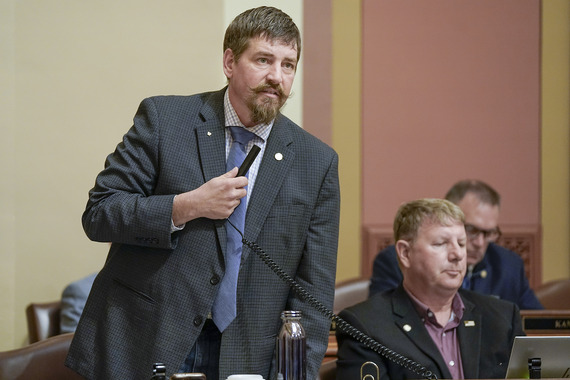 Dear friends and neighbors, Week two of the 2026 legislative session is officially in the books—and if you like fast starts, this one did not disappoint. This morning we received the February budget forecast, and I’ll tell you what: the numbers matter. They matter because they reflect years of pushing for fiscal sanity at the Capitol. While others were spending first and asking questions later, House Republicans were sounding the alarm. Today’s forecast shows that discipline works—and it gives us a real opportunity to change course here in Minnesota. First, the good news: we have a clear path to pass a bipartisan tax conformity bill that actually helps working Minnesotans. I’m talking about common-sense relief like no tax on tips and no tax on overtime. If you’re putting in extra hours or earning gratuities to support your family, you should keep more of that paycheck. It’s that simple. And let’s not forget our Main Street businesses—the family-owned shops, the small manufacturers, the restaurants, the farmers—the job creators who are the backbone of communities like ours. They don’t need more red tape. They don’t need more taxes. They need room to grow. Here’s the part we cannot ignore: Minnesotans are overtaxed. Once again, the forecast shows higher-than-expected tax revenue. Government is not hurting for your money—families are. That means tax increases and new spending proposals should be off the table. Period. Our priority should be lowering costs and protecting family budgets, not expanding government. Now, let’s talk about the elephant in the room: we still have a structural imbalance. Translation? We still have a spending problem. Our work last year made a dent, but the job isn’t finished. Fiscal responsibility isn’t flashy, but it’s necessary if we want long-term stability instead of short-term political wins. Another major takeaway today is fraud prevention. We have already seen health and human services costs begin to drop once basic fraud checks were implemented—and that’s with the bare minimum in place right now. That tells you something. House Republicans have been calling for a robust, serious plan to crack down on fraud. Not half-measures. Not press conferences. Real oversight. Real accountability. Real consequences for fraudsters. When we protect program integrity and align with federal requirements, we ensure dollars go to those who truly need help—and we protect Minnesota from losing federal funding. Here’s what gives me cautious optimism: many of the fraud prevention ideas now being floated by House Democrats and the Governor are proposals Republicans have already put forward. That tells me there’s room for agreement. I’m ready to work with anyone who is serious about cleaning this up. This forecast reinforces what I firmly believe: pro-business policies and economic growth are the real solutions—not bigger government and higher taxes. If Minnesota wants to participate in the national economic rebound, we must reverse the policies that are holding our economy back. We have an opportunity right now to reset—to focus on relief for workers, accountability in government, and growth for our local businesses. I’m ready for the work ahead and committed to fighting for policies that make life more affordable and government more responsible. Not One More Dime: Fiscal Discipline in Action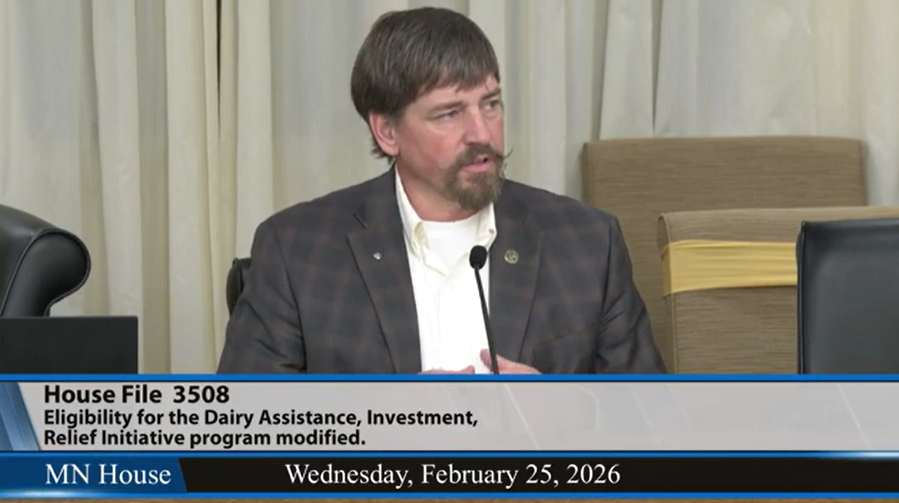 While we’re on the topic of fiscal sanity, I want to be crystal clear about something I’ve told both my constituents and my colleagues: this session, I will not contribute to increasing our already existing deficit. If we truly want Minnesota to thrive—not just today, but five, ten, twenty years from now—we have to be smarter about how we legislate. Fiscal responsibility isn’t optional. It’s non-negotiable. Every bill we pass should either solve a real problem efficiently or get out of the way. What we cannot keep doing is spending money we don’t have and calling it progress. And here’s the exciting part: good policy does not have to come with a price tag. My bill, House File 3508, is a perfect example. It doesn’t spend an additional dime, yet it makes an important correction to ensure fairness for our dairy producers. This week, HF 3508 passed out of the Agriculture Committee and is now headed to Ways and Means before reaching the House floor—a big step forward. 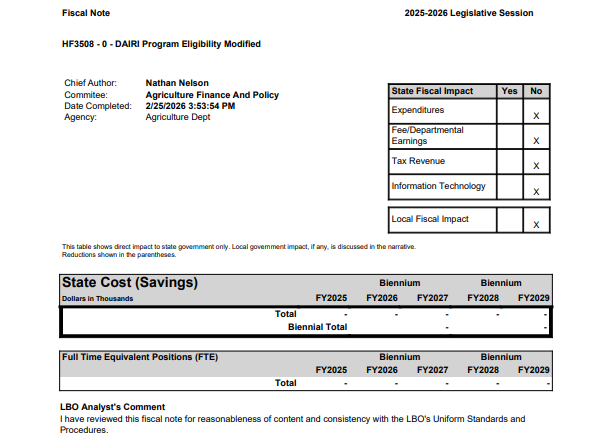 Under current law, DAIRI grants are awarded to dairy farmers who enroll in the U.S. Department of Agriculture’s Farm Service Agency Dairy Margin Coverage Program, with award amounts based on milk production from 2022. That framework unintentionally leaves out newer dairy operations whose production history began after 2022. HF 3508 fixes that. This bill allows dairies that started production after 2022 to participate and benefit from the program—ensuring that emerging dairy farmers, often the ones who need support the most, aren’t left behind simply because of an outdated eligibility window. That’s what effective legislating looks like: identifying a gap, fixing it, and doing so responsibly. No new spending. No expansion of bureaucracy. Just smart policy that supports hardworking Minnesotans—especially our next generation of agricultural producers. We can promote growth. We can support farmers. We can strengthen rural Minnesota. And we can do it without digging the deficit deeper. That’s the standard I’m holding myself to this session—and I won’t compromise on it. Until next time, — Representative Nathan Nelson |