 Minnesota Legislature
Second House division approves pair of firearms-related bills
It was déjà vu for a pair of bills proponents believe will help keep Minnesotans safer.
A bill to limit firearms transfers without a background check and another that would provide a way to prohibit people from possessing firearms were approved by the House Judiciary Finance and Civil Law Division.
With dozens of activists from both sides inside and outside another Wednesday night meeting that began at the same time (albeit in a different room) the bills were approved by votes that once again fell along party lines.
First approved last week by the House public safety division, both bills are headed to the House Ways and Means Committee.
Rep. John Lesch (DFL-St. Paul), the division chair, tried to keep discussion limited to parts of the bill for which his division has jurisdiction: data practices and court process. Nonetheless, the theme of safety vs. personal freedom continued.
“There’s too many guns floating round,” said Rep. Hodan Hassan (DFL-Mpls), while Rep. Andrew Carlson (DFL-Bloomington) termed the proposals “common sense” prevention bills.
Rep. Matt Grossell (R-Clearbrook) said law enforcement personnel he’s spoken with in his district are “vehemently opposed” to these bills.
Background checks
Sponsored by Rep. Dave Pinto (DFL-St. Paul), HF8, as amended, would require a buyer background check for each transfer of a firearm in the state, including those among private parties. Some exceptions would be provided for, such as an exchange between immediate family members or a temporary transfer if it “is necessary to prevent imminent death or great bodily harm.”
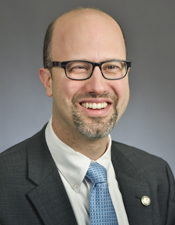
This is a proven policy that is done in 20 other states, Pinto said.
Both parties to a transfer would be required to produce a record of transfer upon the request of a law enforcement officer investigating a crime. A person who will not or cannot would be guilty of a gross misdemeanor.
The bill, co-sponsored by 34 DFL members and zero Republicans, was approved on a 10-7 party-line vote. It has no Senate companion.
A chief law enforcement officer would have the authority to deny an application for a transferee permit if they deem the person “is a danger to self or others.”
Although an appeals process is called for in the bill, opponents expressed concern there is no remedy for a denied person, who wins a court appeal of the denial, to recoup legal fees. There is no disincentive to deny,” said Rob Doar, political director for the Minnesota Gun Owners Caucus, who noted some officials could be “overzealous.” Doar said the current permit-to-carry law does contain legal fee coverage.
Extreme risk protection orders
Preventing potential trouble is the focus of another bill was also approved on a 10-7 party-line vote, which should have come as no surprise as all 34 co-sponsors are DFLers.
As amended, HF9, sponsored by Rep. Ruth Richardson (DFL-Mendota Heights), would permit law enforcement and family members to petition a court to prohibit someone from possessing a firearm for between six months and two years if they pose a “significant danger” to themselves or others by possessing a firearm.

Richardson said 13 states have so-called “red flag” laws.
It would be a misdemeanor for someone to file a petition with false information. A person who continues to possess firearms after an order is issued would also be guilty of a misdemeanor. Additionally, they would be prohibited from possessing forearms for five years.
Dakota County Attorney James Backstrom said most gun owners are responsible, but it’s good to have a way to remove firearms when there’s “credible evidence” someone should not have access to one.
“If it’s one person killed that’s one too many,” said Public Safety Commissioner and former St. Paul Police Chief John Harrington. “Guns are tools used to end the lives of too many Minnesotans. … Doing nothing, I don’t believe is an option.”
Among opponents’ arguments are the bill lacks due process and would take away a civil right to bear arms based on an accusation without the accused getting a chance to respond first.
“When you listen to only one side of the story you don’t get the full picture,” Doar said. He added that other state laws already exist for someone in crisis, such as a 72-hour hold, instead of depriving them of their property.
An appeals process is provided for in the bill, and such cases “shall be given docket priorities by the court.”
Rep. Marion O'Neill (R-Maple Lake) and Rep. Eric Lucero (R-Dayton) pointed out inconsistent wording. The bill first references “bodily harm,” but later references are to “bodily injury,” a term O’Neill said is not defined in statute.
“Language matters, especially when you’re depriving somebody of their constitutional right,” Lucero said.
Richardson said the inconsistency will be fixed going forward.
The bill’s companion, SF436, sponsored by Sen. Ron Latz (DFL-St. Louis Park), awaits action by the Senate Judiciary and Public Safety Finance and Policy Committee.
Related Articles
Search Session Daily
Advanced Search OptionsPriority Dailies
DFL regains control of Minnesota House
By Lisa Kaczke After two years of a tied House, the DFL has regained the majority.
In a year when anger flared on both political sides — DFLers over Operation Metro Surge and Republicans o...
