 Minnesota Legislature
House passes bill to boost spending on security at State Capitol, Minnesota courtrooms
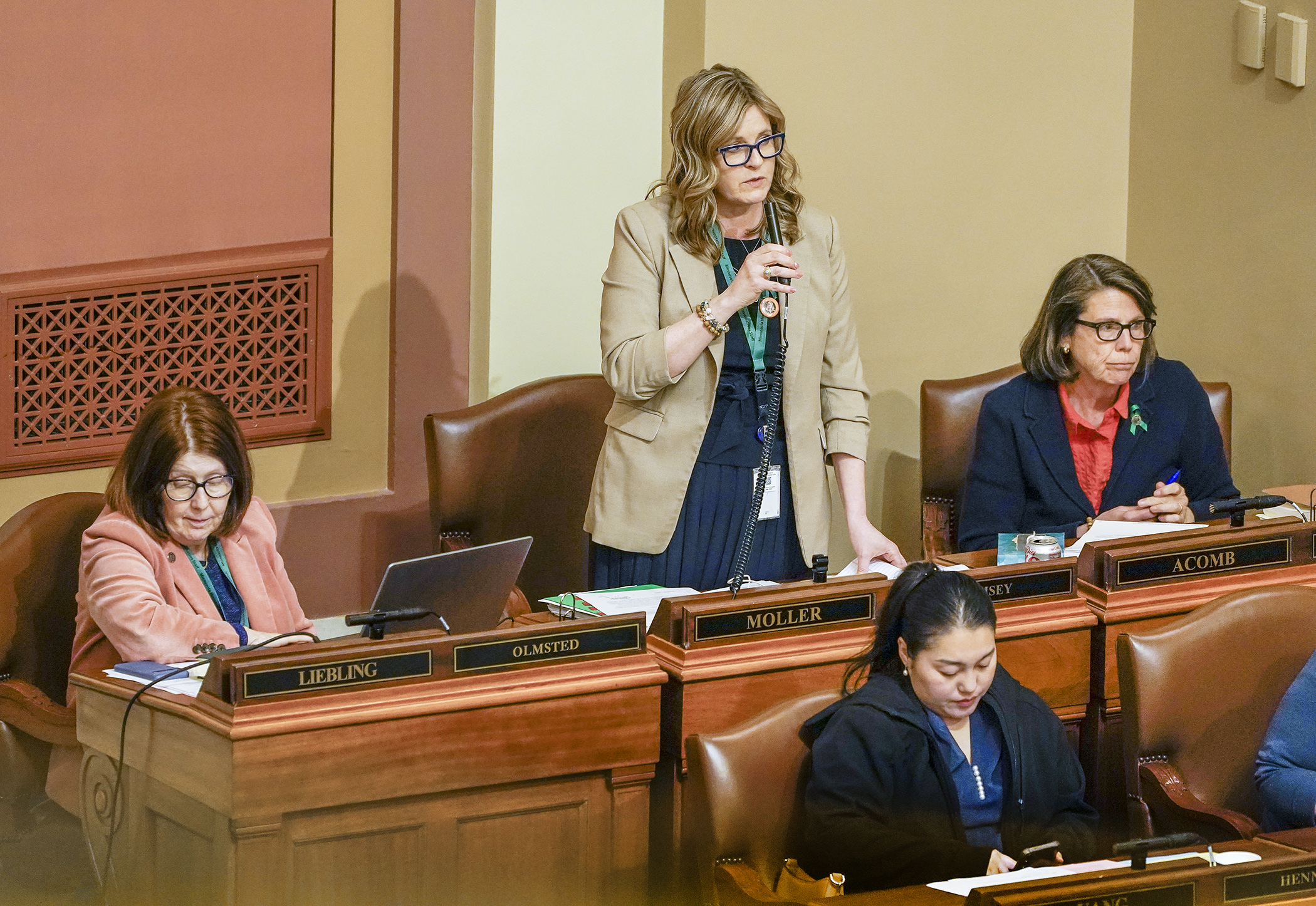
Political violence is all too real here in Minnesota and across the country. In these politically tense times, more security measures are needed to make everyone feel safe.
To that end, Rep. Kelly Moller (DFL-Shoreview) sponsors a public safety funding and policy package that would spend $24.17 million in the 2026-27 biennium to fund legislative, judicial, and State Capitol security programs.
“This funding protects not just those who work in this building, but also all of those who come into this space and the surrounding area: school groups, advocacy groups, our constituents, community members during rallies and protests,” she said. “This security ensures that people can safely exercise their First Amendment rights.”
The House passed HF3230/SF3432*, as amended to include the House language, 92-42 Wednesday. It now returns to the Senate for concurrence.
Moller said the Senate bill sponsored by Sen. Ron Latz (DFL-St. Louis Park) has the same components as the House bill but differs on the amounts individual components would receive. It totals $47.32 million in spending this biennium.
[MORE: View the spreadsheet]
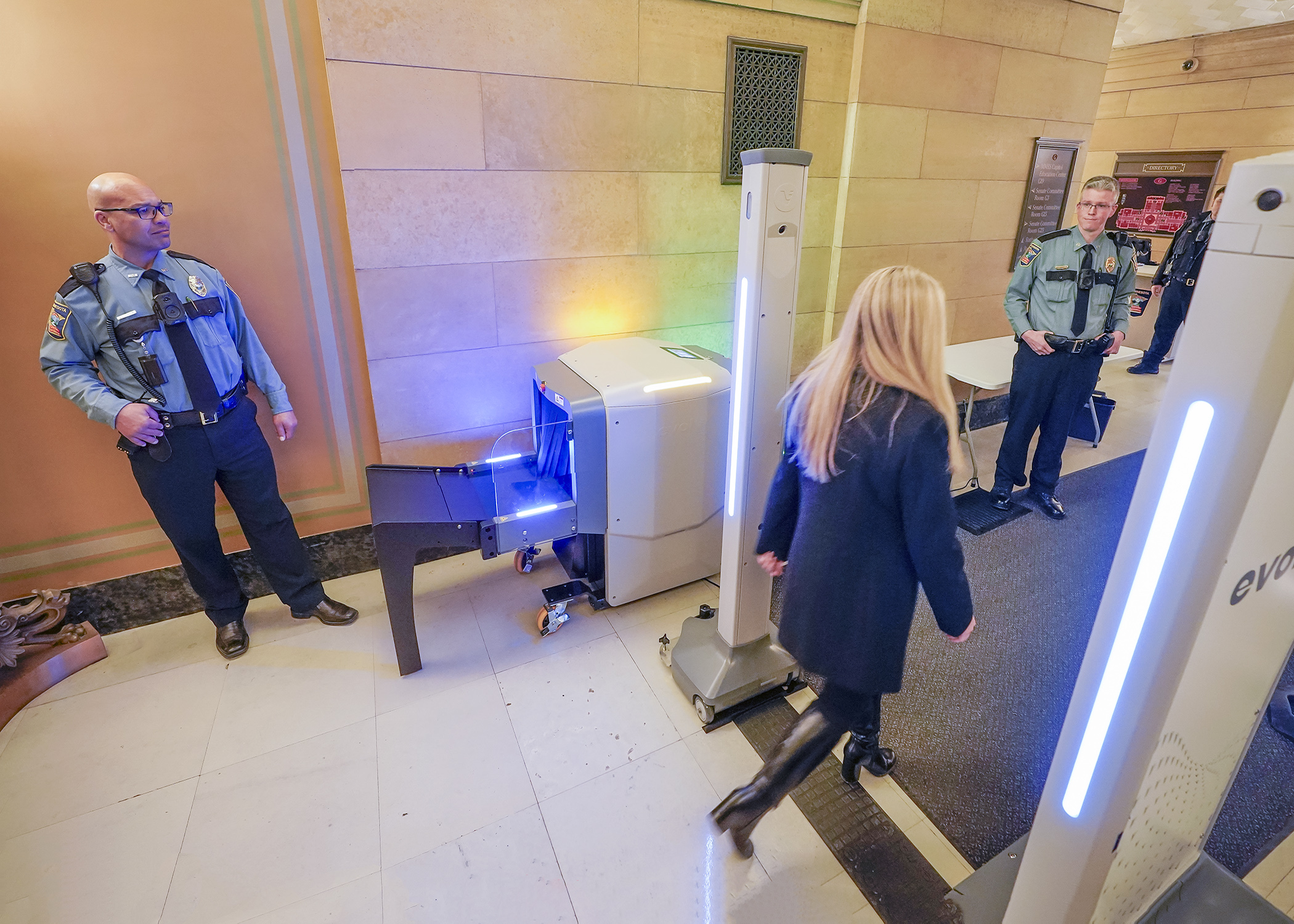 The legislation would, in part, help fund the the beefed-up security screening in place at the State Capitol since earlier this year. (House Photography file photo)
The House version seeks $11.14 million to maintain — and add to — the security personnel and screening stations at entrances to the State Capitol that were authorized by an executive order issued by Gov. Tim Walz on Jan. 26 and installed before the first day of the 2026 session.
“Our democracy doesn’t work if people are afraid to run for office because of threats or actual violence. Then people aren’t going to run and that hurts our democracy,” Moller said.
[MORE: House lawmakers advance bill to boost spending on Capitol security]
Judges and other judicial staff are also facing increasing threats of violence, Moller said, so the bill would provide a one-time $4 million appropriation in Fiscal Year 2027 to fund the Safe and Secure Courthouse Initiative, a competitive grant program to fund courthouse security assessments, equipment, technology, construction, or training needs.
Other notable programs that would be funded by the bill include:
- $1.77 million for enhanced security for state representatives and senators;
- $1.28 million for extra security for judges and other judiciary staff; and
- $1 million for the Bureau of Criminal Apprehension’s threat assessment unit.
Policy provisions
The bill would authorize that, upon request of a legislative leader, the Department of Public Safety could direct the State Patrol to provide personal security and protection for legislators.
As per the bill, the responsibilities of the Capitol Security would expand to include legislative security under a new Legislative Services Unit to be overseen by a peace officer in the State Patrol.
And the bill would require state troopers assigned to Capitol security have training or experience in criminal investigations.
Floor debate, opposition
Opposition to the bill came in two flavors that were revealed when the body took more than two hours to debate two amendments. One failed, the other was ruled out of order.
An amendment offered by Rep. Isaac Schultz (R-Elmdale Township) would have removed all funding in the bill, effectively canceling the security measures in place at the Capitol plus the increased security measures for courtrooms, judges and judicial staff.
It failed 94-37.
In addition to decrying the bill’s cost, Schultz argued the measures it would fund offer only the illusion of safety and act to put up barriers to keep the public from accessing their representatives.
Moller said the added Capitol security has not reduced contact with the public at all, saying many constituents still come and meet with their legislators, and the school groups, protesters, and rallygoers that come daily.
“I have heard from so many people, people who work here, people who visit here, that are so thankful to have added security here,” she said.
Rep. Ben Bakeberg (R-Jordan) offered an amendment to add a Republican-sponsored school safety proposal found in HF3493 that DFLers oppose mainly due to it sending state money to private schools for safety enhancements.
Several Republicans expressed displeasure about funding security for lawmakers and courtrooms before first providing money to increase safety and security for all students.
Some members said the lack of school safety funding is the sole reason for their vote against the bill. Others said while they would vote for the public safety package to send it to the Senate, they could not guarantee they would vote for the package if it came back from a conference committee without safe school funding.
Moller pointed out that $1 million for the BCA’s threat assessment unit could help keep students safe because the unit is not limited to investigating and preventing threats only in the Capitol Area, but could be used at schools throughout the state.
Related Articles
Search Session Daily
Advanced Search OptionsPriority Dailies
Could 2026 retirements lead to record turnover in the House?
By Lisa Kaczke In the final weeks of the legislative session, House members not seeking re-election to the body have taken a turn at gaveling in a floor session.
It’s an opportunity to loo...
In the final weeks of the legislative session, House members not seeking re-election to the body have taken a turn at gaveling in a floor session.
It’s an opportunity to loo...
How short are the Legislature's short sessions?
By Lisa Kaczke Rep. Ron Kresha (R-Little Falls) was ready to end the session March 25, making the motion to adjourn sine die. But not enough of his colleagues shared that sentiment, defeating ...
