 Minnesota Legislature
House, Senate differ on sales tax hike to fund housing aid as conference committee kicks off negotiations
Shake your Magic 8-ball and ask if the House and Senate will agree on a seven-county Twin Cities metropolitan area sales tax.
“Ask again later.”
While the House included a 0.25% metro sales tax increase to fund state rent assistance, metropolitan city aid, and metropolitan county aid in its omnibus housing bill, the Senate can’t say the same.
In fact, that language was removed prior to the Senate Floor debate.
Opponents argue a sales tax is regressive, but supporters suggest housing costs are more so.
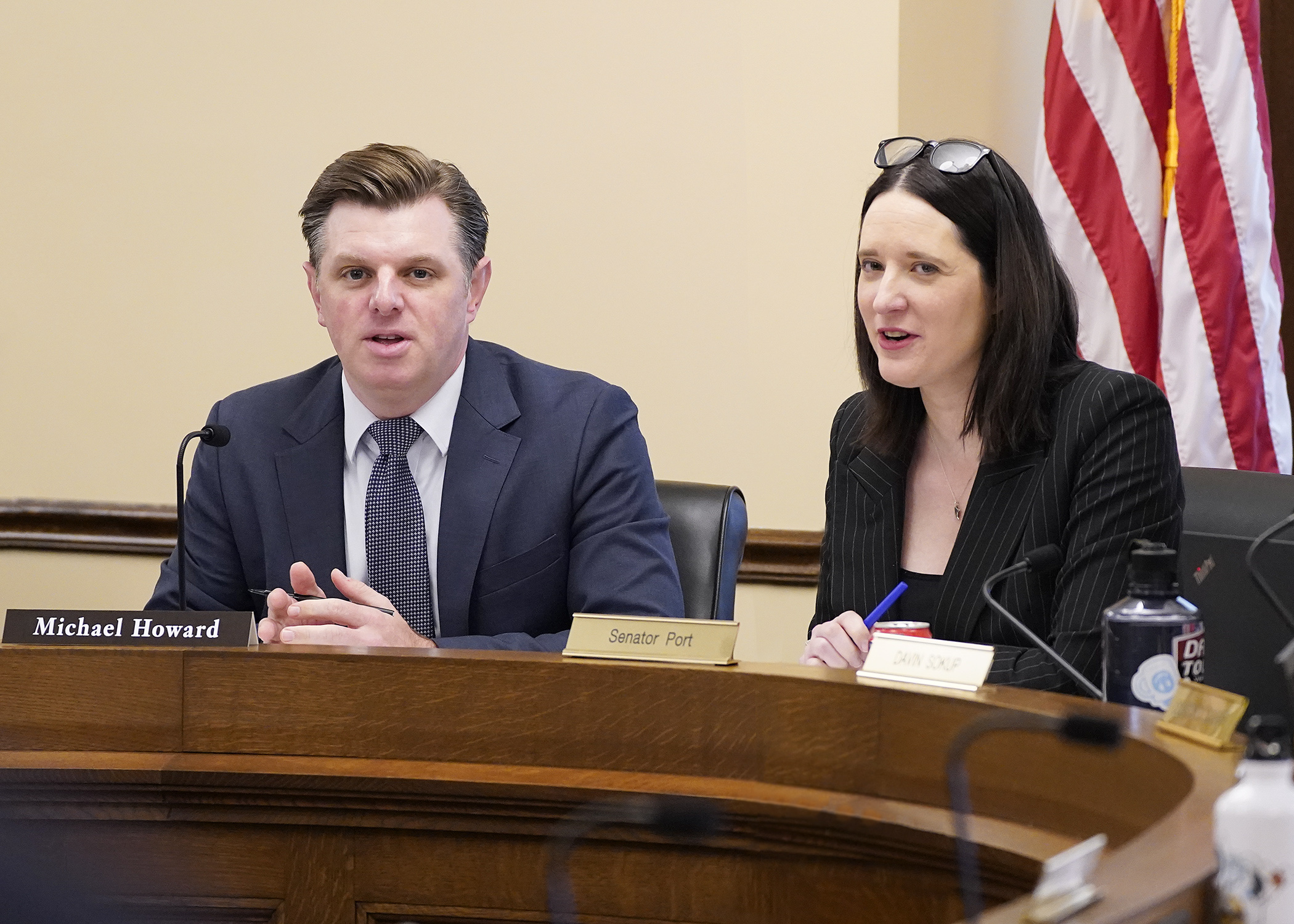
Answers are likely to come in future conference committees, as Tuesday’s first meeting simply opened discussions for the House and Senate versions of HF2335. No future meeting has been announced by the co-chairs, Rep. Michael Howard (DFL-Richfield) and Sen. Lindsey Port (DFL-Burnsville).
[MORE: Side-by-side comparison; View the spreadsheet]
The two legislative bodies propose nearly identical spending: about $1.07 billion over the 2024-25 biennium with the Senate $310,000 higher than the House.
The main differences arise in both when and where they intend to distribute the money.
The Senate wants to spend 76% of its appropriations — $811.05 million — in fiscal year 2024, whereas the House would allocate only 57% of its budget — $608 million — for the same year.
Here are the major spending differences:
- the housing infrastructure program would receive $185 million from the House, $100 million from the Senate;
- a to-be-established first-generation homebuyers downpayment assistance fund would get $150 million from the House, $100 million from the Senate;
- the Family Homeless Prevention and Assistance Program would receive $95.54 million from the House, $70.54 million from the Senate; and
- a to-be-created supportive housing program would collect $40 million from the Senate, $5 million from the House.
On top of this, the Senate would authorize up to $250 million in housing infrastructure bonds, whereas the House would authorize up to $66.67 million, a difference of $183.33 million.
Additionally, the Senate seeks to appropriate $2.5 million to establish a housing cost reduction incentive program that would reimburse cities for fee waivers or reductions provided to qualified housing developments. The House has no such stipulation.
House provisions not in the Senate bill include:
- $25 million to launch a stable housing organization relief to assist nonprofits financially burdened by increased expenses and loss of rental income;
- $10 million to establish a first-time homebuyer, fee-based home purchase financing program; and
- $500,000 for grants to create or expand landlord risk mitigation programs.
Related Articles
Search Session Daily
Advanced Search OptionsPriority Dailies
Could 2026 retirements lead to record turnover in the House?
By Lisa Kaczke In the final weeks of the legislative session, House members not seeking re-election to the body have taken a turn at gaveling in a floor session.
It’s an opportunity to loo...
In the final weeks of the legislative session, House members not seeking re-election to the body have taken a turn at gaveling in a floor session.
It’s an opportunity to loo...
How short are the Legislature's short sessions?
By Lisa Kaczke Rep. Ron Kresha (R-Little Falls) was ready to end the session March 25, making the motion to adjourn sine die. But not enough of his colleagues shared that sentiment, defeating ...
