 Minnesota Legislature
Bill aims to limit costly, time-intensive data requests to schools
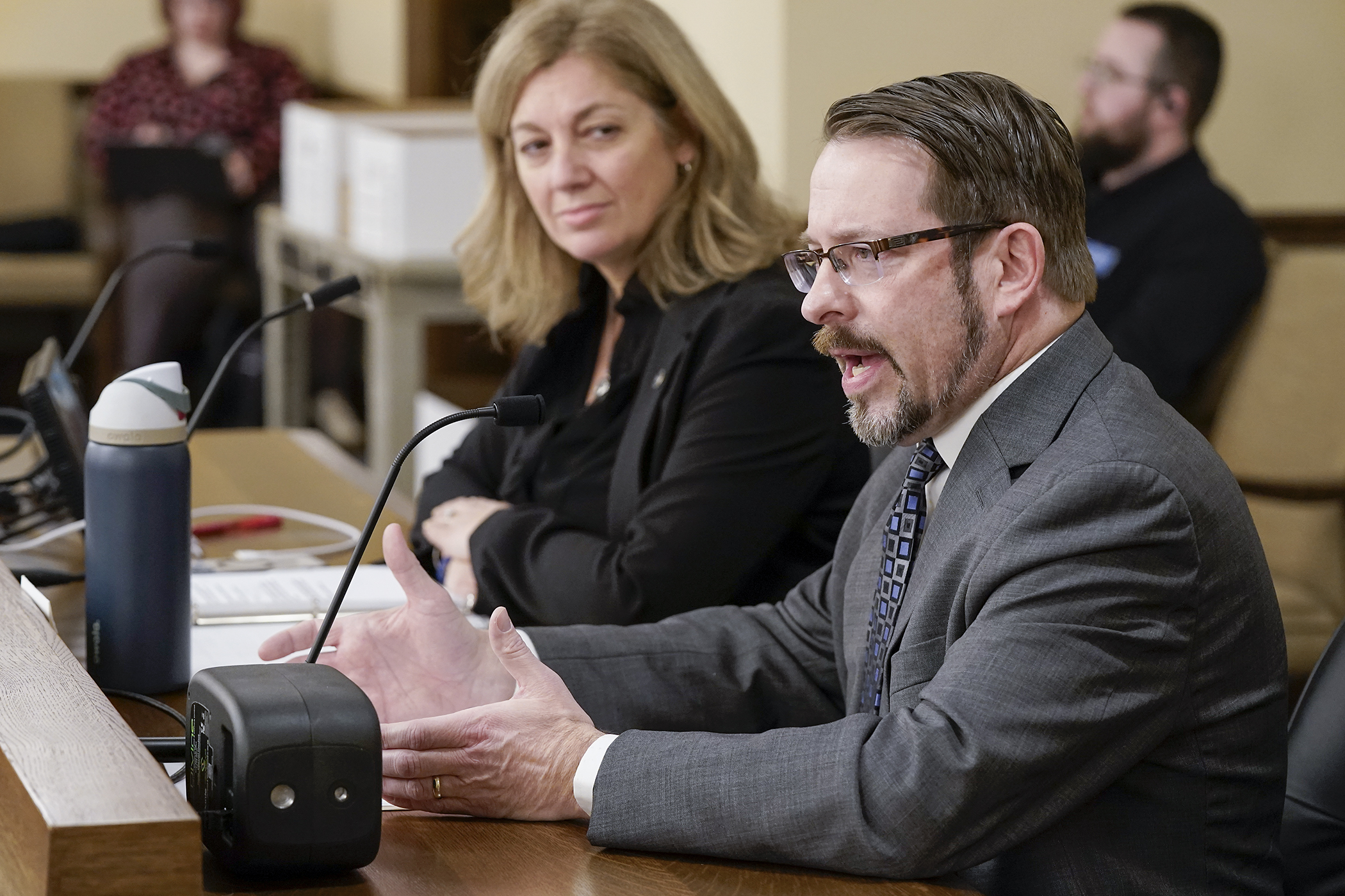
— UPDATED at 7:19 p.m.
Owatonna Public Schools has been overwhelmed the past three years with a large public data request, costing the district more than $400,000 and taking resources away from teaching students.
“We, in fact, were not able to hire four teachers as a result of this data request,” said Superintendent Jeff Elstad.
Additionally, Elstad said the district has received 12 anonymous data requests in the last three years, nine of which were ultimately abandoned, costing the district another $40,000.
To save school districts and other government entities time and expense with data requests, Rep. Julie Greene (DFL-Edina) sponsors HF1999 that, as amended, would allow a public entity, like a school district, to provide data on a rolling basis.
“If a responsible authority has notified the requesting person that responsive data or copies are available for inspection or collection, and the requesting person does not inspect the data or collect the copies, the responsible authority may suspend any further response to the request until the requesting person inspects the data that has been made available, or collects and pays for the copies that have been produced.”
The House Education Policy Committee took no action at Wednesday’s informational hearing.
“What we’ve seen in recent years is that Minnesota public schools have received an influx of data requests,” Greene said. “That in itself is not an issue, but what is an issue is that it’s been quietly putting a significant strain on valuable school resources.”
"And it’s extra-challenging if the request is large in scale, if it’s non-descript or if it needs redacting of personal data,” she added.
Rep. Peggy Bennett (R-Albert Lea) agrees there is a problem, but said it needs to be solved carefully. “We’re dealing with public transparency and we’re also dealing with fiscal responsibility with tax dollars. So, we’ve got to find that sweet spot.”
The Minnesota Government Data Practices Act allows individuals to request public data from government entities such as public school districts, but much of the private information must be redacted, which can be a time-consuming process.
Government entities can charge up to 25 cents per page for copies of requests fewer than 100 pages. Expenses of searching for and retrieving data can be included in the fee for larger requests.
Related Articles
Search Session Daily
Advanced Search OptionsPriority Dailies
Could 2026 retirements lead to record turnover in the House?
By Lisa Kaczke In the final weeks of the legislative session, House members not seeking re-election to the body have taken a turn at gaveling in a floor session.
It’s an opportunity to loo...
In the final weeks of the legislative session, House members not seeking re-election to the body have taken a turn at gaveling in a floor session.
It’s an opportunity to loo...
How short are the Legislature's short sessions?
By Lisa Kaczke Rep. Ron Kresha (R-Little Falls) was ready to end the session March 25, making the motion to adjourn sine die. But not enough of his colleagues shared that sentiment, defeating ...
