 Minnesota Legislature
Teacher mobility compact would let out-of-state teachers fill empty classrooms
One statistic remains a particularly resilient hurdle to filling the ongoing teacher shortage in the state, according to a 2025 report from the Department of Education: nearly one-third of Minnesota teachers leave the profession within the first five years.
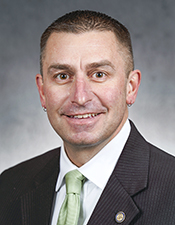
Rep. Josiah Hill (DFL-Stillwater) seeks to ease the bureaucratic state licensing burden on teachers through HF3635, which would establish an interstate teacher mobility compact allowing teachers to more easily receive teaching licenses in other states — and theoretically — bring out-of-state teachers into Minnesota classrooms.
Within the compact, each member state would create its own list of eligible licenses that would be considered for equivalency in other states, allowing teachers to apply for other state’s licenses more easily and quickly.
“This mostly would reduce the paperwork barriers so that you can, instead of asking for transcripts and all that information, just do the background check and immediately get their license,” said Yelena Bailey, executive director at the Minnesota Professional Educator Licensing and Standards Board.
Member states would remain fully in control of their state licensing, but the compact would be overseen by a new Interstate Teacher Mobility Compact Commission composed of one commissioner per member state.
The House Education Policy Committee laid the bill over Tuesday for possible omnibus bill inclusion.
Bailey said the language comes from the U.S. Department of Defense to support military spouses and has been adopted by a number of other states, including Oregon, Florida, and Washington.
“We see firsthand how licensure barriers stop teachers from filling vacancies where they are needed most,” said Patrick Baker, government relations director with Western Governors University.
In a letter, Jimmy Adams, executive director of the National Association of State Directors of Teacher Education and Certification, supports the bill, calling it “a win-win, as professional educators gain increased mobility which is consistent with being a professional, and states benefits from a wider door for effective educators and reclaiming those who left the profession.”
Related Articles
Search Session Daily
Advanced Search OptionsPriority Dailies
Could 2026 retirements lead to record turnover in the House?
By Lisa Kaczke In the final weeks of the legislative session, House members not seeking re-election to the body have taken a turn at gaveling in a floor session.
It’s an opportunity to loo...
In the final weeks of the legislative session, House members not seeking re-election to the body have taken a turn at gaveling in a floor session.
It’s an opportunity to loo...
How short are the Legislature's short sessions?
By Lisa Kaczke Rep. Ron Kresha (R-Little Falls) was ready to end the session March 25, making the motion to adjourn sine die. But not enough of his colleagues shared that sentiment, defeating ...
