 Minnesota Legislature
Public safety panel advances bill modifying rules on Brady-Giglio designations
Every profession has its bad apples — those who don’t live up to the standards set by their professions.
Think of doctors who veer away from the Hippocratic Oath for money or fame.
Now think of bad cops who veer away from “Protect and Serve” and into activity that tarnishes the profession and erodes the public’s trust.
One important way the criminal justice system deals with such miscreants is by putting peace officers with evidence of misconduct, such as untruthfulness, bias, or criminal convictions, on a Brady-Giglio list, which is a database compiled by prosecutors.
If a prosecutor is going to rely on an officer in that database to prosecute a case, the prosecutor must disclose to the defense the evidence that warranted the Brady-Giglio designation.
Thus, the list ensures defense attorneys and juries can evaluate the credibility of any courtroom testimony from a peace officer on the list.
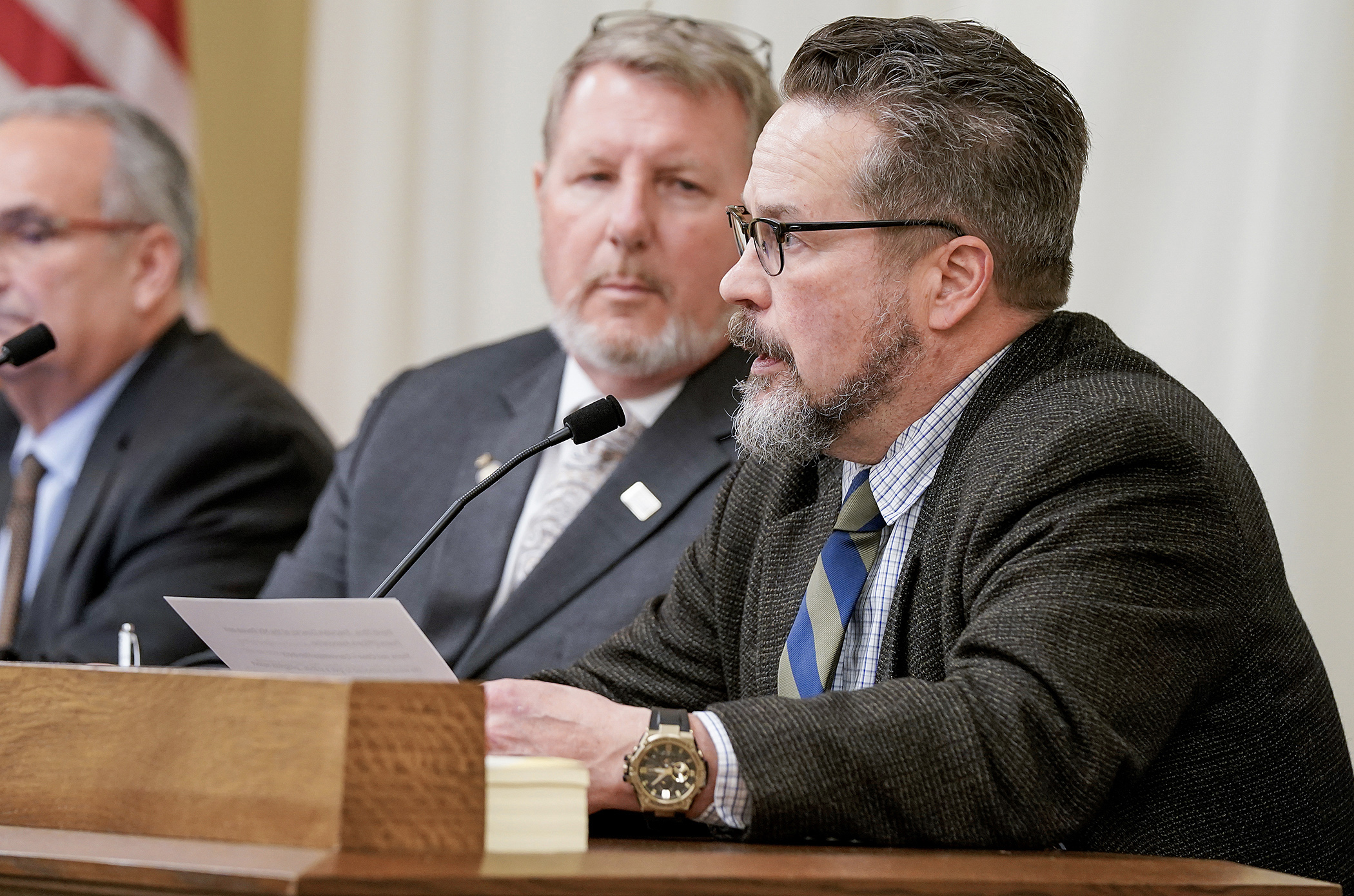
“There have been varying criteria prosecutors use to determine who gets put on a Brady-Giglio list,” said Rep. Paul Novotny (R-Elk River), a former peace officer.
Novotny, co-chair of the House Public Safety Finance and Policy Committee, sponsors HF962, which he said would “put some standards, some uniformity, and protections in place for this Brady-Giglio list.”
The committee approved the bill, as amended by a delete-all amendment, via split-voice vote Wednesday and sent it to the House Judiciary Finance and Civil Law Committee.
Introduced in February 2025, the bill would have prohibited the employer of a peace officer from discharging, disciplining, or threatening to discharge or discipline the officer solely due to a prosecuting agency determining that the officer is “Brady-Giglio impaired.”
Several prosecutors and representatives from law enforcement organizations met in the interim and agreed to an updated bill that does not contain those provisions, but instead focuses on protecting private personnel data prosecuting agencies can access to determine Brady-Giglio determinations.
Rep. Dave Pinto (DFL-St. Paul) commended the two sides for finding common ground, before adding that he hopes the bill would also receive input from public defenders.
Specifically, the bill would require all prosecuting authorities to develop a written policy to guide the process of seeking and reviewing personnel data and disclosing personnel data if determined to be Brady-Giglio material in all criminal actions in Minnesota.
Prosecutors would be prohibited from creating a blanket “do not call list” that would ban a person on a Brady-Giglio list from testifying in all types of court proceedings. Rather, the Brady-Giglio status of a person would be determined on a case-by-case basis depending on the specifics of a court case.
Related Articles
Search Session Daily
Advanced Search OptionsPriority Dailies
Could 2026 retirements lead to record turnover in the House?
By Lisa Kaczke In the final weeks of the legislative session, House members not seeking re-election to the body have taken a turn at gaveling in a floor session.
It’s an opportunity to loo...
In the final weeks of the legislative session, House members not seeking re-election to the body have taken a turn at gaveling in a floor session.
It’s an opportunity to loo...
How short are the Legislature's short sessions?
By Lisa Kaczke Rep. Ron Kresha (R-Little Falls) was ready to end the session March 25, making the motion to adjourn sine die. But not enough of his colleagues shared that sentiment, defeating ...
