 Minnesota Legislature
Commerce committee looks ahead to reinsurance’s future with bill extension
Minnesota will need to reapply for the state innovation waiver for its reinsurance program next year, but lawmakers well versed on the topic won’t be at the Capitol to do so.
All four leaders of the House and Senate commerce committees have announced they’re either not running for re-election or seeking a different office.
“It means that new people will be assuming those roles and that institutional knowledge, which is probably close to 70 years of knowledge plus or minus, closer to 60, is walking out the door,” said Rep. Tim O'Driscoll (R-Sartell), co-chair of the House Commerce Finance and Policy Committee.
The Minnesota Premium Security Plan, also called the reinsurance program, stabilizes health insurance premiums by offsetting insurer’s high-cost claims and lowers premiums for the 187,000 residents who buy their health insurance on the individual market.
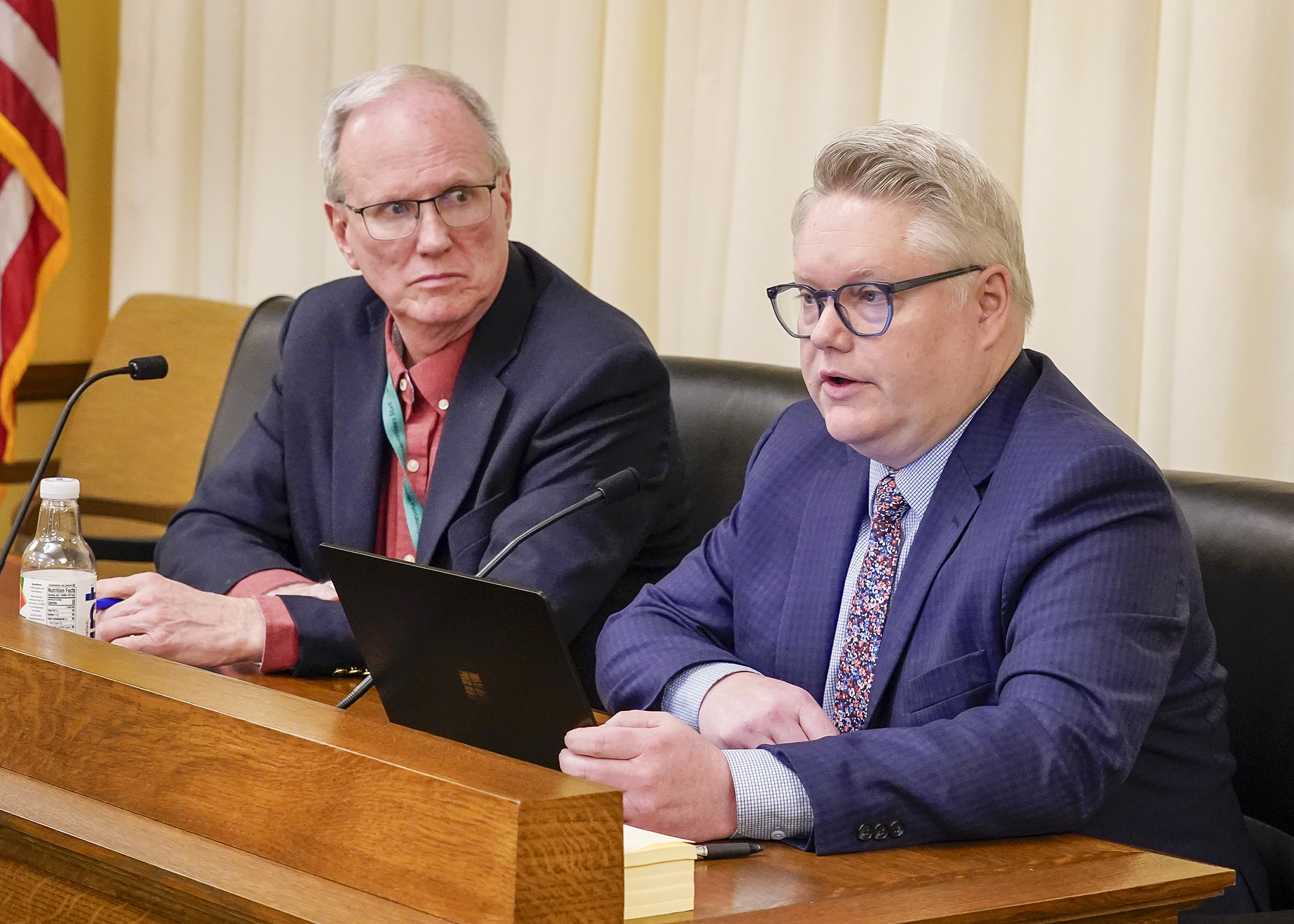 Dan Endresen, senior director of policy and government affairs for the Minnesota Council of Health Plans, testifies March 5 in support of a bill sponsored by Rep. Tim O'Driscoll, left, that would extend the reinsurance program. (Photo by Andrew VonBank)
O’Driscoll is sponsoring HF3388, as amended, to extend aspects of the reinsurance program so the Legislature has options for the program in 2027. If the bill isn’t passed, those options will not be available next year and “the cost of individual premiums will go up substantially,” he said, adding that lawmakers will hear from constituents if that happens.
The committee laid the bill over Thursday for possible omnibus bill inclusion.
The Legislature passed a commerce policy and budget law last year that extended the reinsurance program on the waiver from the U.S. Department of Health and Human Services and changed the funding structure for the reinsurance program. Its funding will move from the Health Care Access Fund to an assessment on group health carriers.
HF3388 continues the assessment process beyond 2027 if the Legislature decides to go forward with the reinsurance program and directs the Department of Commerce to apply for another waiver for the program by Dec. 31, 2026.
The reinsurance program was created nearly a decade ago to keep health insurance more affordable. People who buy plans on the individual health insurance market are often said to be “the sickest of the sick,” but it also includes early retirees, people in a transition and people who have a health condition that makes them unable to work and have access to an employer-based plan, O’Driscoll said.
Reinsurance lowered premiums by 47% this year and the expiration of the federal enhanced premium tax credit necessitates the continuation of the reinsurance program to stabilize the market, said Dan Endresen, senior director of policy and government affairs at the Minnesota Council of Health Plans.
Related Articles
Search Session Daily
Advanced Search OptionsPriority Dailies
Could 2026 retirements lead to record turnover in the House?
By Lisa Kaczke In the final weeks of the legislative session, House members not seeking re-election to the body have taken a turn at gaveling in a floor session.
It’s an opportunity to loo...
In the final weeks of the legislative session, House members not seeking re-election to the body have taken a turn at gaveling in a floor session.
It’s an opportunity to loo...
How short are the Legislature's short sessions?
By Lisa Kaczke Rep. Ron Kresha (R-Little Falls) was ready to end the session March 25, making the motion to adjourn sine die. But not enough of his colleagues shared that sentiment, defeating ...
