 Minnesota Legislature
Higher wages for care workers aiding multiple clients at once placed on hold
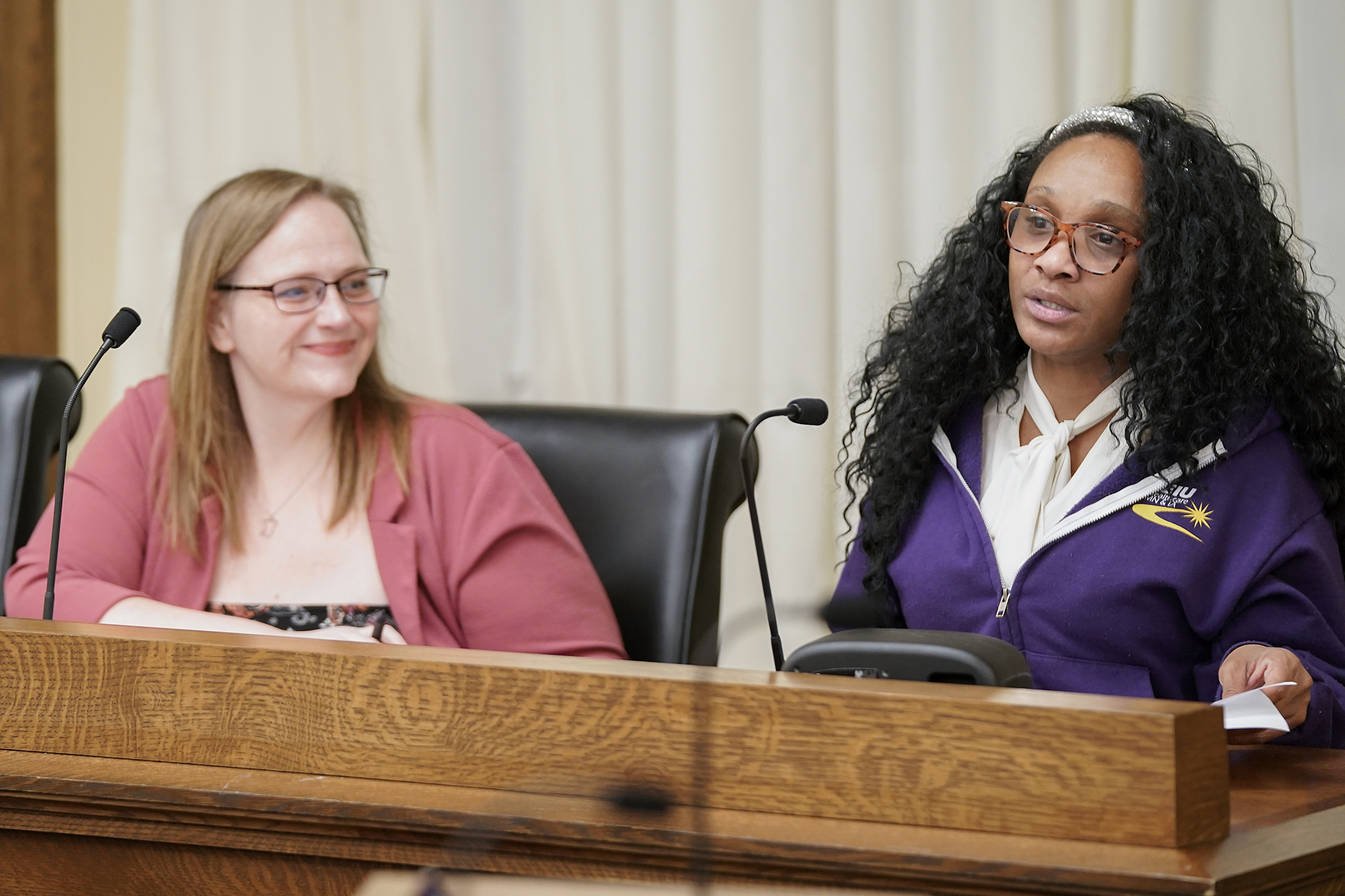
Personal care assistants providing shared services for multiple clients at the same time could be guaranteed a percentage of state reimbursements.
Sponsored by Rep. Kim Hicks (DFL-Rochester), HF3780 would require providers to use an unspecified percentage of additional revenue for these shared services for worker wages.
The bill was laid over Tuesday by the House Human Services Finance and Policy Committee.
The state pays a 150% premium reimbursement rate for two clients or 200% for three, Hicks said, adding that this saves state money because it pays fewer hours for individual services. “It’s a great example of how we can be person-centered and fiscally responsible.”
While many providers already pay more to workers serving multiple clients, as state reimbursements increase it is not legally mandated that pay also increase, Hicks said.
It is common for workers serving multiple clients to receive time and a half or double pay, said Tavona Johnson, a St. Paul home care worker and SEIU executive board member, but it is not industry standard. Johnson spoke with a shared service worker who was only making a few dollars more per hour than the current state minimum wage for workers serving a single client.
“Providing care for two or three clients means a lot of extra work,” Johnson said. “There are some efficiencies, but you still have to assist with twice as many activities.”
Rep. Brion Curran (DFL-White Bear Lake) has worked on the provider side of reimbursements and believes the bill would help create a needed framework.
“Good providers who really want to keep their staff want other providers to be held to the same standard,” Curran said.
Rep. Steve Gander (R-East Grand Forks) asked if this kind of change could be left to union negotiation rather than mandated in state law.
Collective bargaining units can only go so far, Hicks responded. “When all of your funding comes from taxpayer dollars, the Legislature has a role and a responsibility to make sure that these dollars are going to the intended purpose.”
Related Articles
Search Session Daily
Advanced Search OptionsPriority Dailies
Could 2026 retirements lead to record turnover in the House?
By Lisa Kaczke In the final weeks of the legislative session, House members not seeking re-election to the body have taken a turn at gaveling in a floor session.
It’s an opportunity to loo...
In the final weeks of the legislative session, House members not seeking re-election to the body have taken a turn at gaveling in a floor session.
It’s an opportunity to loo...
How short are the Legislature's short sessions?
By Lisa Kaczke Rep. Ron Kresha (R-Little Falls) was ready to end the session March 25, making the motion to adjourn sine die. But not enough of his colleagues shared that sentiment, defeating ...
