 Minnesota Legislature
Public safety committee rejects bill to increase penalties for misconduct by public officials
Under current law, a public officer or employee who commits certain misconduct is guilty of a gross misdemeanor.
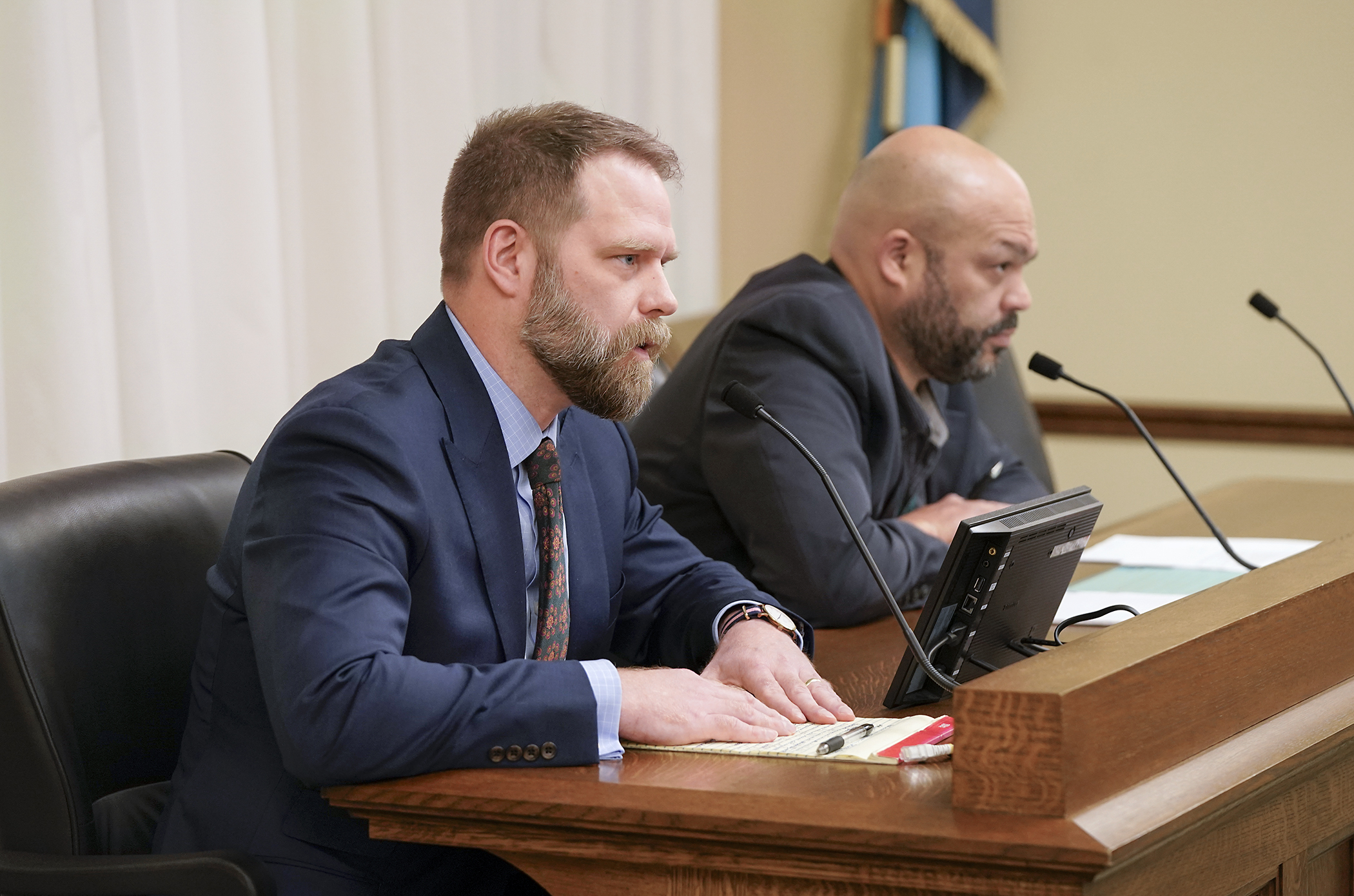
Because Rep. Walter Hudson (R-Albertville) sees those penalties as insufficient, he sponsors HF3822 to increase the penalty to a felony, meaning up to five years behind bars for repeat offenders.
He said the bill aims to stop specific types of misconduct by state employees that led to fraud in the grants programs managed by the Department of Human Services and outlined in a January 2026 report by the Office of the Legislative Auditor.
That report found “systemic problems” in the department’s operations including employees fraudulently backdating documents.
“That type of behavior I think is well beyond the pale of what’s expected from the folks who we pay with taxpayer dollars to administer the business of this state,” Hudson said.
Failing to get out of the House Public Safety Finance and Policy Committee Wednesday along party lines, the bill is one of several addressing fraud in state government programs that are included in Republican legislative priorities announced at the start of the 2026 session.
The types of misconduct outlined in the bill include intentionally failing or refusing to perform a nondiscretionary duty; acting in excess of lawful authority; unlawfully injuring another under pretense of official authority; and making an official report or other document knowing that it is false.
Erin Campbell, commissioner of Minnesota Management and Budget, stated in a letter that the proposed legislation is “too broad to add such severe criminal penalties” and that “a one-size-fits-all penalty increase ignores the wide variation in severity among potential violations.”
Devin Bruce, director of legislative and political affairs at Minnesota Association of Professional Employees, shares Campell’s concerns, and said the bill would have a chilling effect on whistleblowers and could be used to punish “rank and file workers” who were following directives from their superiors while not punishing those ordering the misdeeds.
Rep. Dave Pinto (DFL-St. Paul) and Rep. Kelly Moller (DFL-Shoreview), both prosecutors, said that in their experiences upgrading crimes to a felony makes them less likely to be charged.
Related Articles
Search Session Daily
Advanced Search OptionsPriority Dailies
Could 2026 retirements lead to record turnover in the House?
By Lisa Kaczke In the final weeks of the legislative session, House members not seeking re-election to the body have taken a turn at gaveling in a floor session.
It’s an opportunity to loo...
In the final weeks of the legislative session, House members not seeking re-election to the body have taken a turn at gaveling in a floor session.
It’s an opportunity to loo...
How short are the Legislature's short sessions?
By Lisa Kaczke Rep. Ron Kresha (R-Little Falls) was ready to end the session March 25, making the motion to adjourn sine die. But not enough of his colleagues shared that sentiment, defeating ...
