 Minnesota Legislature
Bill to regulate license plate readers stalls in judiciary panel
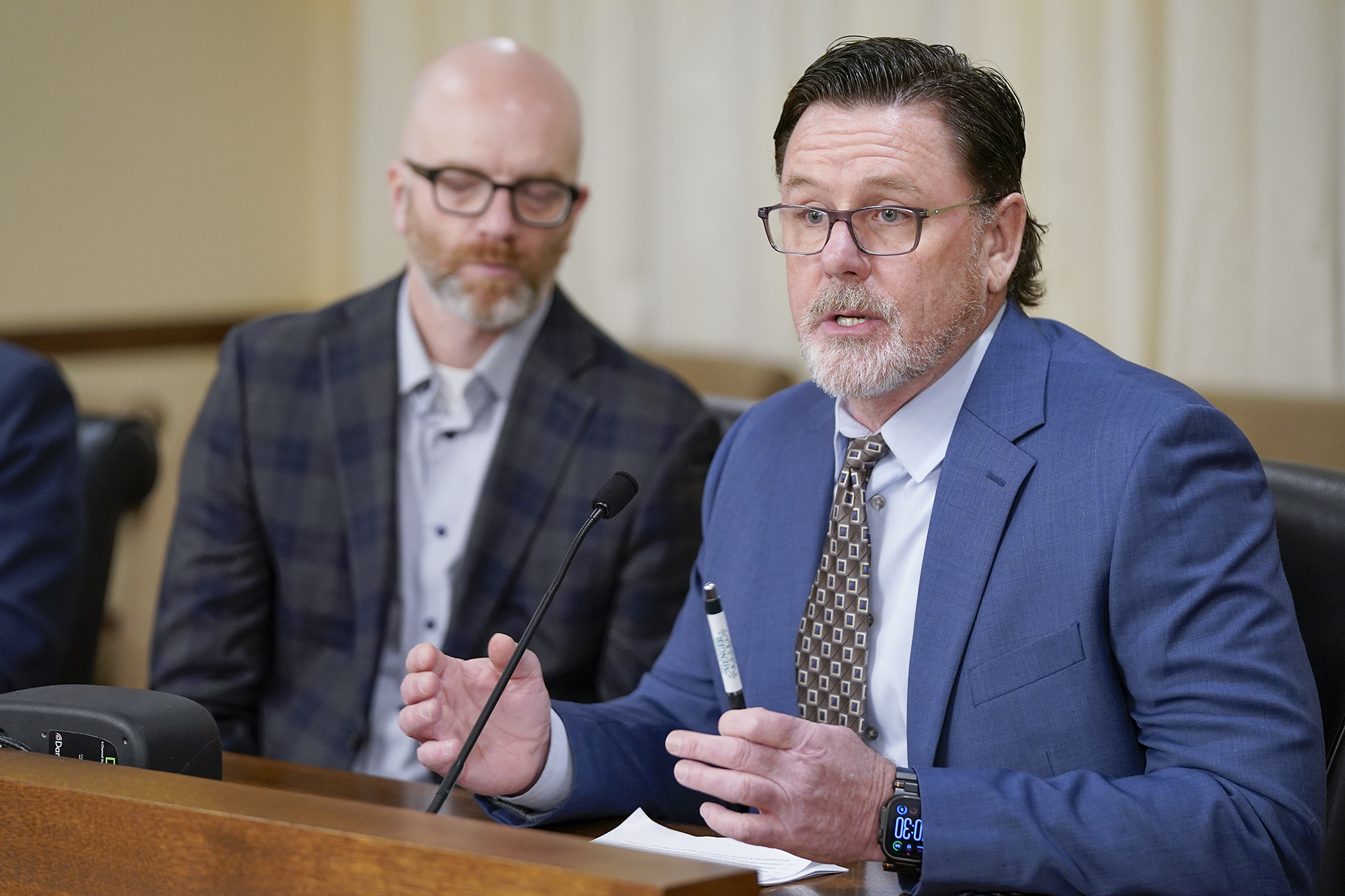
Automated license plate readers are valuable tools that law enforcement can use to catch the bad guys.
But unlike red light or speed cameras, they are not activated by a suspected violation of the law. They instead passively collect data on all motorists who drive by a camera and store that information in cloud-powered, searchable databases managed by private technology firms who contract with law enforcement.
But Rep. Brad Tabke (DFL-Shakopee) says these readers can collect private information that goes far beyond the scope of legitimate law enforcement needs.
Worse, he says, there are few restrictions on how that information is accessed and by whom.
He sponsors HF4205 that would change the Government Data Practices Act to restrict who can access data from license plate readers. For example, prohibiting data from being shared or disseminated outside the state unless required by a court order or judicial warrant.
“This is critical data that needs to be protected,” he said.
However, as amended, the bill failed to advance out of the House Judiciary Finance and Civil Law Committee Tuesday on a 7-7 party-line roll-call vote.
Republicans said the restrictions could unintentionally impede legitimate law enforcement investigations.
John Boehler, policy counsel of the American Civil Liberties Union Minnesota, supports the bill because it would require law enforcement agencies to maintain detailed audit trails on when data is entered, accessed, shared or disseminated.
Those audits would reveal if the technology is being used for legitimate law enforcement purposes, he said, or if it is violating Fourth Amendment rights requiring warrants before tracking the movements of law-abiding people.
Committee Co-Chair Rep. Peggy Scott (R-Andover) shares the data privacy concerns raised by the bill, adding that the 2015 law authorizing the use of automated license readers needs to be revisited to keep up with the quickly advancing technology they employ. But she said this bill is not the correct path to do so.
“There are some things that need to be tweaked,” she said. “I really do want to work on this going forward and I commit to doing that.”
Related Articles
Search Session Daily
Advanced Search OptionsPriority Dailies
Could 2026 retirements lead to record turnover in the House?
By Lisa Kaczke In the final weeks of the legislative session, House members not seeking re-election to the body have taken a turn at gaveling in a floor session.
It’s an opportunity to loo...
In the final weeks of the legislative session, House members not seeking re-election to the body have taken a turn at gaveling in a floor session.
It’s an opportunity to loo...
How short are the Legislature's short sessions?
By Lisa Kaczke Rep. Ron Kresha (R-Little Falls) was ready to end the session March 25, making the motion to adjourn sine die. But not enough of his colleagues shared that sentiment, defeating ...
