 Minnesota Legislature
House passes restrictions on social media to safeguard underage users
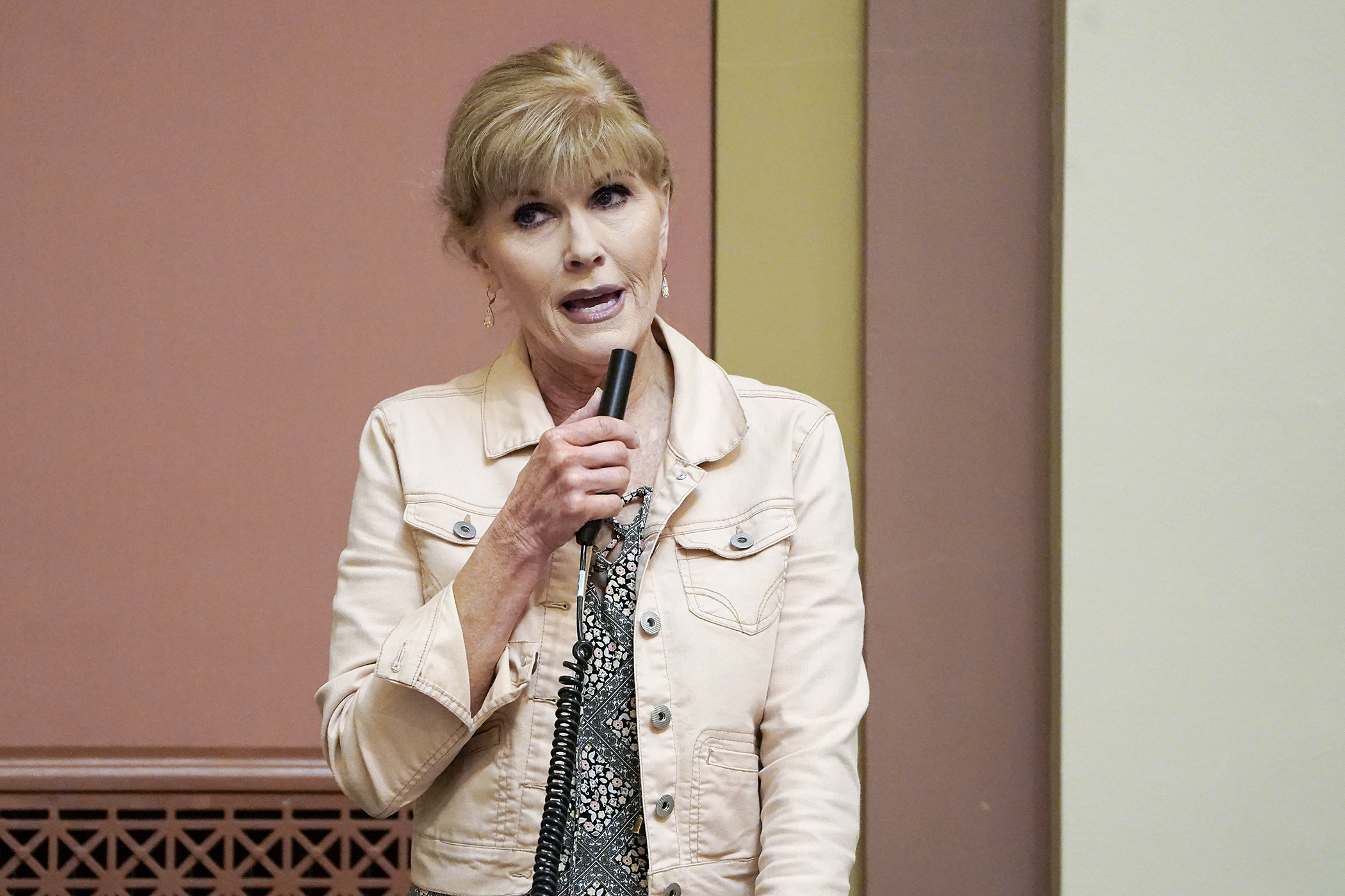
A fundamental redesign of the look and feel of the content in a child’s social media feeds received strong House support Tuesday.
“No more ads, no more push notifications, no more infinite scrolling … and the strongest privacy protections,” Rep. Peggy Scott (R-Andover) said.
She believes children are especially vulnerable to the dangers posed by social media and need extra protection and therefore sponsors HF4138, which would require age monitoring and verification for social media platforms, parental approval, and specific treatment of accounts for children under age 16 related to addictive features, paid advertising, and the creation and termination of accounts.
Passed 132-2, the amended bill next goes to the Senate.
The bill would not ban younger users from having social media, Scott emphasized, rather it would require a parent or guardian to approve of social media contractual agreements.
Socal media companies would be required to use their software to determine the age of a person signing up to their platform. If the new user is 15 or younger, parental permission would be required and a restriction would limit what content could be shown. Scott said companies can make these adjustments by using the technology they already employ.
Privacy settings for younger users would be automatically set to the highest level, which would restrict, for example, only content sharing between a child’s direct friends.
This would be a big step to keep grooming, pedophiles, drug dealing, sexploitation and sex traffickers away from vulnerable children, Scott said.
Rep. Kristin Bahner (DFL-Maple Grove) unsuccessfully offered an amendment that would have raised to 18 the age that users would be protected. She said the bad actors trying to exploit our vulnerable children will still be out there after a child turns 16.
“It’s time that we tell big tech that we’re going to protect kids and not their profits,” Bahner said.
Scott said she chose the age of 16 because social media companies have successfully sued other states that have extended similar protections to older children.
Rep. Andy Smith (DFL-Rochester) successfully offered an amendment that would require social media platforms to promptly inform the Bureau of Criminal Apprehension if in monitoring a user’s account they suspect that a criminal offense involving a threat to the life or safety of a person or persons has taken place, is taking place, or is likely to take place.
Related Articles
Search Session Daily
Advanced Search OptionsPriority Dailies
Could 2026 retirements lead to record turnover in the House?
By Lisa Kaczke In the final weeks of the legislative session, House members not seeking re-election to the body have taken a turn at gaveling in a floor session.
It’s an opportunity to loo...
In the final weeks of the legislative session, House members not seeking re-election to the body have taken a turn at gaveling in a floor session.
It’s an opportunity to loo...
How short are the Legislature's short sessions?
By Lisa Kaczke Rep. Ron Kresha (R-Little Falls) was ready to end the session March 25, making the motion to adjourn sine die. But not enough of his colleagues shared that sentiment, defeating ...
