 Minnesota Legislature
Licensure compact plan to allow morticians from outside Minnesota to practice here still has life
If a funeral home director takes their last ride to work in a coffin, who fills their position? In Minnesota, it’d be someone with a four-year degree.
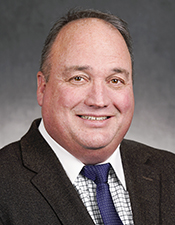
Minnesota is one of only four states across the country that requires a bachelor’s degree in mortuary science to practice, a requirement Rep. John Huot (DFL-Rosemount) says is exacerbating a workforce shortage.
He sponsors HF84 to establish a mortuary science licensure compact to allow morticians who have practiced in states that don’t require four-year degrees to practice in Minnesota.
The bill was laid over Monday by the House Health Finance and Policy Committee.
In lieu of a four-year degree, the bill would require a mortuary scientist from another jurisdiction be credentialed and receive a passing score on the national board exam or similar exam. They would also be required to have performed at least 25 funeral services, completed at least 25 funeral arrangements and performed at least 25 embalming cases.
Rep. Tina Liebling (DFL-Rochester) is concerned that the bill does not address the root of the problem. Instead, she would like to see licensing requirements change statewide.
The University of Minnesota is one of only a handful of schools in the country that offers a four-year degree in mortuary science because of the state’s education requirement.
“I wonder, if we pass this, if it almost encourages someone to — instead of starting their career in Minnesota — to move out of state, work for three years and then come back,” Liebling said.
In written testimony, Jay Dietz, vice president of funeral practice and experience for Vertin, said the bachelor’s degree requirement “is keeping qualified morticians from helping Minnesotans in their time of greatest need.”
A report by St. Paul-based Real Time Talent, he indicated, found Minnesota currently has only 51 licensed funeral directors for every 100 open positions, one in three are 65 or older and 50% of the workforce is projected to be gone by 2029.
Related Articles
Search Session Daily
Advanced Search OptionsPriority Dailies
Could 2026 retirements lead to record turnover in the House?
By Lisa Kaczke In the final weeks of the legislative session, House members not seeking re-election to the body have taken a turn at gaveling in a floor session.
It’s an opportunity to loo...
In the final weeks of the legislative session, House members not seeking re-election to the body have taken a turn at gaveling in a floor session.
It’s an opportunity to loo...
How short are the Legislature's short sessions?
By Lisa Kaczke Rep. Ron Kresha (R-Little Falls) was ready to end the session March 25, making the motion to adjourn sine die. But not enough of his colleagues shared that sentiment, defeating ...
