 Minnesota Legislature
House health panel takes no action on bill to mandate coverage for infertility treatment
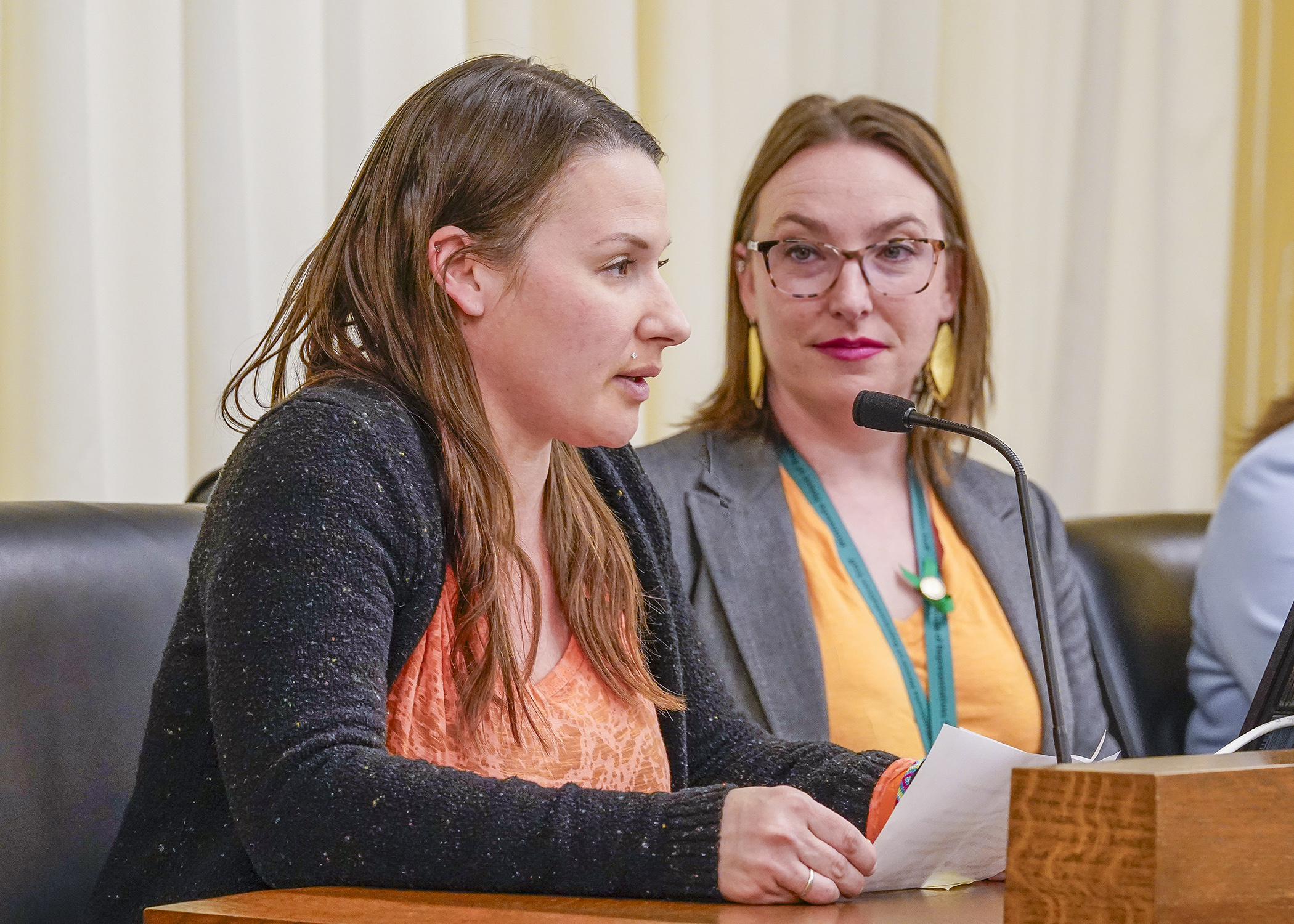
Jennifer Stein sat at the testifier table Wednesday and described herself as a mother, wife and spouse of a cancer survivor.
She told the House Health Finance and Policy Committee that her husband was diagnosed with leukemia in 2014 and how their journey ended with a child.
“Following his diagnosis, his doctors told us the treatment that would be used to save his life would also take away his ability to one day become a father. So, before treatment began, he chose to preserve his fertility and we were focused on survival, but also held onto hope. Years later when he was healthy and were ready to grow our family, we learned that because of the side effects of his life-saving treatment we would also need (in-vitro fertilization) to have a child.
“Our employer-sponsored insurance covered only a fraction of the amount it cost. We drained our savings, held fundraisers and leaned in on the generosity of our families. After one round of IVF we were blessed with our daughter, Kennedy, who was born in 2022. She’s the light of our lives.”
Twenty-five states have laws requiring some form of insurance coverage for infertility. Minnesota is not one of them.
Rep. Carlie Kotyza-Witthuhn (DFL-Eden Prairie) sponsors HF4609 to require Minnesota health plans to cover infertility treatments. “Families cash out their 401Ks, take out second mortgages, max out credit cards, take out loans and even have bake sales just to have a child,” she said.
No committee action was taken.
“In Minnesota one in six experience infertility,” said Miraya Gran, president of the Minnesota Building Families Coalition.
“Think of someone you know who’s faced cancer and imagine telling them that you may survive but lose your chance to become a parent. And not because of access to medical treatment that doesn’t exist, but because your insurance simply doesn’t cover it. It’s cruel and it’s unnecessary and it’s also fixable,” said Stein, who has two more embryos remaining, but with their family’s current insurance “the door’s closed by cost.”
Gran asked legislators to look at the bill as a health prerogative. “Fertility coverage doesn’t just save families and businesses financially; it saves lives too. Patients are more likely to choose single-embryo transfer, reducing high-risk pregnancies and costly NICU stays.”
Not all testifiers agreed that fertility treatment should be covered.
Maggee Hangge, assistant director for operations and family policy at the Minnesota Catholic Conference, said many embryos in IVF clinics “die,” and urged legislators to vote against the bill. “We must recognize that children are gifts, not a commodity.”
Until protections for embryos are put in place, Rep. Krista Knudsen (R-Lake Shore) can’t support the bill. “I think we’re putting the cart before the horse here.”
Knudsen had three of her children with the help of IVF. Her doctor told her it would cost tens of thousands of dollars each time. “I wanted a family, so we sacrificed and we did everything we could to save that money, and we did what it took.” But during this process, she learned what happens to unused embryos collected for the procedure; families either choose to store them long-term, donate them to other infertile couples, donate them to scientific research or dispose of them.
Other legislators voiced concern that the bill could lead to higher health insurance premiums and asked about how much it would cost the state.
Gran said in the 25 states with fertility coverage there has been “little impact” on insurance premiums.
Kotyza-Witthuhn said the change would cost $1.8 million in Fiscal Year 2027, $4.3 million in Fiscal Year 2028 and $4.3 million in Fiscal Year 2029 with funds coming from the General Fund and Health Care Access Fund.
Related Articles
Search Session Daily
Advanced Search OptionsPriority Dailies
Could 2026 retirements lead to record turnover in the House?
By Lisa Kaczke In the final weeks of the legislative session, House members not seeking re-election to the body have taken a turn at gaveling in a floor session.
It’s an opportunity to loo...
In the final weeks of the legislative session, House members not seeking re-election to the body have taken a turn at gaveling in a floor session.
It’s an opportunity to loo...
How short are the Legislature's short sessions?
By Lisa Kaczke Rep. Ron Kresha (R-Little Falls) was ready to end the session March 25, making the motion to adjourn sine die. But not enough of his colleagues shared that sentiment, defeating ...
