 Minnesota Legislature
House workforce panel advances omnibus bill that would overhaul state grant process
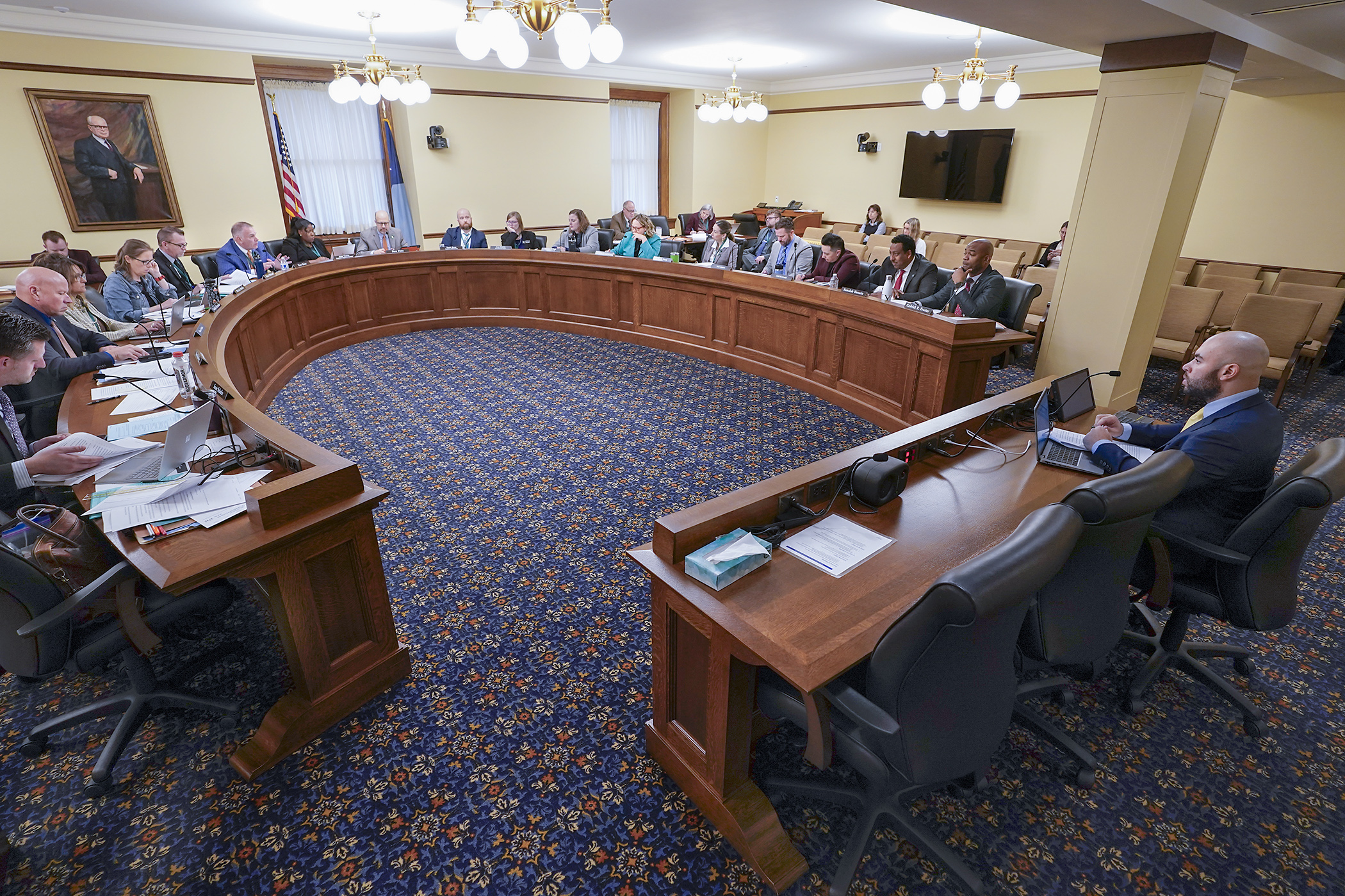
For Rep. Dave Baker (R-Willmar), the past two years chairing the House Workforce, Labor, and Economic Development Finance and Policy Committee clarified a central mission: shift committee work away from direct appropriations to a competitive, accountable grant-making process.
Baker noted that even before recent high-profile fraud cases, he and Committee Co-Chair Rep. Dave Pinto (DFL-St. Paul) shared a sense that when it comes to grant-making, “We can do better.”
The co-chairs believe HF3732, as amended and sent to the House Ways and Means Committee on a voice vote Thursday, can offer an improvement to the current system.
Sponsored by Pinto, the finance and policy bill would create an Office of Community Investment, responsible for overseeing Department of Employment and Economic Development grant programs.
Funding grants this way could break a committee pattern during budget years: meetings where three, four, or five organizations describe their work and request state dollars, often without members having clear information on past grant outcomes.
Worthy as many proposals are, noted Rep. Emma Greenman (DFL-Mpls), the programs might be funded through end-of-session bartering instead of best serving legislative goals.
As amended, the bill would require the new office to engage stakeholders in the Legislature, executive branch and wider community. Programs would be designed around achievable goals, and the office would be charged with transparency of grantmaking, maintaining best practices and tracking outcomes.
Pinto acknowledged the department is “still digesting” the proposal, but he argues the structure could strengthen accountability, saying legislators sometimes never learn whether a funded initiative achieved the outcomes intended.
The bill would take other steps aiming to improve the grantmaking process by establishing a health care workforce grant program.
And it would create a Workforce Development Board subcommittee to recommend how up to $10 million from the Workforce Development Fund should be allocated. Baker previously proposed the subcommittee in HF3843, with the idea that regional workforce boards are well positioned to see gaps between available jobs and people ready to fill them.
Appropriations of $400,000 from the General Fund to set up the new office and $400,000 from the Workforce Development Fund to fund the new subcommittee are included.
[MORE: View the spreadsheet]
Other provisions would:
- extend the availability of unemployment benefits for laid off Iron Range workers;
- modify a Rural Cancer Institute pilot program so it prioritizes Minnesota students and clinicians, while allowing participation from elsewhere in the U.S., and all care is provided in Minnesota;
- make support services such as child care or transportation an allowable cost in youth employment and cannabis training programs instead of having a separate grant program for support services;
- require the Department of Employment and Economic Development to allow individuals on a medical assistance waiver to receive extended employment services when necessary;
- codify the Pathways to Prosperity program;
- make changes, mostly technical, to building code enforcement and installers' licenses as requested by the Department of Labor and Industry;
- reorganize Explore Minnesota councils as requested by the agency; and
- repeal outdated programs, most of which haven't received funding in 20 or more years.
****
The following are bills that have been incorporated in part or in whole into the omnibus workforce, labor and economic development finance and policy bill:
Related Articles
Search Session Daily
Advanced Search OptionsPriority Dailies
Could 2026 retirements lead to record turnover in the House?
By Lisa Kaczke In the final weeks of the legislative session, House members not seeking re-election to the body have taken a turn at gaveling in a floor session.
It’s an opportunity to loo...
In the final weeks of the legislative session, House members not seeking re-election to the body have taken a turn at gaveling in a floor session.
It’s an opportunity to loo...
How short are the Legislature's short sessions?
By Lisa Kaczke Rep. Ron Kresha (R-Little Falls) was ready to end the session March 25, making the motion to adjourn sine die. But not enough of his colleagues shared that sentiment, defeating ...
