 Minnesota Legislature
Proposed rules on motorized bikes, motorcycles headed to House Floor
What hit Janet Stotko? That’s been a controversy among law enforcement, insurance companies and advocacy organizations focused on bicycles and motorcycles.
What’s known is that Stotko was out for a walk in Hastings one evening last summer when she was struck from behind by a vehicle on the sidewalk going an estimated 25 mph. She suffered a traumatic brain injury and broken bones. The driver of the vehicle was 14 years old.
But what kind of vehicle was it? News stories called it an “e-bike,” but that turned out to be inaccurate. It was actually what those in the industry call an “e-moto,” too big to be considered a bicycle and not fitting into the current definition of a motorcycle. And there’s nothing in Minnesota statute regarding regulations on an “e-moto.”
Sponsored by Rep. Tom Dippel (R-Cottage Grove), HF3785 would categorize these vehicles as electric motorcycles and regulate them in much the same way as motorcycles with combustion engines.
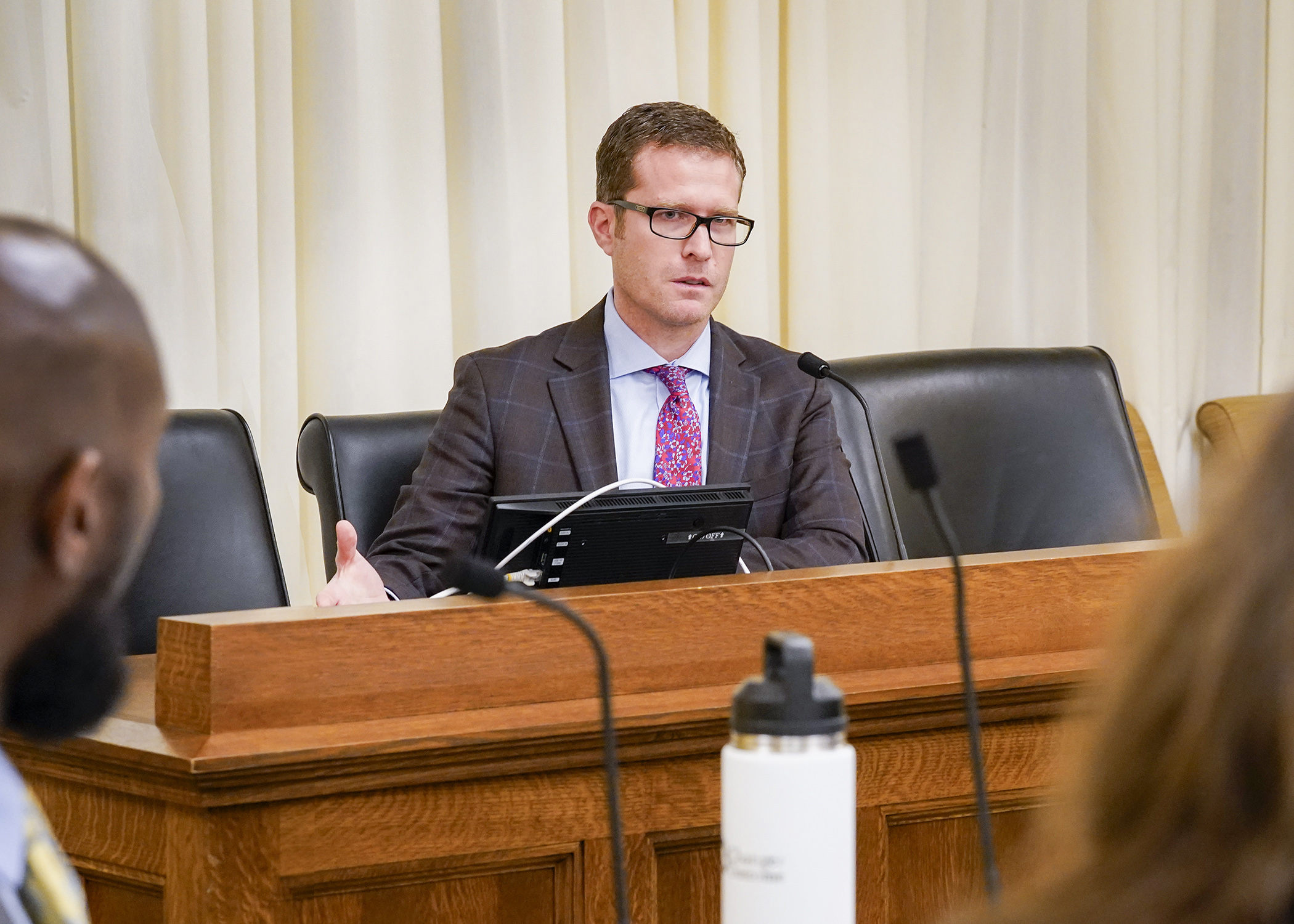 Rep. Tom Dippel presents HF 3785 to the House Ways and Means Committee April 20. The bill would regulate motorized bicycles. (Photo by Andrew VonBank)
On Monday, the House Ways and Means Committee approved the bill, as amended, and sent it to the House Floor.
“Currently, there isn’t a good classification for an electric motorcycle,” Dippel said. “So an individual could be driving an electric motorcycle, get into an accident – like happened to a constituent of mine – cause severe injury to that individual, and there isn’t clarity for law enforcement to be able to either define that that was a motorcycle, that it only belonged on a public right-of-way, and what are the ramifications to the individual who was injured? How are they made whole?”
The bill would:
- amend the definitions of motorcycles, off-highway motorcycles, micromobility devices and motorized bicycles;
- authorize motorized bicycle registration with both the Department of Natural Resources for operation as an off-highway motorcycle and the Department of Public Safety for operation on public roads; and
- make changes in dealer licensing, regulations and bonds.
The committee approved an amendment that would appropriate $30,000 in Fiscal Year 2027 from the off-highway motorcycle account in the natural resources fund for related signage, communications and outreach materials.
Motorized bicycles would be removed from the state’s definition of a “micromobility device,” which would be limited to bicycles, motorized foot scooters and electric personal assistive mobility devices. Vehicles within that category would have their powered top speed reduced from 30 to 20 mph and their maximum weight lowered from 500 to 100 pounds.
As for motorized bicycles, their electric motors would be required to have an output between 750 and 1,500 watts.
The Legislative Budget Office estimates that the bill’s changes would increase state costs by $1,000 in Fiscal Year 2027, but save $64,000 in the next biennium.
Related Articles
Search Session Daily
Advanced Search OptionsPriority Dailies
Could 2026 retirements lead to record turnover in the House?
By Lisa Kaczke In the final weeks of the legislative session, House members not seeking re-election to the body have taken a turn at gaveling in a floor session.
It’s an opportunity to loo...
In the final weeks of the legislative session, House members not seeking re-election to the body have taken a turn at gaveling in a floor session.
It’s an opportunity to loo...
How short are the Legislature's short sessions?
By Lisa Kaczke Rep. Ron Kresha (R-Little Falls) was ready to end the session March 25, making the motion to adjourn sine die. But not enough of his colleagues shared that sentiment, defeating ...
