 Minnesota Legislature
Transportation panel approves plan for a Metro Transit takeover of suburban routes
On Feb. 18, the House Transportation Finance and Policy Committee learned about the Twin Cities area’s most expensive transit routes. The members heard about 28 bus lines that had been recommended for restructuring or elimination based on ridership figures that showed the state was paying between $23.83 and $110.30 per passenger.
On Wednesday, the committee’s co-chair, Rep. Jon Koznick (R-Lakeville), presented an option for cutting these costs.
He sponsors HF4111 that would consolidate all of the Twin Cities metropolitan area’s transit operations under the umbrella of Metro Transit, which is overseen by the Metropolitan Council.
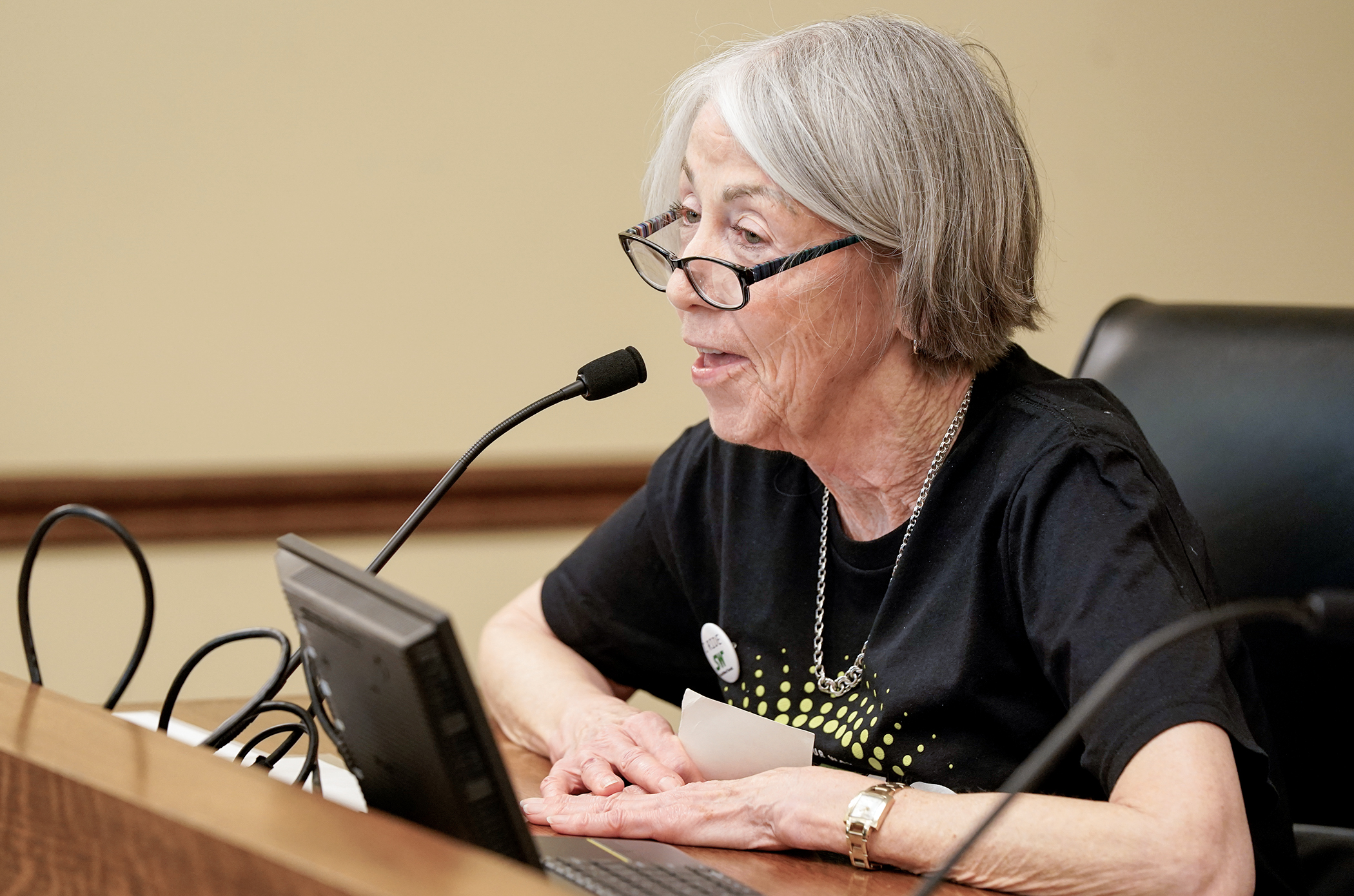 Carol Saefka describes to the House transportation committee her reliance on SouthWest Transit. She spoke against HF4111, sponsored by Rep. Jon Koznick to consolidate most transit service in the Twin Cities metropolitan area. (Photo by Michele Jokinen)
Such a proposal would mean Metro Transit taking over the operations of the Minnesota Valley Transit Authority — 18 of the 28 lines recommended to be cut are part of that system — SouthWest Transit, Plymouth MetroLink and the bus system of Maple Grove.
The committee approved the bill, as amended, by a voice vote and referred it to the House Ways and Means Committee.
“This restructures our bus service in the metropolitan area,” Koznick said. “This proposal makes sense for efficiency and fiscal and rider service reasons. The estimate is that we can save $50 million every budget cycle.
“Good routes in these suburban areas will continue to be served. But we cannot continue to fund routes that people don’t use that are three times more expensive than similar routes.”
The bill would make the Metropolitan Council the exclusive comprehensive transit provider in the Twin Cities metropolitan area, beginning July 1, 2027. It would also:
- require development of an implementation plan for transit consolidation;
- set consolidation requirements;
- create a task force to advise on implementation planning and activities; and
- require a study of transit service in areas currently served by the suburban transit providers.
Koznick said the Twin Cities-area transit system has changed greatly in this century.
“Suburban agencies were created in the ‘80s because suburban communities were paying local property taxes into the regional bus system and wanted a voice in how those local taxes were being invested in service,” Koznick said, adding that, since 2001, those systems have been funded directly by the state through the General Fund and support from the motor vehicle sales tax.
The committee’s co-chair, Rep. Brad Tabke (DFL-Shakopee), asked Charles Carlson, the Metropolitan Council’s executive director for Metropolitan Transportation Services, how much he expected the consolidation to save that could be put back into the transit system.
“We estimate about $24 million of annual savings and $25 million of one-time savings,” Carlson said.
Almost all of the 18 testifiers were against the consolidation, as were most of the 29 letters sent to the committee. Many spoke very highly of SouthWest Transit, in particular, as did Rep. Lucy Rehm (DFL-Chanhassen).
“I’m very concerned about this abrupt plan to dismantle something that we’ve had in our community for 40 years,” Rehm said. “In the suburbs and the exurbs, we have different needs, and I don’t think Metro Transit can be as nimble in adapting to what we need out here.”
Related Articles
Search Session Daily
Advanced Search OptionsPriority Dailies
Could 2026 retirements lead to record turnover in the House?
By Lisa Kaczke In the final weeks of the legislative session, House members not seeking re-election to the body have taken a turn at gaveling in a floor session.
It’s an opportunity to loo...
In the final weeks of the legislative session, House members not seeking re-election to the body have taken a turn at gaveling in a floor session.
It’s an opportunity to loo...
How short are the Legislature's short sessions?
By Lisa Kaczke Rep. Ron Kresha (R-Little Falls) was ready to end the session March 25, making the motion to adjourn sine die. But not enough of his colleagues shared that sentiment, defeating ...
