 Minnesota Legislature
Voice, roll call and division: Voting in a tied House
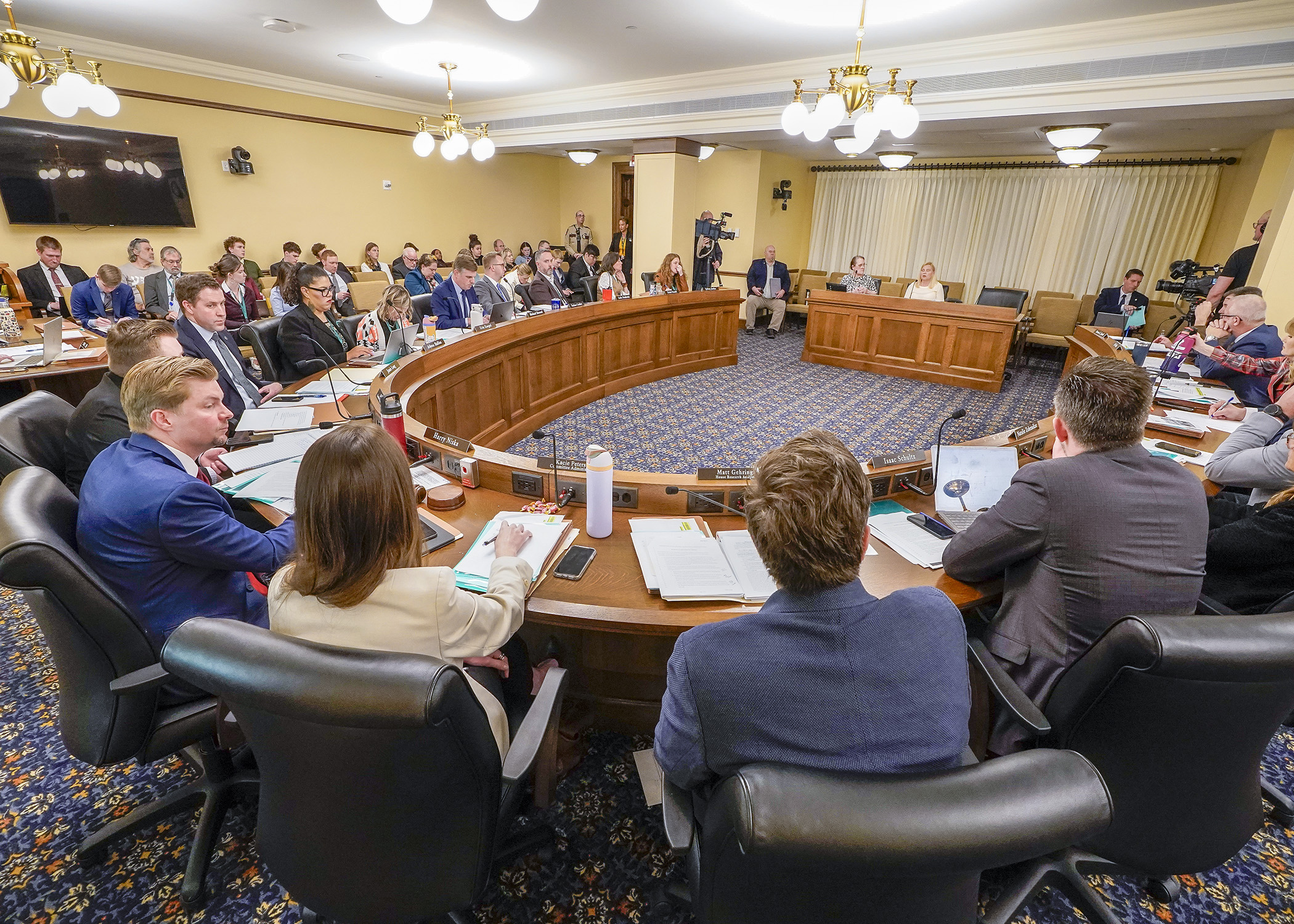
During a February House Health Finance and Policy Committee, a voice vote was called following debate about a bill to create a license for massage therapy and Asian bodywork therapy.
But, after hearing the “ayes” and “nays” from members, Co-Chair Rep. Robert Bierman (DFL-Apple Valley) announced a majority voted in favor of HF362, moving it to the House Judiciary Finance and Civil Law Committee.
The committee moved on to other bills until, at the very end of the meeting, Rep. Scott Van Binsbergen (R-Montevideo) moved to reconsider the vote on HF362. “When I looked around the room, I believe that there were more negatives than positives on that and I’m just not sure how that works. I’m a new legislator and this is a learning experience for me.”
Bierman said he clearly heard more yes votes than no votes but obliged his fellow representative and called for a roll-call vote.
It turned out the bill failed down party lines with 10 ayes, 11 nays and one abstention.
In an evenly split House along party lines, the phrase “it failed on a tie vote” has become a familiar refrain this biennium. But when it’s a voice vote with an equal split between the parties, it can be a matter of which side is simply the loudest, which has led to the use of “division” after a voice vote at times to vet if a bill was truly approved this session.
Committees have several options for what to do with a bill:
Roll-Call votes: In the House, committee members may demand a roll call on any bill before the committee. The name of the member demanding the roll call and the vote of each member must be recorded in the committee minutes. The committee minutes must also include the names of those in favor and those opposed on a roll call vote.
Voice votes: If no committee members request a roll-call vote, the chair calls for a voice vote. This is the most common method of voting in committee.
Division: After the chair announces the result of the voice vote, any member may request a “division,” or show of hands. How legislators vote in a division is not recorded in meeting minutes.
Lay over: When a bill is tabled and laid over for possible inclusion in an omnibus bill or future consideration. This does not require a vote.
While a bill’s approval can be murky with a voice vote, lawmakers sometimes take issue with a roll-call vote too. One such dispute arose in the House Commerce Finance and Policy Committee in March.
Rep. Andy Smith (DFL-Rochester) asked for a roll-call vote on HF3419, which would crack down on entities engaging in ballot issue and election activity, saying that it’s “rare” for Minnesotans to have a view of “who is standing for their voice.”
But Rep. Ron Kresha (R-Little Falls) took issue with the request.
“A representative has thrown out a roll call like it’s a dagger,” he said.
Kresha’s argument against taking a roll-call vote centered around trust between legislators and the public record.
“If you really want to start breaking down walls, let’s stop the ultimatums,” Kresha said. “Pull the roll call off, not because I’m afraid to vote for it, that is not it, but because let’s show a sign of laying down arms and starting to extend olive branches.”
Kresha said roll-call votes add more division in the Legislature, making it harder to be bipartisan. “I would recommend we just take it to a voice vote or even lay it over so we can have conversations because it’s conversations that get us to the next step — not going to the apocalyptic option.”
The committee moved forward with a roll-call vote and the bill failed 10-10 along party lines.
Related Articles
Search Session Daily
Advanced Search OptionsPriority Dailies
Could 2026 retirements lead to record turnover in the House?
By Lisa Kaczke In the final weeks of the legislative session, House members not seeking re-election to the body have taken a turn at gaveling in a floor session.
It’s an opportunity to loo...
In the final weeks of the legislative session, House members not seeking re-election to the body have taken a turn at gaveling in a floor session.
It’s an opportunity to loo...
How short are the Legislature's short sessions?
By Lisa Kaczke Rep. Ron Kresha (R-Little Falls) was ready to end the session March 25, making the motion to adjourn sine die. But not enough of his colleagues shared that sentiment, defeating ...
