 Minnesota Legislature
Evenly-split House compromises to pass major legislation, finish session on time
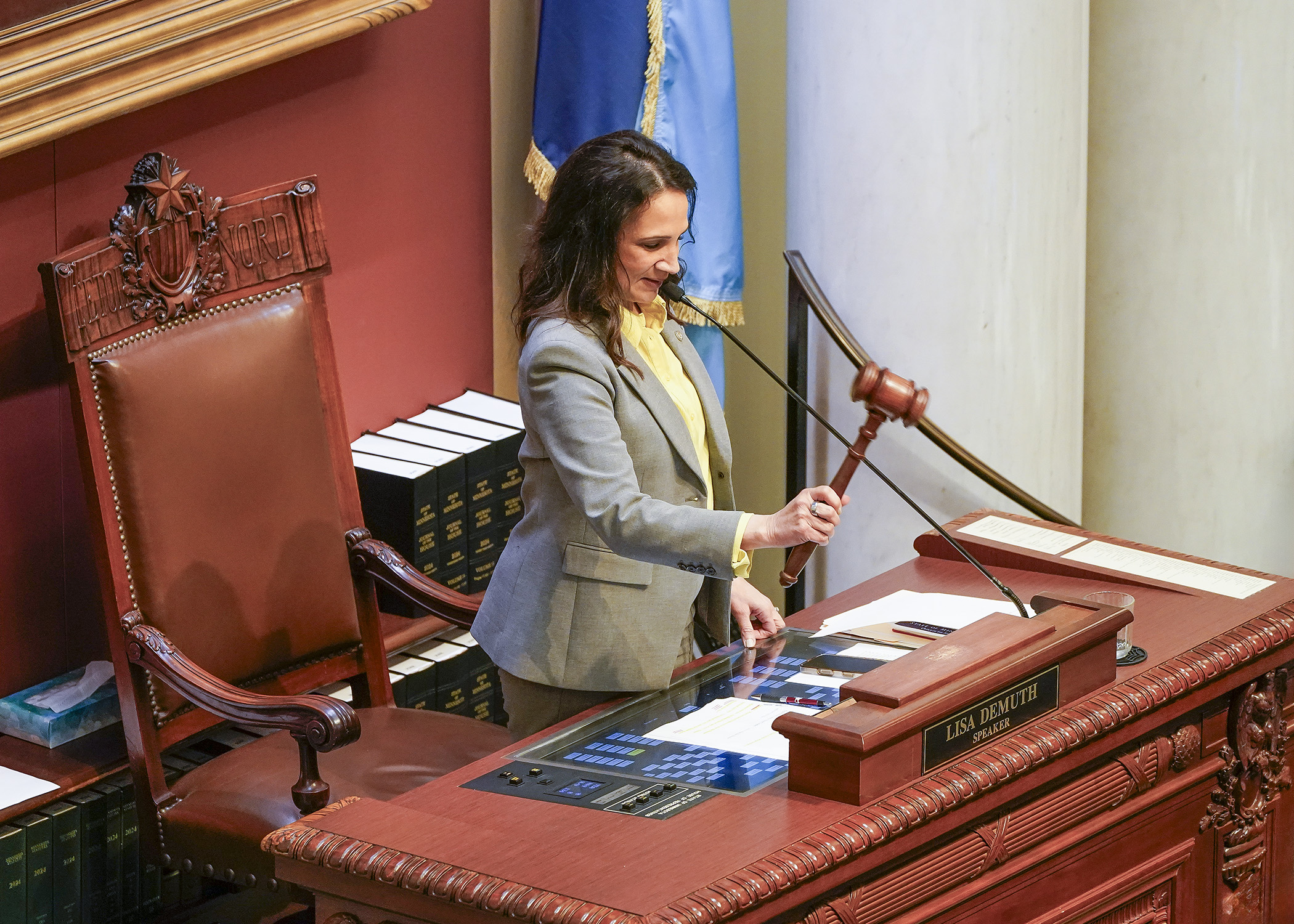
The bipartisan burst of enthusiastic applause that reverberated around the House Chamber at midnight felt like a catharsis full of relief and release late Sunday.
For the first time this decade, the Legislature completed its business on time, without one party infuriating the other with parliamentary maneuvers or the size of its bills.
Yes, in the second year of an evenly divided House of Representatives, members seemed to have settled into a relatively comfortable pattern of largely agreeing on the most important issues to address, compromising on details, and eventually accepting that there were some areas in which movement wouldn’t be possible.
“A lot of tension, a lot of emotion” is the way that House DFL Caucus Leader Zack Stephenson (DFL-Coon Rapids) described the mood that pervaded the session. After a nerve-addling interim that included the assassination of Speaker Emerita Melissa Hortman, the shooting at Annunciation Church and School and Operation Metro Surge, Stephenson said he is proud that legislators held it together despite a few “combustible moments in session.”
“The best tribute to Melissa Hortman is getting our work done and getting it done on time,” Stephenson said.
A few key bipartisan goals emerged early in the session. Legislators agreed that something would need to be done to address the possible closure of Minneapolis’ Hennepin County Medical Center, expensive fraud in the state’s human services programs and rising property tax rates.
Bills are on their way to Gov. Tim Walz’s desk — or have already been signed into law —including a package that could amount to $705 million to assist HCMC; creation of an Office of the Inspector General; a boost in funding for the attorney general’s fraud investigations; and an increase in homestead property tax refunds.
“We delivered really good things working together in a tie,” said House Speaker Lisa Demuth (R-Cold Spring).
“Were all of these things we would have done as a caucus? No. Is this work over the last two years good for Minnesota? Absolutely.”
While DFL House leaders lament the lack of progress on gun restrictions and aid packages for businesses affected by federal immigration enforcement, there was still much legislation approved by both chambers.
Capital investment: A $1.24 billion bonding package emerged on the session’s final day and received the required two-thirds majority in both houses. Among the largest investments in the package will be $420 million for water infrastructure, $177 million for transportation and $75 million for the University of Minnesota.
Health and human services: HCMC will receive $205 million in direct stabilization funding and be able to tap into a $500 million reserve account in ensuing years, as will other hospitals dealing with the financial burden of uncompensated care. The approved bill also conforms to cuts, changes and restrictions to the state’s Medical Assistance system that the federal government made a prerequisite for continued funding. And the counties administering the state’s human services programs will receive a long overdue upgrade to their technology for processing paperwork and payments.
Education: November ballots will include the opportunity to create a constitutional amendment to increase distributions from the Permanent School Fund to the state’s school districts. And measures were created to target school employees and volunteers who sexually groom students, including creating a felony offense.
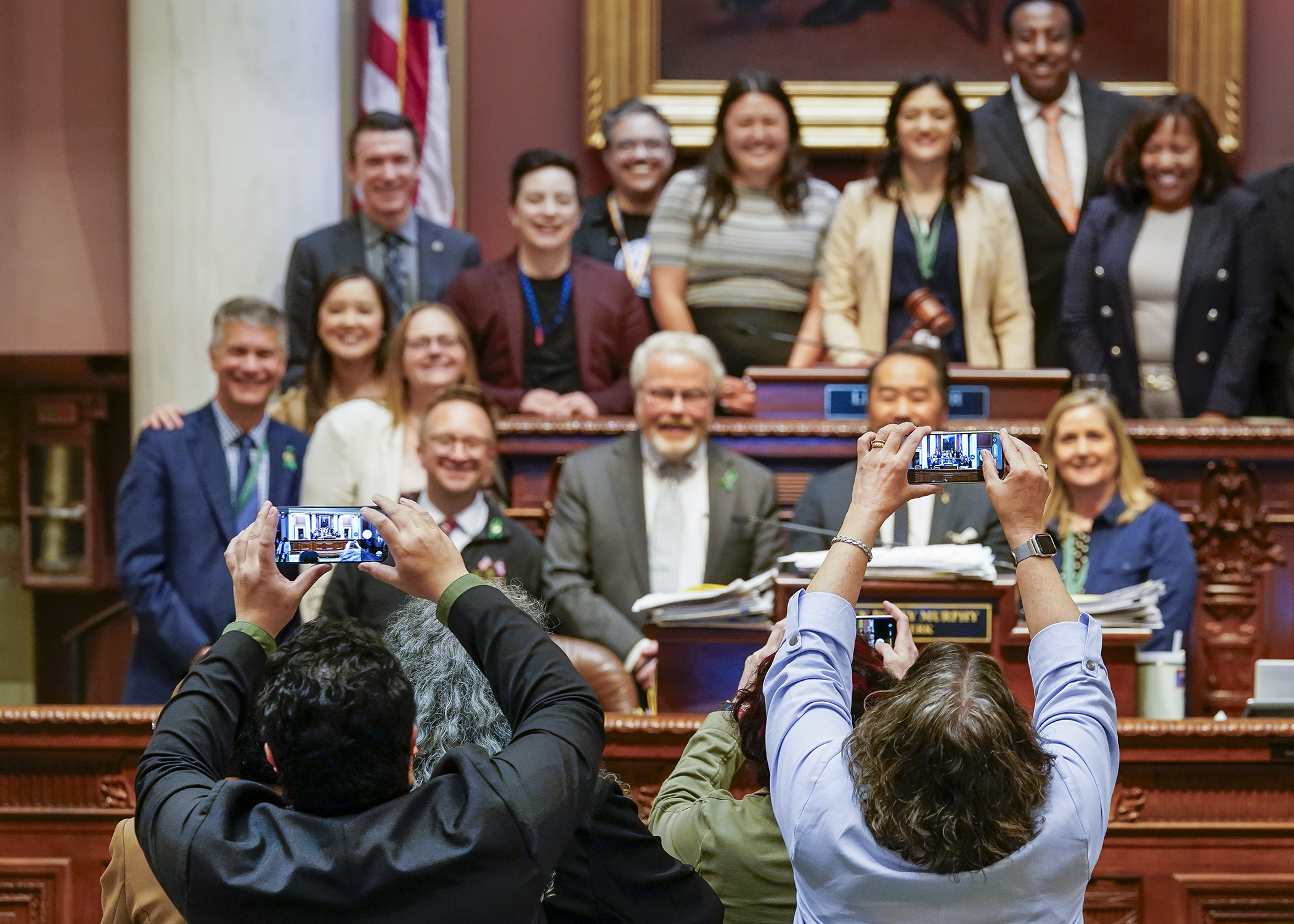 Members gather at the speaker’s rostrum for “class pictures” during a May 17 session recess. (Photo by Andrew VonBank)
Taxes: The tax bill that emerged on the session’s final night features a one-time increase in homestead credit refunds to 14.88%, at a cost to the state’s General Fund of $125 million. Most of the bill’s measures deal with conforming to changes in federal tax law, but it does contain provisions that expand the Dependent Care Credit and establish a direct free filing system.
Housing: The housing finance and policy bill features $165 million for housing, including $100 million in Housing Infrastructure Bonds and $40 million for rental and mortgage assistance in Fiscal Year 2027 through the Family Homeless Prevention and Assistance Program. By reallocating funds, it’s expected to result in more than 2,000 homes without General Fund impact. And new regulations were created for homeowner associations.
Higher education: While the Minnesota State system has a new tool to combat fraud committed through “ghost students,” left unaddressed was an expected $131 million shortfall in the state’s financial aid programs, including North Star Promise grants.
Transportation: The bonding package includes temporary reductions in the motor vehicle registration tax — or “tab fees” — that will shrink the Highway User Tax Distribution Fund by $119 million in Fiscal Year 2027.
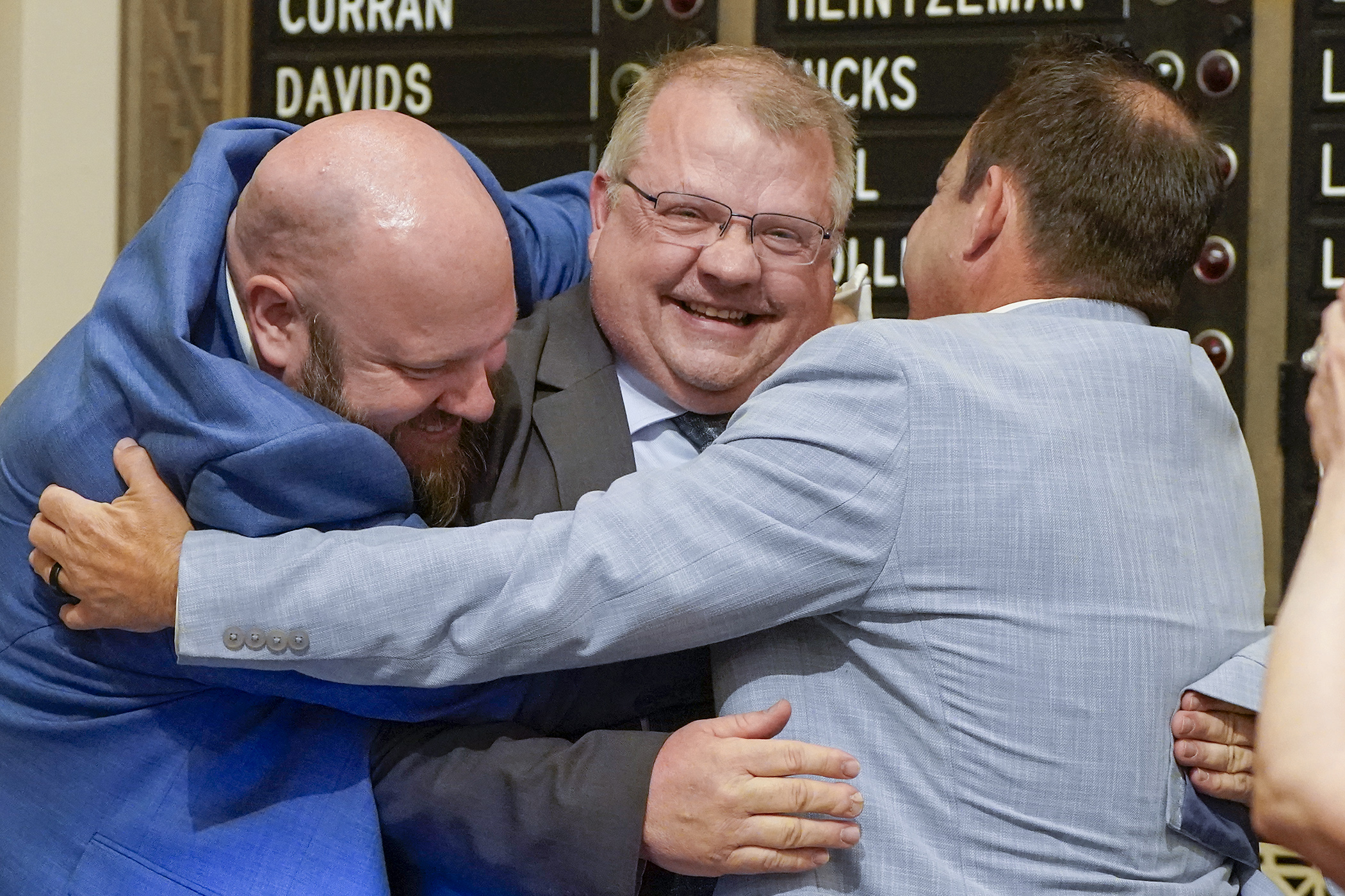 Rep. Ron Kresha gets a bear hug from his desk neighbors Rep. Joe Schomacker, left, and Rep. Chris Swedzinski after giving his retirement speech on the House Floor May 18. All three are not seeking re-election. (Photo by Michele Jokinen)
Public safety: There will be age monitoring and verification requirements for social media platforms, including parental approval and specific treatment of accounts to safeguard children under age 16. A $47.44 million supplemental budget bill focusing on boosting security measures would provide enhanced security services from the State Patrol to legislators in the Capitol Complex and beyond if necessary. Judges would also get protection through enhanced courtroom security.
Commerce: In response to a trend in scamming, the state will ban virtual currency kiosks. And predictive market wagering on such websites as Kalshi and Polymarket will also now be illegal in the state.
Environment: A $102 million Environmental and Natural Resources Trust Fund bill contains 108 projects for education and outdoor recreation, fish and wildlife, and water and conservation throughout the state. And a $191 million appropriation from the Outdoor Heritage Fund will be directed toward a variety of wildlife habitat, wetland restoration and watershed protection projects.
Cannabis: The cannabis bill would create a macrobusiness license, merge the medical and adult-use supply chains and give a helping hand to hemp businesses facing federal headwinds.
Energy: The tax bill contains $500,000 for a study regarding nuclear generation.
Agriculture: Eggs can soon be donated to food shelves past their quality assurance date.
— Session Daily writers Graham Johnson, Winter Keefer, Margaret Stevens and Tim Walker and Assistant Editor Lisa Kaczke contributed to this story.
Related Articles
Search Session Daily
Advanced Search OptionsPriority Dailies
Could 2026 retirements lead to record turnover in the House?
By Lisa Kaczke In the final weeks of the legislative session, House members not seeking re-election to the body have taken a turn at gaveling in a floor session.
It’s an opportunity to loo...
In the final weeks of the legislative session, House members not seeking re-election to the body have taken a turn at gaveling in a floor session.
It’s an opportunity to loo...
How short are the Legislature's short sessions?
By Lisa Kaczke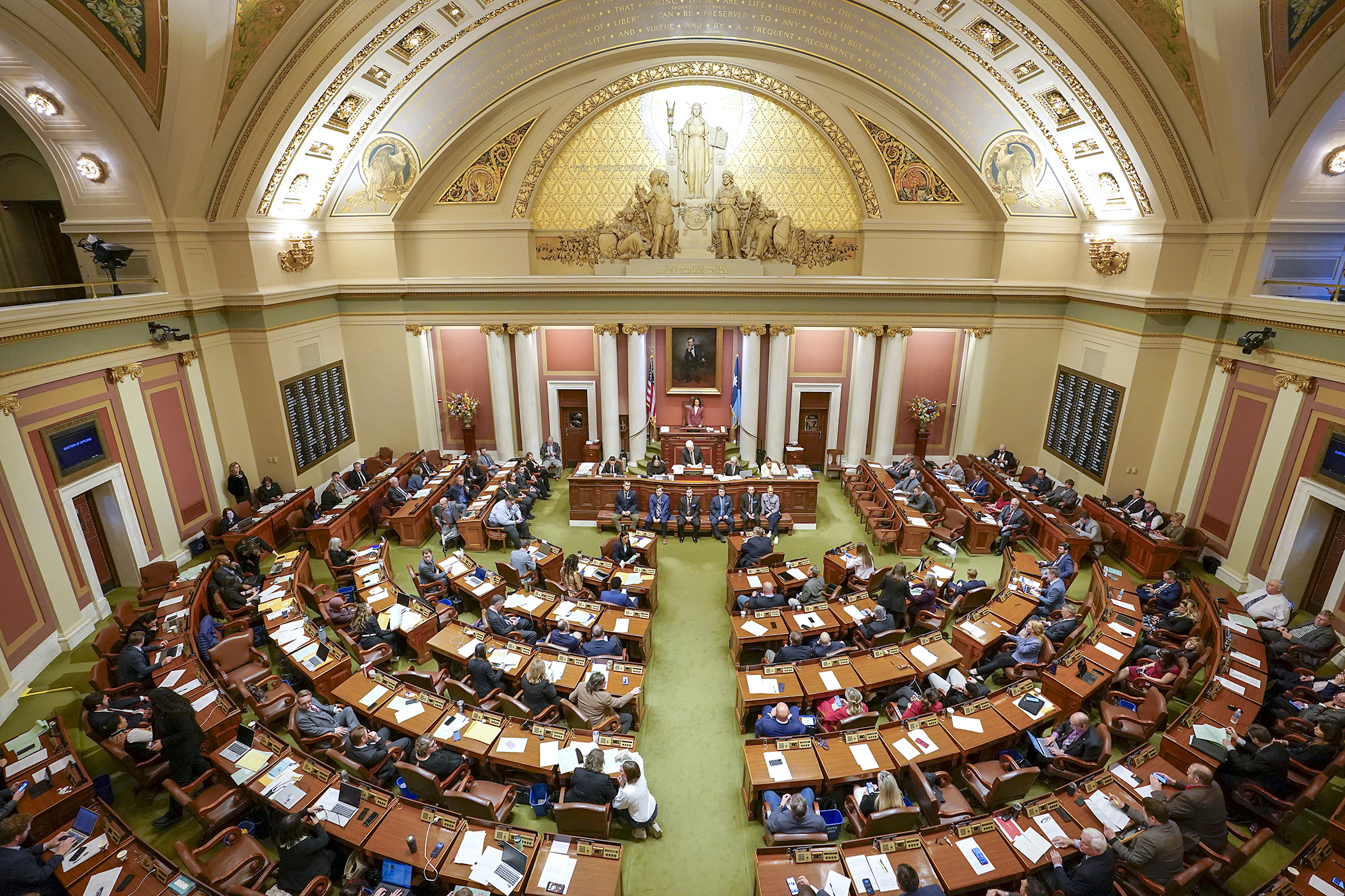 Rep. Ron Kresha (R-Little Falls) was ready to end the session March 25, making the motion to adjourn sine die. But not enough of his colleagues shared that sentiment, defeating ...
