 Minnesota Legislature
Wide-ranging state government bill awaits governor's action
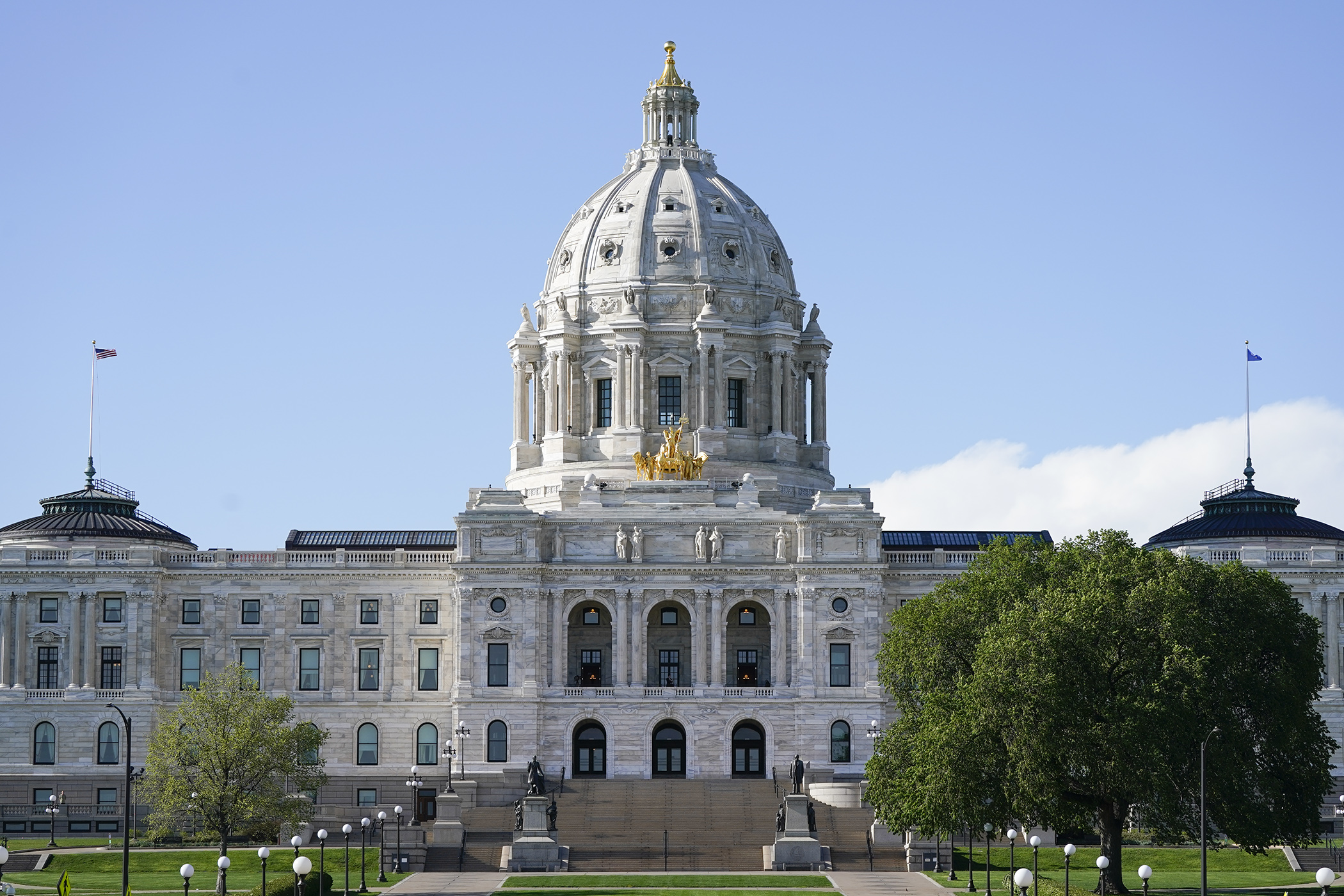
— UPDATED at 4:38 p.m. May 17 after House vote
What started as a bill to provide additional funding for 17 independent locally programmed and managed radio stations across the state has blossomed in the final days of the 2026 session to include more than a dozen bills related to state government.
Passed 53-13 by the Senate early Saturday afternoon, HF4591 was repassed 113-20 by the House Sunday and sent to the governor’s desk.
Sponsored by Rep. Jim Nash (R-Waconia), the bill meets the $925,000 target set by legislative leaders earlier in the week, and it cancels $1 million of unused funds from a previous allocation for implementation of the Department of Children, Youth, and Families.
That contributes to the almost $1.83 million in Fiscal Year 2026 for grants to a quintet of public television stations in Greater Minnesota for operations and $100,000 in Fiscal Year 2027 to the Association of Minnesota Public Educational Radio Stations, better known as AMPERS, for resources, software and other training to help its member stations consolidate resources and expenses.
[MORE: View the spreadsheet]
Other Fiscal Year 2027 financial changes include:
- reducing by $1.84 million — from $4.92 million to $3.07 million — money for the Department of Human Services to coordinate with the newly created Office of Inspector General;
- $561,000 to Minnesota IT Services for data sharing between agencies;
- an additional $264,000 for creation of the Office of Inspector General;
- $262,000 to the Department of Education for data sharing preparation; and
- $86,000 for administrative costs of the Mark and Melissa Hortman Memorial State Park working group.
Among its policy provisions the bill would:
- charge the Department of Administration with developing a grantee fraud rating system policy informed by the principles of vendor risk management;
- require the department to provide a template summary page for use by agencies that award grants;
- to alleviate the penny problem, allow state agencies and parties engaging in transactions on behalf of state agencies, to round cash transactions, as follows: when the amount ends in 1, 2, 6, or 7 cents, the agency must round down to the nearest nickel; when it ends in 3, 4, 8, or 9 cents, the agency must round up to the nearest nickel;
- allow the Minnesota Historical Society to contract with any person or entity for management and operation of state historic sites. Current law permits contracts with counties, municipalities, and local historical societies;
- extend the expiration date for the Legislative Commission on Cybersecurity from Dec. 31, 2028, to Dec. 31, 2035;
- move from April 1 to May 1 of each odd-numbered year when the Compensation Council must determine the salaries of constitutional officers, commissioners and other agency heads, and the chairs of the Metropolitan Council and the Metropolitan Airports Commission;
- change a provision in the health insurance benefit plans offered in the non-represented employees compensation plan and the managerial plan;
- provide for continuing operations of the Legislature in advance of it becoming duly organized;
- reduce the number of legislative manuals that the Office of the Secretary of State is required to distribute to specified recipients; and
- modify statutes pertaining to the Board of Barber Examiners and Board of Cosmetology Examiners licensing and regulations.
Related Articles
Search Session Daily
Advanced Search OptionsPriority Dailies
Could 2026 retirements lead to record turnover in the House?
By Lisa Kaczke In the final weeks of the legislative session, House members not seeking re-election to the body have taken a turn at gaveling in a floor session.
It’s an opportunity to loo...
In the final weeks of the legislative session, House members not seeking re-election to the body have taken a turn at gaveling in a floor session.
It’s an opportunity to loo...
How short are the Legislature's short sessions?
By Lisa Kaczke Rep. Ron Kresha (R-Little Falls) was ready to end the session March 25, making the motion to adjourn sine die. But not enough of his colleagues shared that sentiment, defeating ...
