 Minnesota Legislature
GOP-led House fraud panel approves final report on party-line vote
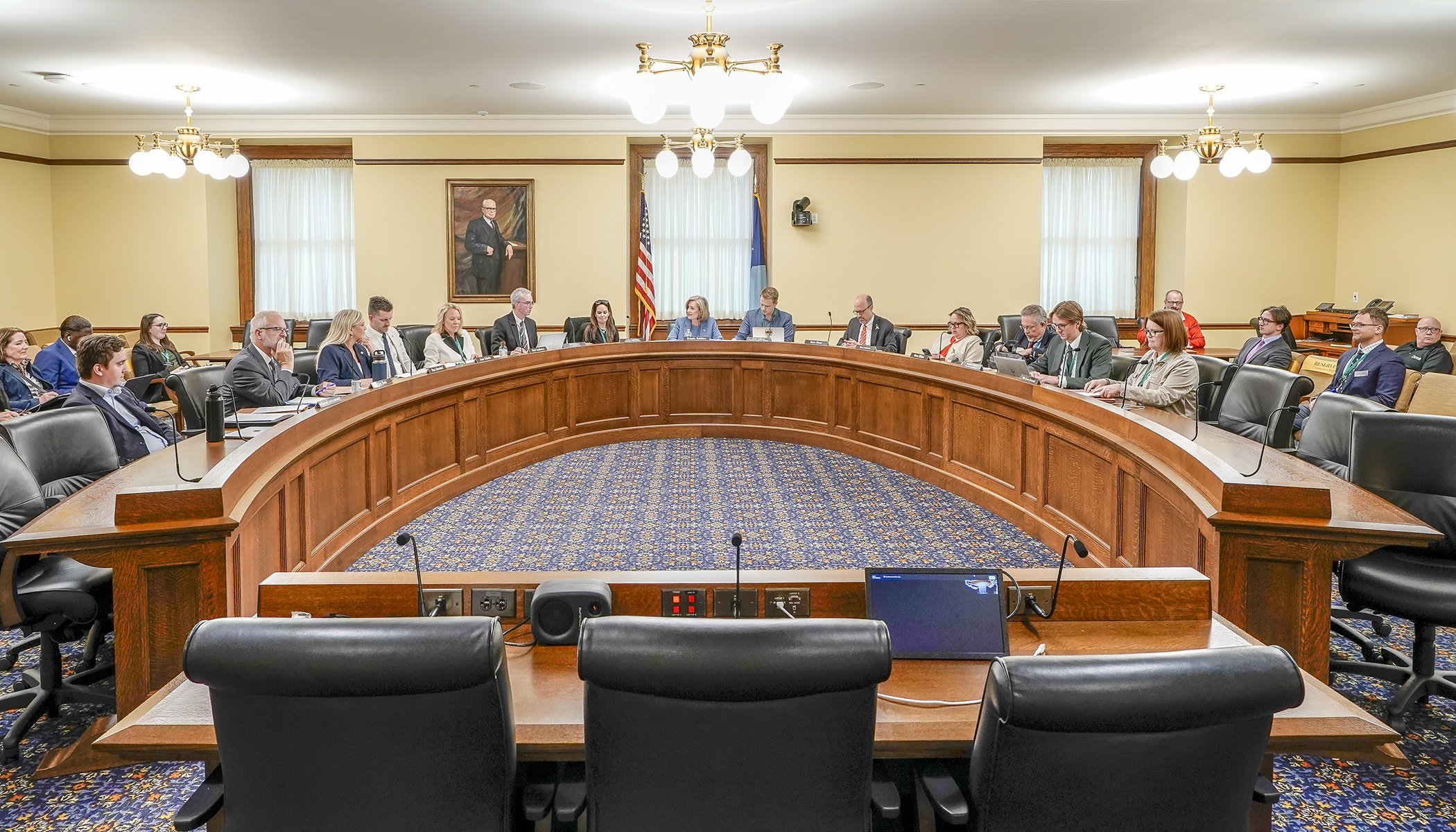
For the first time in state history, a committee was created in January 2025 to specifically focus on oversight.
A report summarizing that work and providing recommendations for improvement was approved Wednesday by the House Fraud Prevention and State Agency Oversight Policy Committee — or most of it.
The four present Republicans voted for the 84-page document that was previously signed by all five Republican committee members. Both present DFLers abstained.
The lack of consensus was not surprising, as opinions of the committee’s purpose and whether it did enough to aid in fighting fraud fell along party lines.
Rep. Kristin Robbins (R-Maple Grove), the committee chair, spoke glowingly of the work that occurred during the committee’s 25 meetings. While acknowledging fraud prevention is important, Rep. Dave Pinto (DFL-St. Paul) called the committee a “spectacle” and a “missed opportunity.”
Said Robbins: “We have helped illuminate the vast fraud that is criminally stealing money from taxpayers and is hurting our most vulnerable. … The fraud that has been enabled and covered up by the Democrat administration has hurt Minnesotans. And continues to hurt them.”
'Everyone is mad about fraud'
DFLers questioned that effectiveness.
“Everyone is mad about fraud; fraud has no political bias. We are in a tie House. True progress requires collaboration. We have seen that in other committees,” Pinto said. “This committee has been so committed to political points it has achieved nothing, and having this document as the conclusion is the final confirmation.”
Pinto noted nobody from his side was consulted with input or review for a partisan report that, he said, includes some fraudulent claims.
“To provide one example, it says the attorney general has prosecuted very few fraud cases when, in fact, we heard in this committee evidence it’s one of the most effective AG-fraud control units in the country,” he said.
“I was in public safety where we heard about the Medicaid fraud unit that is under-resourced compared to other states, which we are taking care of, and overperforming,” added Rep. Emma Greenman (DFL-Mpls).
Pinto also noted that many fraud-fighting bills were approved by other committees, while the fraud committee did not.
Robbins countered that an oversight committee brings people before it and its final product is a report, or reports if a minority one is created, which she would welcome. “Our role is to have hearings, to uncover fraud, to decide where to strengthen internal controls and create those bills that get passed by other committees. We have done that work.”
What’s in the report
Per the executive summary, “After two dozen hearings with dozens of witnesses, hundreds of whistleblower reports and reviewing hundreds of documents and reviewing years of Office of Legislative Auditor reports, it is clear that the breadth and depth of fraud in Minnesota is much worse than anyone thought possible, and stretches across multiple agencies in the Walz Administration.”
Robbins said the administration created a culture where fraud is accepted, tried to suppress that it occurred, and failed to hold any agency staff or leaders accountable.
“One of the values of this committee is exposing the scope of the fraud that has gone on in Minnesota government,” Robbins said. “We first thought it was child care, then it was Feeding Our Future, and from there that same pattern morphed into a lot of the Medicaid waiver services programs. … The agencies have the tools, they could have done more on the front end, they could have declared a program high-risk much earlier, they could have done unannounced site inspections, they could have done prepayment reviews. Any of these things years ago would have helped reduce the volume of the fraud.”
The report contains 18 recommendations going forward including technology modernization; requiring documentation and in-person site visits before a program provider can bill the state; requiring electronic attendance records for child and adult day cares, sober homes and autism centers; and creating a stop-payment mechanism to halt payments when a program budget increases by at least 50% over the prior year.
What’s next
Robbins wants the committee to continue in the future, no matter which party is in control.
“The work we’ve done has hopefully carved a path for the next Legislature in the next biennium to continue this important work,” she said. “It’s going to take many years, unfortunately, to undo the damage that has been done to taxpayers and vulnerable residents, but we must continue to expose the fraud, to strengthen internal controls and make sure that fraudsters and agency officials are held accountable.”
Related Articles
Search Session Daily
Advanced Search OptionsPriority Dailies
Could 2026 retirements lead to record turnover in the House?
By Lisa Kaczke In the final weeks of the legislative session, House members not seeking re-election to the body have taken a turn at gaveling in a floor session.
It’s an opportunity to loo...
In the final weeks of the legislative session, House members not seeking re-election to the body have taken a turn at gaveling in a floor session.
It’s an opportunity to loo...
How short are the Legislature's short sessions?
By Lisa Kaczke Rep. Ron Kresha (R-Little Falls) was ready to end the session March 25, making the motion to adjourn sine die. But not enough of his colleagues shared that sentiment, defeating ...
