Dear Neighbors,
This week marks the deadline for purely policy bills to clear all of their committees in both the House and Senate, and it’s the most hectic week of the legislative season. It’s worse than usual this year because of our late (February 17th) start. With a 67-67 tie in the House, there is relatively little of either party’s agenda that can be accomplished. So we had an abbreviated session in acknowledgment of the fact that while the ideals of bipartisanship are good to strive for, it faces incredible challenges in reality. As a result, most of the policy bills that will “make deadline” this week will be minor and non-controversial while more significant bills, even those with bipartisan support, will run out of runway and fall by the wayside.
My one policy bill that will clear its House committees, this week, is a bill that will bring the health data that’s collected from health apps and wearable devices (data that’s not covered by HIPAA) under the protection of our Consumer Data Privacy Act. My bills that implement the recommendations of the Property Insurance task force that I chaired last fall and the bills that will fund the human services systems modernization work that I’ve been promoting are still in line to be included in the budget-related bills that we’ll take up after spring break next week.
In the meantime, I’m working hard at the Capitol to advocate and advance legislation that will ease the consequences of federal chaos and Trump’s political retribution. The consequences of the Medicaid cuts required by the Trump administration’s big bad bill are shaping up to be dire for State and County health systems as well as personal budgets over the next several years. We will not be able to leave the Capitol without first shoring up the Hennepin County Medical Center, the State’s one indispensable critical care hospital.
Tax Equity
This week in the House Tax Committee, staff presented the results of this year’s Tax Incidence Study which showed that Minnesota has the second least regressive tax structure in the country.
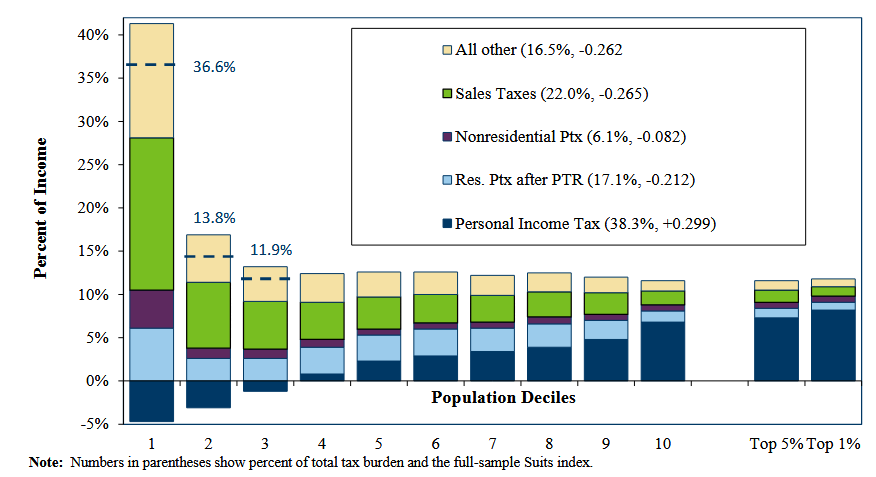
2023 Tax Burdens by Tax Type
Minnesotans at all income levels (except the lowest one) pay about 12% of their income in state and local taxes, with more affluent taxpayers paying mostly income taxes while lower income households pay proportionately more in sales and property taxes. As a share of income, our taxes are a little lower than they were 30 years ago.
Affordable Housing
Housing across Minnesota is too sparse and too expensive. I'm working with my DFL colleagues to pass sweeping affordability reforms. Everyone deserves a place they can call home without breaking the bank. Read about some of what we are fighting for here.
Strengthen MN Homes
Strengthen Minnesota Homes was a program passed by the legislature a few years ago, but not funded or implemented. I have a few related bills, this year, to implement it coming out of the Property Insurance task force that I chaired during the interim. I also authored HF4137, it would have the DLI Construction Codes Council adopt the related building codes to define what a strengthened roof is.
MN Uninsured Rate Rises
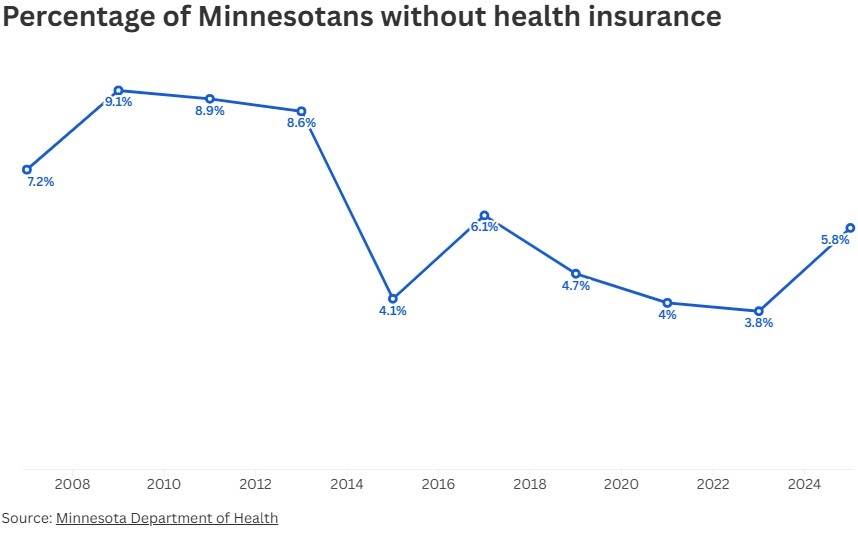
A new report shows that the uninsured rate in Minnesota is rising rapidly. This is a direct result of massive cuts to healthcare coupled with the ongoing affordability crisis. If the uninsured rates continue to rise we will see huge consequences for our state. For starters, this means fewer people getting the care they need, leading directly to more harm. But beyond that we will see a huge financial strain on our healthcare system, just look at HCMC for a vision of what the future holds if we continue to underinvest in healthcare.
Passing Bills off the House Floor
Even though many important bills have not been able to move ahead due to partisan differences and the compressed calendar, we have reached agreements on a couple important bills.
One of the first bills we passed renames Minnesota’s Community Solar Garden Program for Speaker Emerita, and former Energy Committee chair, Melissa Hortman. In 2013, Melissa authored the law that established the Community Solar Garden Program and set the state’s solar standard, helping to increase the state’s use of solar power
We also passed a bill that addresses a crisis caused by the Trump administration. In one of their many senseless budget cuts, a crucial program at the Department of Housing and Urban Development was impacted, leaving Minnesota’s supportive housing providers in limbo. These providers are crucial in assisting Minnesotans struggling with housing security throughout the state, and unless we acted fast, we would be in a homelessness crisis. The bill we passed directs $9 million dollars to these supportive housing providers, ensuring that their doors can stay open to support our neighbors through this year.
Child Tax Credit Reminder
If you’re still working on your 2025 taxes and have children, please don’t forget about the Child Tax Credit! It is NOT automatic. So far this year, more than 154,000 tax returns have claimed the Child Tax Credit, benefiting over 318,000 children across Minnesota. Families are receiving an average credit of $2,669. The credit is estimated to reduce child poverty by up to a third in Minnesota, making it one of the most impactful investments DFLers protected amid federal cuts. Learn more about eligibility here.
Supportive Housing
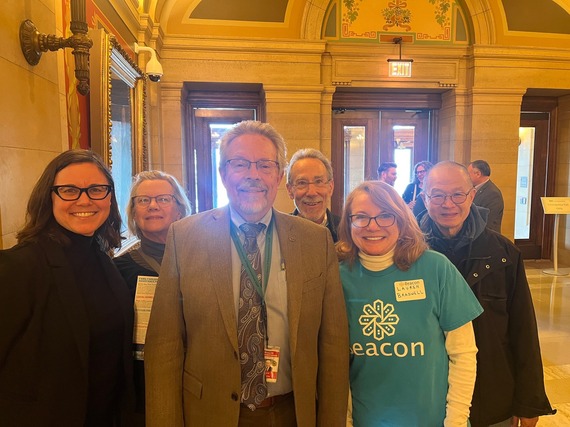
I had a great time speaking with my constituents about the importance of funding for supportive housing today! We are in a housing crisis right now and I'm ready to pass legislation to improve the situation!
Keep in Touch
Don’t hesitate to reach out if I can provide any assistance. Please follow me on my Facebook page for further updates and invite your friends and family to do so as well.
Thanks for the honor of representing you at the Capitol.
Sincerely,
Steve Elkins
Representative, District 50B
Minnesota House of Representatives
rep.steve.elkins@house.mn.gov