Legislative Update
Friends,
The legislative session is moving beyond the third week, and committee hearings have been heating up. Over the past week, lawmakers have been reviewing several state programs, discussing legislation that supports Minnesota’s outdoor traditions, and taking a closer look at the state’s financial outlook.
One theme that continues to surface is the importance of strong oversight and accountability when it comes to taxpayer dollars.
Encouraging the Next Generation of Anglers
Fishing is a way of life here in northern Minnesota. It is part of our culture, our tourism economy, and the traditions many families pass down from one generation to the next.
At the same time, the average age of anglers in Minnesota has been steadily increasing for years. If we want these traditions to continue, we need to make sure the next generation is excited to get out on the water.
Representative Chris Swedzinski introduced HF 624, which would allow anglers who purchase a $5 voluntary walleye stamp to fish with two lines during the open water season and four lines while ice fishing. Under current law, anglers are generally limited to one line in open water and two lines when ice fishing.
Revenue from the walleye stamp is dedicated to walleye stocking efforts, so the proposal could both support Minnesota’s fisheries and encourage more people to participate in one of our state’s most important outdoor traditions.
February Budget Forecast
The state’s February budget forecast was released the other week and gives us an updated picture of Minnesota’s financial outlook.
In the short term, the state is showing a positive balance. That outcome did not happen by accident. Last year, my colleagues and I took a firm stance against the continued push for excessive spending from Democrats and the Walz administration. By standing our ground and demanding a more responsible approach, we were able to prevent even more spending from being added to the state’s base budget -- and in turn, prevent even higher taxes to pay for it.
However, the long-term outlook is much more concerning. The forecast still projects a significant structural deficit in the FY 2028–29 budget cycle, driven largely by the rapid growth in government spending approved in recent years.
When the long-term financial outlook is this uncertain, it should be even more apparent that Minnesota simply cannot afford the staggering levels of fraud, waste, and abuse that continue to surface in state programs.
If we truly care about the quality of life for Minnesotans, addressing fraud in government programs has to be a top priority. That will require cooperation from the entire Legislature. We simply cannot afford to lose focus on this issue or allow taxpayer dollars to continue slipping through the cracks.
Questions Surround the Minnesota Promise Act
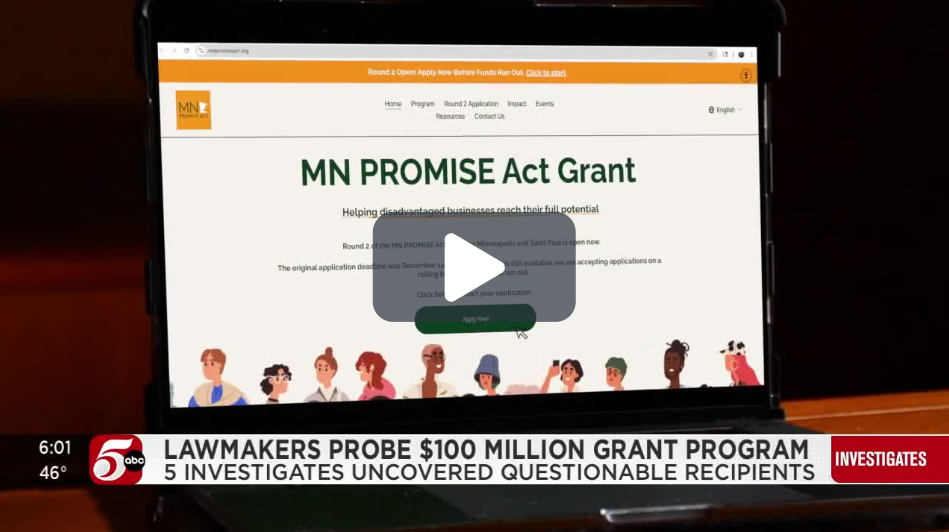
Lawmakers are also raising serious concerns about the Minnesota Promise Act, a $100 million grant program created in 2023 to provide grants of up to $50,000 to small businesses.
Recent reporting uncovered troubling examples of weak oversight. In one case, a company received nearly the full grant amount despite having its license revoked at the time it applied. The program relies heavily on outside organizations to review applications, and businesses are not required to report how the money is spent after receiving the grant.
Those same organizations acknowledged that they flagged dozens of suspicious applications, yet none were referred to law enforcement.
Minnesotans expect their tax dollars to be used responsibly. Programs intended to support small businesses can play an important role, but they must include strong guardrails and real accountability to ensure public funds are protected.
Fraud in the Non-Emergency Medical Transportation Program
Another program drawing scrutiny is Minnesota’s Non-Emergency Medical Transportation program, which provides rides to medical appointments for individuals enrolled in Medicaid.
Unfortunately, investigations have uncovered schemes involving false billing, inflated mileage claims, and rides that never occurred. In some cases, the alleged fraud involves millions of dollars in taxpayer funds.
Programs like this exist to help Minnesotans access important medical care, and when they work properly they serve an important purpose. But weak oversight has allowed bad actors to exploit the system.
Many of the largest investigations into fraud involving public programs in Minnesota have been led by federal authorities. Strengthening oversight and improving accountability at the state level must be a priority moving forward.
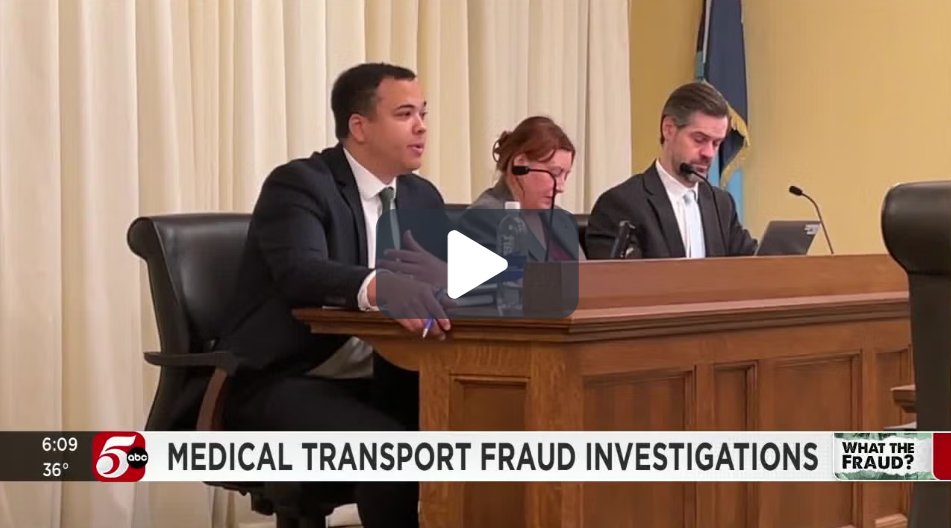
You can watch Rep. Anderson's comments below.
Thank You for Staying Engaged
Friends,
I want to sincerely thank you all for staying up to date on what's happening at the Capitol and learning about how it affects our state. I appreciate all of you have reached out to me or my office to share your thoughts, ideas, or concerns.
My goal is and always will be to ensure the voices and perspectives of our district are strongly represented in St. Paul. I will continue to fight against metro-based proposals that don't have our best interests at heart.
If there is anything I can do or if there is anything you'd like to get an update on, please don't hesitate to reach out.
Thank you and have a great weekend,
Josh